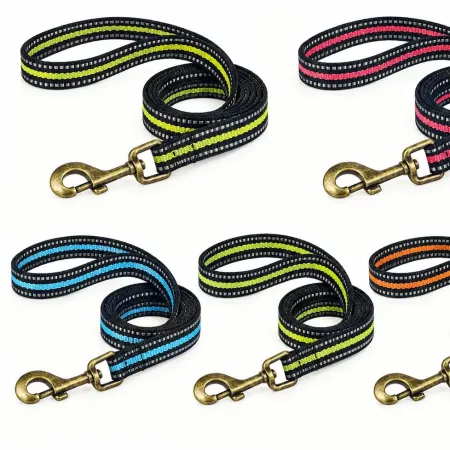
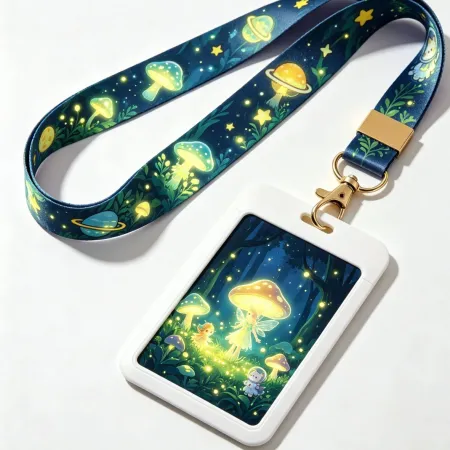
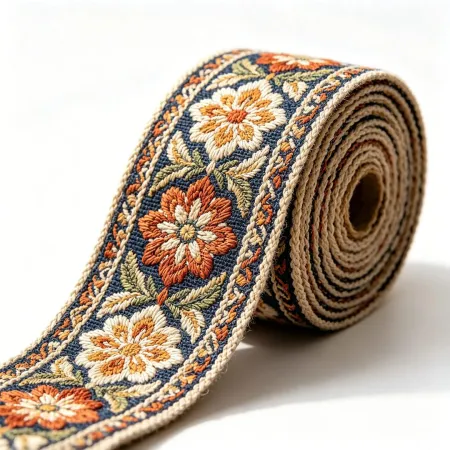
Custom Lanyard for Keys: Where Metal Meets Webbing
A custom lanyard for keys is a wear problem disguised as a strap. A key bunch weighs little, but steel is hard, the load swings, and the same few square millimetres of webbing take the whole of it through a fold that never quite relaxes. Where a badge lanyard fails because somebody pulls it, a key lanyard fails quietly — the edge frays, the stitch abrades through, and one morning the ring drops off with the keys still attached to nothing.
This guide looks at the three joints that decide whether a key lanyard lasts a year or a fortnight, the construction choices that improve each one, the length that suits belt, wrist and neck wear, and the material question that most key programmes get backwards.
Three Joints, One Weak Point Each
The load path on a key lanyard is short, and every element in it behaves differently under a swinging weight.
- The fold — where the strap turns back on itself to hold the ring. Sewn folds abrade along the needle line; riveted folds concentrate force on the rivet head; both are working on the same narrow band of cloth.
- The ring or clasp — a split ring rotates freely and grinds against the fold. A fixed loop or a swivel spreads the contact point instead of wearing one spot.
- The strap surface — keys hang against the band, and their cut edges act like a file. A tight sett resists this far better than an open one, because there is less exposed yarn to catch.
The table ranks the four common ways of terminating a key lanyard against what actually wears out first, since most buyers choose on appearance and then live with the consequence.
| Termination | How it holds | What fails first | Suits |
|---|---|---|---|
| Sewn fold, box-X | Thread through four layers | The cloth beside the stitch line, not the thread | Most programmes — cheap, flexible, easy to inspect |
| Riveted fold | A metal rivet pierced through | The yarns cut by the rivet hole | Short straps and heavy fobs, where a sewn fold looks light |
| Eyelet through folded webbing | A brass or nickel ring crimped through | Corrosion or the eyelet pulling through soft cloth | Where the ring has to be replaced without re-stitching |
| Metal loop sewn in | A D-ring or rectangle captured inside the fold | The loop wears the fold from the inside | Programmes where keys are clipped on and off all day |
Custom Lanyard for Keys: Material Chosen Backwards
Most key programmes start with a preference for cotton because it feels better in the hand, and then discover that the hand is not what wears the strap. Three properties matter more than feel.
- Abrasion resistance — polyester and nylon filament yarns outlast cotton by a wide margin against a steel edge. On a key lanyard that is used daily, this is the property that decides the replacement interval.
- Sett density — a tight plain weave exposes less yarn per square centimetre and catches fewer key edges. A loose weave chosen to keep the strap soft is the wrong trade on this product.
- Edge structure — a tucked edge keeps the cut ends inside the weave, which is what stops the fray that eventually walks across the fold. A cut edge on a key lanyard is a countdown.
- Stretch — a strap that grows under load lets the keys sit lower and swing wider, which increases the wear at the fold. Low elongation holds the geometry where it was designed.
Hang the actual keys on the sample
A key lanyard approved with an empty ring has not been tested. Load the sample with the keys it will carry — including the heaviest fob — and carry it for a week before signing off. Most of the failures in this category are visible in that week: the fold softens, the ring marks a groove, and the stitching starts to show white where the thread has abraded. Catching that on a sample is a design change; catching it in service is a return.
Length by Where It Sits
A key lanyard is worn in three places, and each one demands a different length for the same job.
Belt or bag loop
Short enough that the keys sit in a pocket rather than swinging at the thigh. A 400 to 500 mm open length suits most wearers, with a swivel at the anchor so the strap does not twist when the wearer turns. This is the format used by facilities teams, security staff and anyone who opens the same door fifty times a day.
Around the neck
Longer than a badge lanyard is comfortable, because the keys hang rather than sit. Where a neck version is required, a breakaway closure is worth having: a key lanyard caught on a door or a machine is a far more serious event than a badge snagging, and the release is doing the same job it does on an ID strap.
Wrist
Short and light, often with a clasp so it can be moved to a bag. The wrist format is the one most often specified from a photograph, and the one where the finished circumference matters most — a loop that fits a wrist with a jacket cuff will fall off a bare arm.
Six Lines That Keep the Ring Attached
A key lanyard specification is short, and every line in it exists because something failed without it.
- Finished length, not cut length — measured to the inside of the ring, because that is the dimension the wearer feels.
- Termination method — sewn, riveted, eyeleted or looped, with the stitch pattern named where it is sewn.
- Ring gauge and material — a light split ring opens under a heavy fob, and a plated ring in a humid pocket can corrode at the joint.
- Strap width and sett — 15 to 20 mm is the working range, and the sett should be tight enough to resist a key edge.
- Expected load — the real key bunch, weighed, rather than a description of it.
- Print position — clear of the fold, because ink over a fold stiffens it and then cracks where it bends.
Because the strap, the stitching and the hardware all meet at one point, it helps when they are made in one place: the sett can be adjusted for the ring, the stitch pattern changed for the fold, and the ring fitted on the same bench. A 20 mm band of the nylon webbing used for abrasion-heavy straps clears 2000N and resists a key edge far better than a soft cotton band. The assembled formats sit in the custom lanyard range, and wear testing runs through the in-house laboratory.
FAQ: Custom Lanyard for Keys
Is cotton or polyester better for keys?
Polyester and nylon last longer against steel, and hold their length better under a swinging load. Cotton feels softer and prints beautifully, which is why it still appears on promotional key straps that are used gently. If the keys are used daily, the synthetic option is the one that survives.
Which termination lasts longest?
A sewn fold with a box-X pattern, on a tight weave, is the most durable common option — provided the stitch line sits far enough from the fold that the cloth beside it is not perforated at the point of highest stress. Rivets and eyelets are faster to make and concentrate load, so they suit lighter bunches.
Should a key lanyard be breakaway?
On a neck version, yes. Keys are heavy enough that a snag pulls hard before anybody reacts, and a release closure is the only thing that limits the consequence. On a belt or wrist version the closure is a convenience rather than a safety device, and a swivel clasp does the job.
Why does the print crack at the fold?
Because ink on the surface of a woven band has no stretch. Every time the fold opens and closes, the ink layer is asked to move with it, and a thick print gives up before the cloth does. Keeping the artwork away from the fold, or using a dye-based print that sits inside the fibre, removes the problem.
Can the keys be colour coded on the strap?
It is the most useful customisation on this product: a band of colour or a printed block that identifies which set a key belongs to. Put the code where it is visible when the keys hang rather than at the top of the strap, which is the part that spends its life inside a pocket.
A custom lanyard for keys is decided at the fold. Choose a tight weave, keep the stitch line clear of the bend, size the ring to the bunch and keep the ink away from the crease, and the strap will outlast several sets of keys rather than the other way round.
Why Xinxiangrui for Custom Lanyard for Keys
The sett, the stitch pattern and the ring all meet at one point on a key lanyard, so having the loom, the cutting table and the hardware bench in one building means a custom lanyard for keys can be adjusted for the ring rather than the ring chosen from whatever fits. Weave, stitch density and hardware grade are recorded per order. Give us the application and the load it must carry, and the construction follows.