Custom Lanyard With Buckle: Slot Arithmetic and Release
A custom lanyard with buckle is a strap plus a mechanism, and the mechanism is where the specification usually goes quiet. The buckle has an internal slot, the strap has a thickness, and the two either work together or produce a lanyard that slips under load or will not thread at all. Since a standard 20 mm strap clears 2000N while the buckle is doing a fraction of that, the buckle is never the strong part — it is the part that has to behave.
This guide covers the five buckle types that appear on lanyards, the slot and thickness arithmetic that decides whether the strap adjusts properly, the release behaviour of each type, and the lines worth writing into an order before a mould or a hardware order exists.
Five Buckles and What Each One Is For
A buckle on a lanyard is doing one of three jobs: adjusting length, releasing under load, or making the strap detachable. Most bad choices come from asking one buckle to do all three, and the second most common is choosing the buckle before the strap has been measured.
- Side-release breakaway — two halves that click together and split at a set force. It is a safety device first and a fastener second, and the release band has to be specified.
- Ladder-lock or cam — an adjustable slider that grips the strap by friction. It lets the wearer set the length, and it will slip if the strap is too thin or too smooth for the jaws.
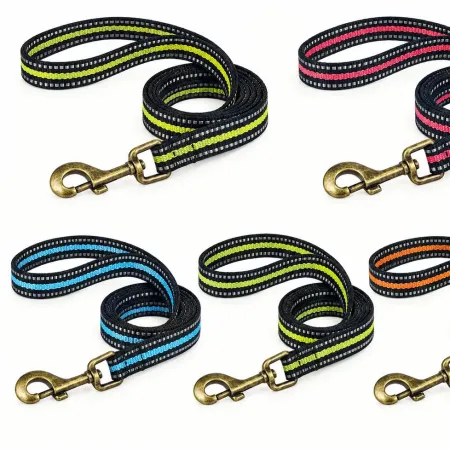
- Trigger or swivel snap — a clip rather than a buckle, used to attach the strap to a bag or a belt loop. It turns the lanyard into something that can be moved.
- D-ring or rectangle — a fixed metal or moulded loop sewn into the fold. Not adjustable, but it takes the wear that would otherwise land on the stitching.
- Magnetic or quick-release — a two-part closure that separates by pulling apart rather than by squeezing. Elegant, and unsuitable near card readers, medical devices or magnetic locks.
The table lines the five up against the failure each one produces when it is chosen for the wrong reason.
| Buckle | Job | Strap fit | Typical failure |
|---|---|---|---|
| Side-release | Release and rejoin | Fixed slot, no adjustment | Loose after the first release; the two halves no longer click positively |
| Ladder-lock | Set the length | Needs a strap within 1 mm of the slot | Slips under a hanging badge on a smooth strap |
| Trigger clip | Attach and detach | Sits on a fold or an eyelet | Spring weakens; the gate stops closing flush |
| D-ring | Wear point and anchor | Captured inside the fold | The ring grinds through the fold from the inside |
Custom Lanyard With Buckle: The Slot Arithmetic
A buckle slot is a fixed opening and a woven strap is a variable object. Three figures decide whether they suit each other, and all three are measurable before an order is placed.
- Inner width against strap width — the slot should be 2 to 4 mm wider than the finished strap. Less and the strap will not thread after a wash; more and an adjuster will not grip.
- Thickness — a 1.0 mm strap folds tighter than a 1.8 mm one, and the slot has to clear the folded thickness twice over. This is the figure most often missing from a buckle datasheet.
- Corner radius — a slot with a sharp internal corner cuts a woven strap at the bend. A radius of 1 mm or more turns a wear point into a bearing surface.
- Fold allowance — the length consumed by turning the strap back on itself, which is between two and three times the strap thickness plus stitching room.
Measure the buckle, then specify the strap
If the buckle is already chosen, take its internal slot and recess depth with a calliper and build the strap to those numbers. If the strap is already approved, choose the buckle to the strap rather than the other way round. What fails is the third approach, where the buckle is picked from a picture and the strap is specified from habit, and the two meet for the first time on a sample that does not adjust.
Adjustment, Release and Detachment
These three functions are often asked for in one sentence and behave very differently in the hand.
Adjustment needs friction
A ladder-lock holds by gripping the weave. A smooth, tightly woven strap slides; a slightly textured twill or a ribbed weave holds. Where the strap must stay smooth for printing, an adjuster with a serrated bar compensates — at the cost of abrading the print where it passes through.
Release needs a number
A breakaway buckle releases at a force set by its ramp angle and resin, and that force has to be stated as a band rather than a point. Where the lanyard is worn by a child, in a school or near machinery, the release is a safety requirement and the test record belongs in the order file, measured on the assembled strap.
Detachment needs a gate that closes
A trigger clip is judged by its spring, not its finish. A cheap clip opens under a swinging badge and stops closing flush after a few hundred cycles; a heavier gauge holds. Where the lanyard is clipped and unclipped several times a day, the clip is a wear item and should be chosen as one.
Six Lines That Stop a Bad Match
Every one of these has been the cause of a rejected sample at some point, and every one takes a minute to write down.
- Slot width, measured — not the nominal strap size the buckle is sold as.
- Strap thickness band — with the instrument and the pressure used to measure it.
- Function — adjust, release or detach, and which one matters most if the answer is more than one.
- Release band — where a breakaway is involved, with the test method named.
- Fold allowance — so the finished length comes out where the buyer intended rather than 20 mm short.
- Hardware finish — plating colour, and whether it has to match the clip or contrast with it.
The buckle is a small part of the product and the whole of its function. Buckles and clips sit alongside the straps in the custom lanyard range, release and pull figures come from the testing laboratory, and a buckle that has to be developed rather than selected is handled through OEM and ODM development.
FAQ: Custom Lanyard With Buckle
Should a lanyard buckle be adjustable?
Only if the wearers differ in height or in what they wear under it. An adjustable buckle adds a friction point and a slip risk, and most badge programmes are better served by a fixed length chosen from one measurement. Where the same strap is issued to visitors of all sizes, adjustment earns its place.
Why does my adjustable lanyard slip?
Because the strap is thinner or smoother than the adjuster expects. A ladder-lock grips by compressing the weave, and a 1.0 mm smooth polyester band gives it nothing to bite. Either a thicker strap, a textured weave, or an adjuster with a serrated bar solves it.
Can a buckle be colour matched to the strap?
Plastic buckles are moulded in a colour, so a match is possible within a moulding tolerance rather than exactly. Metal buckles are plated, so the choice is between finishes rather than colours. Approving the buckle and the strap together, in the same light, is quicker than matching a number to a number.
Does a breakaway buckle weaken the lanyard?
It makes the closure the weakest point by design, which is the point. The strap behind it still clears 2000N, so the assembly fails at the release rather than at the cloth — and that is what a safety reviewer wants to see in the file.
How much length does a buckle consume?
A fold through a slot typically takes 20 to 35 mm depending on thickness and stitch allowance, and a buckle body adds its own length on top. On a 900 mm lanyard that is a visible proportion, so the buckle dimensions belong on the drawing rather than in a footnote.
A custom lanyard with buckle is decided by three numbers: the slot, the folded thickness and the fold allowance. Get those right and the buckle does its job quietly for years; get them wrong and the lanyard is either impossible to thread or impossible to keep adjusted.
Why Xinxiangrui for Custom Lanyard With Buckle
Buckles, clips, rings and eyelets sit on the same hardware bench as the cutting table, so a custom lanyard with buckle can be built to the measured slot instead of the slot being matched to a stock strap afterwards. Release force and clip pull are measured on the assembled piece and recorded per order. Give us the application and the load it must carry, and the construction follows.