Hook and Loop Fastener for Shoes: Why It Cannot Sit on the Flex
A hook and loop fastener for shoes has one rule that overrides most others: the closure must not cross the flex zone. A foot bends where the toes meet the instep, and a stiff strip placed over that line is asked to fold several thousand times a day. It will open, or it will hold and tear the material it is sewn to, and which of the two happens is decided by where the strap sits rather than by the grade of the closure.
This guide covers the geometry of a shoe closure, what grit and dust do to a hook face at ground level, how the strap's free end is the second failure, and how to run a trial that predicts a worn pair rather than a new one.
Hook and Loop Fastener for Shoes: The Geometry First
A shoe closure solves a different problem from a bag closure. It has to hold a foot that changes volume through the day, open wide enough to get the foot in, and survive a surface that is never clean. Each of those pushes the design in a direction the others resist.
- Position relative to the flex — the strap should lie behind the flex line, over the instep, where the upper barely bends.
- Strap length range — enough to open for entry and enough to close on a narrow foot without a long loose end.
- Contamination tolerance — a hook face at ankle height collects grit, sand and grass, and grip drops before the hooks wear.
- Free-end management — the tab that hangs after closing catches on the other shoe, on trouser hems and on the ground.
| Position on the shoe | Daily load | Typical outcome |
|---|---|---|
| Over the instep | Tension, little bending | Works, and is the correct place |
| Across the flex line | Repeated folding | Peels, or tears the upper |
| At the heel | Rubbing against the other shoe | Abrasion and opening |
| On the tongue, light strap | Little load, much dirt | Grip fades as the face fills |
A closure that holds can still ruin the shoe
Over a flex line, the successful case is worse than the failure. A closure strong enough to stay shut takes the whole fold itself, and the material either side of it is worked until it splits. That is why shoe closures are usually short, sit behind the bend, and are anchored to a reinforced panel rather than straight onto the upper.
Three Things a Worn Pair Tells You
Where the grit collects
A hook face at ankle height gathers sand, seed husks and grass, and the debris works into the hooks rather than sitting on top of them. Grip falls in a way that a laboratory peel test on a clean sample never predicts. A denser hook with a shorter pile resists it better than a soft, open face, and a design that lets the wearer flick the face clean is worth more than a stronger grade.
How the free end behaves
The tab left after closing is the second failure of every shoe closure. It catches on the opposite shoe when the wearer crosses their legs, on a hem when they kneel, and on the ground when they crouch. A tab that is too long stays open and peels from the tip; one that is cut flush cannot be gripped with cold fingers. The answer is usually a small pull tab of a different material, not a longer strap.
Whether the anchor panel moved
Look at the panel the closure is sewn to, not the closure. On a worn pair the upper around the stitches either holds its shape or has stretched into a ripple, and the ripple is the sign that the strap was tensioned against material that could not carry it. A reinforcement behind the anchor costs almost nothing at the cutting stage and is impossible to add later.
Six Lines for a Shoe Brief
- Strap length and closed position — drawn on the last, so the closure lands behind the flex rather than over it.
- Open position and entry — how far the strap must release for the foot to go in, which sets the face length.
- Grade for a dirty environment — a hook and loop pair chosen for contamination tolerance rather than for maximum peel.
- Anchor panel and stitch pattern — the reinforcement behind the seam, and the rows that spread the load.
- Colour fastness to rubbing — a closure at floor level crocks against socks and trouser hems continuously.
- The wear trial — how many pairs, for how long, on what surfaces, judged against what failure criteria.
The sixth line is the one that changes a decision, because a shoe closure cannot be judged on a sample in a bag. Ten pairs worn for a month by people who walk on pavements, gravel and a polished floor will reveal more than any bench reading, and they will reveal it in the order that matters: contamination first, free end second, anchor last. A trial designed to look for those three in that order takes a month and settles a specification for years.
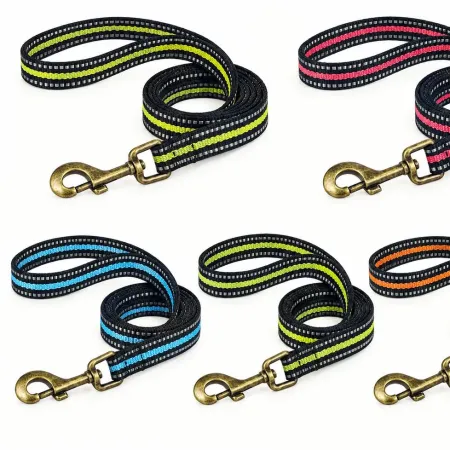
Shoe closures often sit beside a strap or a pull tab, and those are cut from the same narrow fabric family as the rest of the range: polyester webbing for a stable pull tab that will not grow, nylon webbing where a softer hand is wanted against the ankle, both clearing 2000N in a standard construction and both tested for crocking on the in-house bench.
Two Users Who Test It Hardest
Children and the one-handed close
A child puts a shoe on while standing, often in a hurry, and pulls the strap across with one hand. The closure that works is the one that engages when it lands roughly in the right place, which means a generous face and a hook that catches before perfect alignment. A high-peel grade that needs to be pressed firmly is a worse product here than a moderate one that grabs, and it is the clearest case in this category where more strength is the wrong answer.
Workwear and the standing foot
A boot closure is tensioned with the foot already inside and the wearer standing, so the strap is pulled hard against a loaded upper and the anchor takes that tension directly. It also meets mud, oil and abrasion in a single day. The specification for this use is closer to an industrial one than to a fashion one, and the difference shows in the anchor and the strap far more than in the closure face.
FAQ: Hook and Loop Fastener for Shoes
Why does a shoe strap keep coming open?
Usually because it crosses the flex line, or because grit has filled the hook face. Moving the strap back, shortening it so less tail hangs, or choosing a face that tolerates dirt solves more than a stronger closure.
How long should the strap be?
Long enough to open the throat of the shoe for entry and to close on the narrowest foot in the size range, with a tab short enough to stay flat. Both ends of that range matter, and the narrow end is usually forgotten.
Is a strong grade better for boots?
Up to a point, and the point arrives when the wearer cannot open it with cold or gloved hands. For workwear the better investment is a reinforced anchor and a strap that does not stretch.
Can the closure be glued instead of sewn?
On some uppers it can, and it saves the needle holes, but the bond has to survive flexing and moisture. Sewing through a reinforced panel remains the more predictable route for a shoe that is worn daily.
Does colour matter on a shoe closure?
It matters for crocking rather than appearance. A dark closure at ankle height rubs against pale socks and hems continuously, so fastness to rubbing is the reading to ask for, at the condition the shoe will meet.
A hook and loop fastener for shoes is a geometry problem before it is a materials problem: keep it off the flex, give it a face that grabs a roughly placed strap, manage the free end, and reinforce the panel it is sewn to. Do that and a modest grade will outlast a strong one that was put in the wrong place.
Why Xinxiangrui for Hook and Loop Fastener for Shoes
A shoe closure is settled on a foot rather than on a bench, so a hook and loop fastener for shoes here starts as a sample strap sewn to the customer's own upper, cut from the roll that will be used, with the crocking and peel readings attached. Free samples are routine, and the webbing for pull tabs is woven on site to clear 2000N so the tab does not grow with wear. Send us the last and the closed position, and the strap comes back on the shoe.