Polyester Webbing for Outdoor Gear: Weathering Three Ways
Polyester webbing for outdoor gear is not bought for strength, because almost any construction is strong enough for a strap on a pack. It is bought for what happens over three seasons of sun, rain and cold, and those three exposures do different things at the same time. A band that is excellent against one of them can be ordinary against another, and a datasheet that reports a single weathering figure has hidden the two that matter.
This guide covers the three exposures and how each is measured, the readings that predict outdoor behaviour, why polyester is chosen over the tougher-feeling alternative, six lines an outdoor brief should carry, and the two failures that appear in the field rather than in the laboratory.
Polyester Webbing for Outdoor Gear: Three Exposures at Once
Each exposure attacks a different part of the product, which is why a single accelerated test cannot stand in for the set.
| Exposure | What it attacks | How it is read |
|---|---|---|
| Light | The dye first, then the polymer itself, so colour goes before strength does | Colour difference after a stated exposure, alongside a retained-strength reading |
| Water | The interface between yarns, and any finish sitting on them | Strength wet against dry, and the length change on drying |
| Cold | The flexibility of the fibre and the stiffness of any coating | Hand and resistance to creasing at a stated low temperature |
The first row is the one that produces most after-sales conversations, because it is the visible one. A band that has faded is assumed to have failed, even when its strength is intact, and a customer looking at a two-year-old pack cannot tell the difference. Reporting colour and strength separately is fairer to the material and more useful to the buyer.
A light-exposure reading has two numbers
An exposure test reports a colour difference and a retained strength, and the two move at different rates. A band can hold its strength while shifting several units of colour, which is acceptable on a black strap and unacceptable on a shade that has to match a garment. The laboratory here runs light exposure past a thousand hours and reports the colour difference against the original, so the pair of figures arrives together rather than one being quoted alone.
Three Readings That Predict Outdoor Behaviour
Wet strength against dry
Polyester absorbs very little water, so the wet reading sits close to the dry one. That is the single strongest argument for the fibre outdoors: a strap that has been soaked behaves like a strap, and the same construction in an absorbent fibre loses a measurable share of its strength at exactly the moment it is loaded. Reporting both figures shows the size of that margin rather than asserting it.
Length change across wet and dry cycles
A band on outdoor gear is rained on and dried repeatedly, and anything that grows when wet and does not fully return will slowly lengthen the adjustment. Polyester is dimensionally stable, and the residual comes from the weave and the heat setting rather than from the fibre. A well-set band returns; a poorly set one creeps, and creep is what makes a strap need re-tensioning after a season.
Abrasion retention rather than initial strength
Outdoor gear rubs against rock, tree bark and its own hardware, and the figure that describes that is strength retained after a stated number of abrasion cycles. It is a different number from the peak and it is usually far lower, which is precisely why it is worth asking for.
The alternative fibre deserves an honest comparison rather than a dismissal. Polyamide is tougher under some abrasion regimes and more elastic, so it absorbs shock and recovers from a stretch better than polyester does. It also takes up moisture, loses strength when wet, and degrades faster under ultraviolet. For a strap that is dragged over granite in the dry, the first set of properties wins; for a strap that is wet, sunlit and must hold a length, the second set does.
Six Lines for an Outdoor Brief
- The exposures, ranked — which of light, water and abrasion the product will meet most, since the weave trades between them.
- A colour tolerance after exposure — stated as a number, because visible fading is what customers report.
- The wet-to-dry strength ratio — the figure that justifies the fibre choice and exposes a substitute.
- The low temperature it must work at — a band that stiffens is a band that will not thread through a buckle with gloves on.
- The abrasion cycle count — and the strength that must remain after it, rather than the strength before.
- How the band is joined — a sewn loop, a bar-tack or a metal fitting, since the join outlives the cloth in most cases.
The fourth line is the one outdoor brands add after their first winter. A band that is perfectly flexible in a warm laboratory becomes reluctant at freezing point, and a buckle that was easy to adjust in the design studio needs two hands through gloves. That behaviour comes from the construction as much as from the polymer, and it is worth testing at the temperature the product will actually meet.
- Soak it and pull it — the wet reading is the one the product experiences.
- Leave a strip in a window for a month — a crude test that predicts a real complaint.
- Put it in a freezer for an hour — then try to thread the buckle with gloves on.
- Rub it on a rough edge — the edge of a concrete step is a fair stand-in for rock.
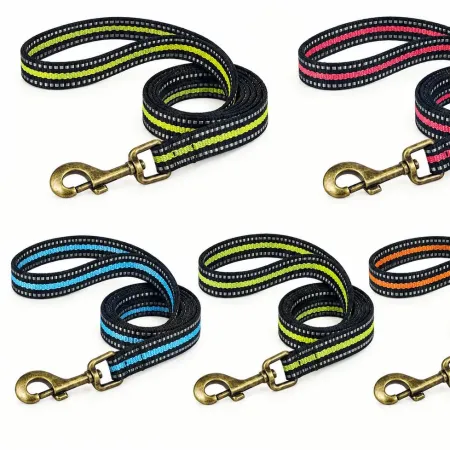
Outdoor constructions run on the same polyester webbing looms as the rest of the range here, and the laboratory that measures them also tests the pet webbing line, where a band is likewise expected to survive weather and use. The 2000N anchor belongs to the 25 mm base; outdoors the numbers that decide are the wet-to-dry ratio and the colour after a thousand hours.
One last measurement is worth the trouble. Weigh a metre dry, soak it, and weigh it again. The gain is the water the band holds, and it is the plainest evidence of why the wet strength reading sits where it does. On polyester that gain is small, and the smallness is the whole argument.
Two Failures That Show Up in the Field
The edge abrades where the buckle slides
Every adjustable outdoor strap has one point where the band runs through a fitting, and the edge there sees a slow grinding motion rather than a steady load. It is the first place to thin, and a thinned edge is where the band eventually parts. A rolled or tucked selvage resists it; a hot-cut edge does not, which is why the edge specification belongs in an outdoor brief.
The colour moves and the customer stops trusting the product
A faded band on an otherwise sound pack reads as wear, and wear reads as a product near the end of its life. The strength may be untouched and the perception is still real, which is why a colour tolerance after exposure is a specification rather than a preference. On dark shades the change is barely visible; on bright ones it is the whole story.
FAQ: Polyester Webbing for Outdoor Gear
Does polyester lose strength when it gets wet?
Very little, which is the main reason it is chosen outdoors. An absorbent fibre loses a measurable share, and that difference is worth asking for as two figures.
Is nylon better for outdoor webbing?
For abrasion and shock, often yes. For wet strength, dimensional stability and light resistance, polyester is the better fit, so the answer depends on which exposure dominates.
How is light exposure reported?
As hours of exposure with a colour difference and a retained strength. Quoting only one of the two leaves out the half that the other cannot predict.
Why does a strap need re-tensioning after a season?
Usually creep rather than stretch: the band has grown slightly across wet and dry cycles and not returned. Better heat setting reduces it.
Does the edge matter on outdoor gear?
It is usually the first part to fail, because it runs through a fitting on every adjustment. A rolled selvage lasts longer than a sealed cut edge.
Polyester webbing for outdoor gear is chosen for three exposures that arrive together. Ask for wet strength, colour after light and strength after abrasion as three separate readings, and the material choice becomes an argument with evidence rather than a matter of habit.
Why Xinxiangrui for Outdoor Webbing
Outdoor gear is judged by what it does in its third season, and a polyester webbing for outdoor gear is measured here against three exposures rather than one: wet strength, light exposure with a colour reading, and abrasion on the batch that will ship, in a laboratory that reports the lot rather than a catalogue page. Send us the drawing, the width and the target market — we reply with a construction.