
Features
Why Choose Xinxiangrui Webbing?
Source Factory
Direct wholesale production from our own plant in Dongguan, not a trading desk. Weaving, dyeing, printing, hardware assembly and packing all run in house, with no middleman margin in the price.
Full Customization
OEM and ODM work starts from your drawing: width, weave, colour, hardware and retail packaging. We match Pantone, send a physical sample before bulk, and keep every change on one work order.
Strict QA & ISO Standards
Every batch is checked for width, thickness, break strength and colour fastness before it ships, and the plant runs to ISO 9001 and ISO 14001. Test reports for your batch travel with the goods.
Proven Track Record
Fifteen years of narrow fabric since 2011, 200+ active partners and shipments to 50+ markets. Long-run programmes are what this factory is built for, which is why most customers reorder.
We Have The Best Solutions for Your Business
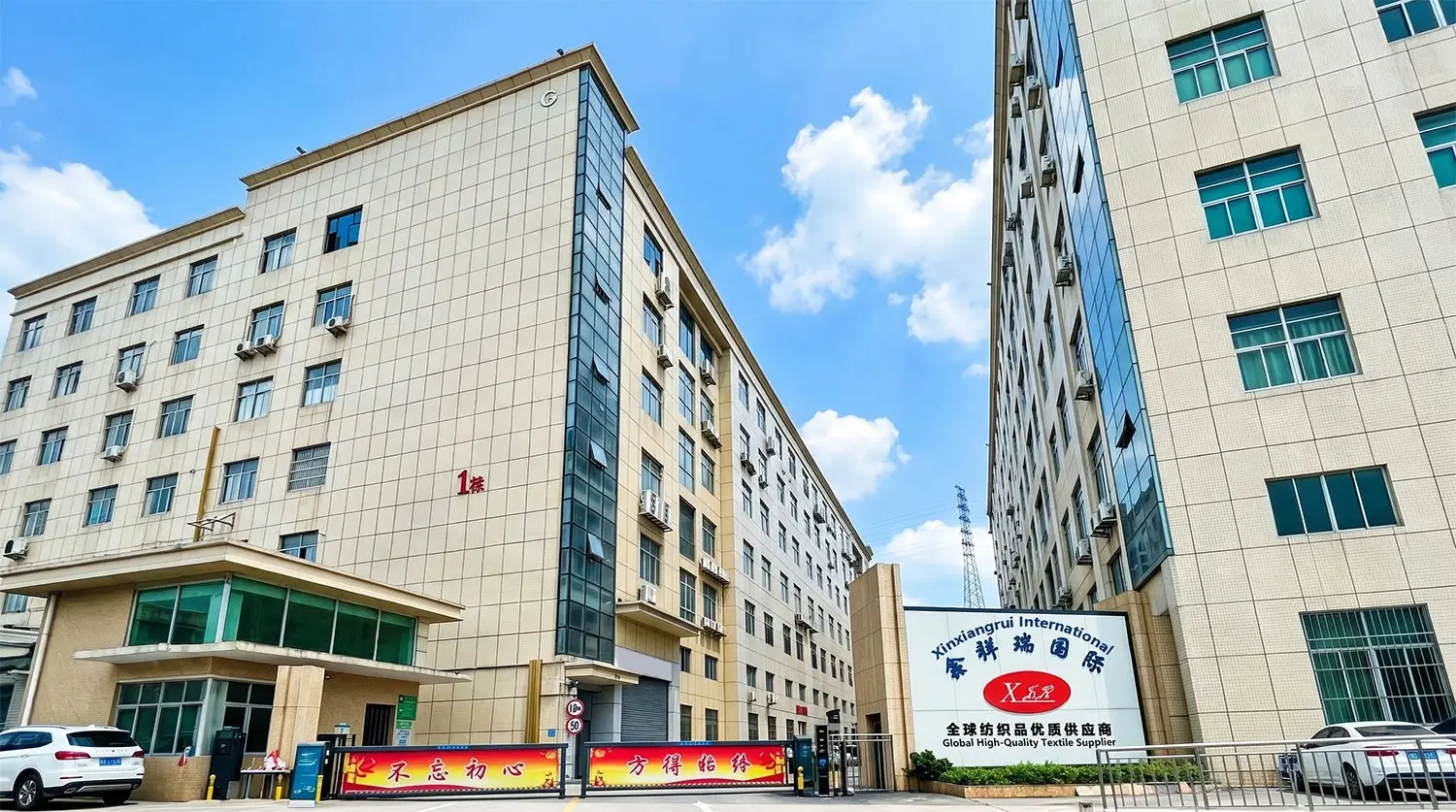
Xinxiangrui has made narrow fabric in Dongguan, China since 2011. Our 8,000 m² plant weaves, dyes, prints, cuts and sews under one roof, supplying 200+ active partners in 50+ markets. We produce polyester, nylon, cotton, elastic, reflective and bio-based webbing, ribbon, lanyards, pet leashes, bags and luggage components, from yarn and reflective tape to finished straps and handles.
Because every step stays in one plant, a widening range does not cost tolerance. Our laboratory tests to 2000N+ break strength, 50,000+ Martindale cycles and 1,000+ hours of UV exposure, and every batch carries its own figures rather than a catalogue sample. We work to OEKO-TEX, CPSIA, REACH, RoHS, ISO 9001, ISO 14001 and GRS. Send us your spec sheet and target quantity, and we will recommend the construction that fits.
Bio-Based Webbing: What the Percentage Is Counting
A figure such as a share of renewable carbon sounds precise and is answering a narrower question than most buyers assume. Four questions hide behind one number, and the table below separates them.
| Question | What it means | How it is evidenced | Where it trips |
|---|---|---|---|
| Feedstock origin | Whether the carbon in the polymer came from a plant | Radiocarbon analysis of the finished yarn | A blend where only one component is tested |
| Share of the whole | How much of the finished band, by mass, is renewable | A calculation per component, not per yarn | A figure quoted for the yarn and printed for the band |
| Chain of custody | Whether the renewable material was kept apart or pooled | Segregated lots or a mass balance ledger | A mass balance claim read as a physical claim |
| End of life | What happens to the band after its last use | A separate test, on the finished article | Assuming renewable carbon means degradable |
The distinction that saves an argument later: a mass balance certificate says the renewable feedstock was fed into a system and the volume is tracked, not that the specific roll in your hand is physically made of plants. That is a legitimate and auditable model, and it is a different sentence from the one a marketing team usually wants to print. Decide which sentence the label will carry before the material is bought.
Three Feedstocks That Reach a Webbing Loom
Polylactic acid, the one that behaves most differently
Polylactic acid arrives from fermented plant sugar and weaves into a band with a crisp hand and a bright, slightly glassy surface. It takes dye well at low temperature, which is one of its genuine advantages, and it softens at a temperature a polyester band would shrug off. That single property governs everything downstream: a heat-set finish, a hot transfer print and a tumble dryer all sit closer to its limit, so a process window written for polyester cannot be copied across without re-testing.
Bio-based polyamide, the one that feels familiar
A polyamide made from plant-derived monomers behaves so much like its petroleum twin that the two are difficult to tell apart on a bench: same elongation, same abrasion resistance, same tendency to absorb a little moisture and recover it slowly. For a programme that is moving from conventional nylon and wants the transition to be invisible to the assembly line, this is usually the shortest path. The trade is availability and colour consistency between lots, which is a supply question rather than a textile one.
Bio-attributed polyester, the one that keeps the process
Polyester can be made from plant-derived monoethylene glycol, or produced conventionally and attributed renewable content through a mass balance model. Either route keeps the polymer chemistry that every dyehouse, printer and sewing room already knows, which means no process is re-validated. What changes is the paperwork and the wording, and what does not change is the band. For a buyer whose priority is a claim rather than a new hand, this is the option that moves least.
One further difference is worth recording because it appears in every programme sooner or later. A bio-based yarn often arrives with a slightly different crimp and a slightly different coefficient of friction from its petroleum twin, and both of those change how the band behaves on a needle. On the loom the effect is small; at the sewing machine it shows as a band that feeds a little faster or a little slower under the presser foot, which moves a stitch line by a millimetre over a long run. It is not a defect and it is worth a note, because the first operator to notice will report it as one. Adjusting the foot pressure and the stitch length for the first roll costs an hour and removes a month of questions.
Six Lines a Bio-Based Brief Should Carry
- The polymer and its feedstock — named specifically, because two bio-based bands of the same width can behave nothing alike under heat.
- The renewable share by mass — stated for the finished band rather than for the yarn, with the calculation method attached.
- The custody model — segregated or mass balance, because the label wording depends on which one the supply chain actually runs.
- The temperature ceiling — the highest surface temperature the band meets in finishing, printing or domestic care, since this is where a bio-based polymer announces itself.
- The strength target at the stated width — carried over from the petroleum version, so the bio-based sample is judged against the product it replaces rather than in isolation.
- The end-of-life wording — what the pack may say and what it may not, settled before the print run rather than after it.
Four Checks Before a Bulk Order
- Compare side by side with the incumbent. Weave a short run of the bio-based band at the same width and pick count as the polyester article and judge the two together. A sample approved on its own has no reference and no scale.
- Run the finishing step at the real temperature. A press, a heat set or a transfer print applied at the setting used for polyester is the single most common way a bio-based programme is ruined in the first week.
- Ask for the certificate that names the lot. A site certificate proves a system exists; a lot document proves the material in the shipment passed through it.
- Sew a finished part and leave it in a warm place. A folded seam under a press is where a lower melting point shows up first, and a week on a sunny shelf answers a question a bench test will not.
The bio-based webbing range is built on bases that also exist in conventional polyester webbing, which is what makes a like-for-like comparison possible: same loom, same width, same pick count, different carbon. The 25 mm band in this range clears 2000N when the construction matches its polyester equivalent, so a switch does not have to be argued on strength. Where the numbers come from is written down in the test record for each lot.
Two Claims That Go Wrong
Renewable read as degradable
A band made from plants is not a band that returns to them. Some bio-based polymers are compostable under industrial conditions and most are not, and a woven band with a finish, a dye and a print is a more complicated object than the pellet it started as. The two words have to be kept apart on a label, because a customer who reads one and expects the other has been misled by a sentence nobody checked.
The percentage moved without the product moving
A supplier changes the yarn, or a dyehouse adds a component, and the renewable share printed on the pack no longer describes the article. Nothing about this is dishonest at the start; it becomes inaccurate later because nobody re-read the figure. The defence is dull and effective: make the share part of the construction sheet rather than part of the marketing file, so that any change to the construction forces the number to be recalculated.
A bio-based band is a normal band with an unusual paper trail. Choose the polymer for the behaviour you need, choose the custody model for the sentence you intend to print, and test the finishing step at the temperature the polymer will actually meet. Do those three things and the renewable content becomes an engineering fact rather than a claim that has to be defended.
Why Xinxiangrui for Bio-Based Webbing
A bio-based order is decided by whether the finishing line can be reset, and here the loom, the dyehouse and the press sit in one plant in Dongguan, so a lower temperature window is a work order rather than a negotiation. This site has run narrow fabric since 2011, which means the bio-based webbing made here is compared against a conventional band woven on the same machine. Send the polymer, the width and the temperature ceiling, and a matched sample comes back to you.
Featured Products
Collection about Xinxiangrui Webbing

User Reviews
What users say about Xinxiangrui Webbing
Frequently Asked Question
Do you have any question?
It means the polymer carbon came wholly or partly from plant or other renewable feedstock instead of fossil carbon. It says nothing about how the band behaves at end of life, nothing about how much of the finished band is renewable, and nothing about chain of custody. Those are three separate questions with three separate documents.
No. A band made from plants is not a band that returns to them. Some bio-based polymers compost under industrial conditions and most do not, and a woven band with dye, finish and print is a more complex object than the pellet it started as. The two words must be kept apart on any label.
That renewable feedstock entered a system and the volume was tracked and allocated. It does not prove that the specific roll in your hand is physically made of plants. That model is legitimate and auditable, and it supports a different marketing sentence from the one a physically segregated supply chain supports.
Polylactic acid behaves most differently: it takes dye at low temperature and softens where polyester would not, so a heat-set or transfer-print window written for polyester cannot be copied across. Bio-based polyamide behaves almost identically to its petroleum twin, and bio-attributed polyester keeps the same chemistry throughout.