High-End Luggage Case Supplier: Ask This Before the Sample
A high-end luggage case supplier is judged on what happens between orders rather than on the sample itself. Samples are usually good, because a sample is the thing a supplier is trying to win with. The failures arrive later: a shade that moved between lots, a declaration that was missing from the carton, a strap width that changed quietly because a roll ran out. Choosing a supplier is therefore less about the first shipment and more about what the second one looks like.
This guide sets out the four promises worth checking before an order, explains why documents are part of the product rather than an attachment to it, and describes what a reorder actually tests that a first order cannot.
High-End Luggage Case Supplier: Four Promises
Each of the four is easy to agree to and hard to keep, which is exactly why the answer to each one separates suppliers more than a catalogue does.
- Consistency — the same shade, the same trim and the same fitting positions on order two as on order one, which is a records question rather than a manufacturing one.
- Documentation — the declarations the destination requires, correct and complete, in the carton rather than in an email thread.
- Change control — an agreed list of what may be substituted without approval and what must be raised first.
- Answerability — one named contact who can say why something changed, rather than a relay between three companies.
| Promise | What it should look like | How it fails |
|---|---|---|
| Consistency | Lot numbers kept on every trim | A shade that is close but not the same |
| Documentation | Assembled before the cartons close | A container held at the destination |
| Change control | A short written list of what may move | A substitution discovered at unpacking |
| Answerability | One contact who knows the file | A question that becomes a tour of suppliers |
Consistency is a records question
A buyer who approves a sample by eye has approved a photograph in their memory, and the second order will be compared with that memory rather than with an object. A buyer who approves a sample with a lot number, a shade standard and a dated photograph has approved something that can be checked. The difference is not bureaucratic; it is the difference between a complaint that can be proved and one that can only be felt.
Three Things That Only Show Up Later
Documents are part of the product
A case that arrives without the right declaration is not a case that can be sold, which makes the paperwork a component rather than an attachment. The material declarations behind a luggage case cover the shell, the lining, the zip and the webbing, and each of those may come from a different producer. A supplier who assembles the set before the cartons close is doing the buyer's work; one who promises to send it later is transferring a delay.
Multi-market means multi-paperwork
A programme shipping to several destinations from one production run has to attach the correct documents to the correct carton, and the cartons look identical from the outside. That is an operational discipline rather than a technical one, and it is where suppliers used to multi-market shipments differ most from those whose experience is domestic. It is worth asking how the cartons are marked for a split shipment, because the answer describes the routine.
What a reorder actually tests
A first order tests capability; a reorder tests memory. The second shipment has to match a shell that may no longer be in stock, a lining that may have been discontinued, and a webbing shade that has to be dyed again rather than pulled from a shelf. Suppliers who keep the approved sample and the lot records handle that as routine; suppliers who do not will offer the nearest available and call it a match.
The Questions Before the Sample
- Which documents come with the carton — named individually, not summarised as compliance, because each one has an owner in the supply chain.
- How the approved sample is recorded — signed, dated, photographed, with trim lot numbers attached, which is the only thing that makes a reorder checkable.
- What may be substituted — the written list, and the process for raising something that is not on it.
- How a split shipment is marked — the carton marking convention for multiple destinations, since this is where paperwork errors originate.
- Who answers a technical question — a name, not a department, and whether that person has access to the loom or only to a mailbox.
- Which figures are tested here — because a claim that comes off the plant's own bench can be repeated, and one that comes from a material supplier cannot.
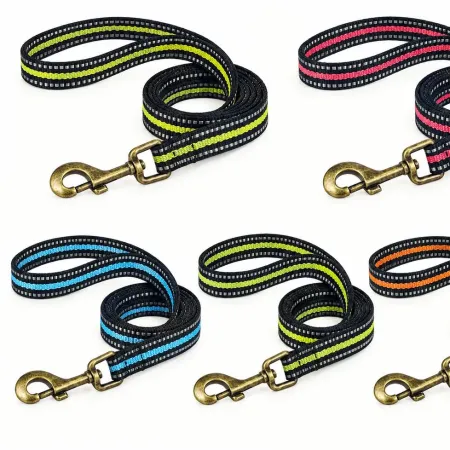
The sixth question is the one that most often produces a straight answer or none at all. A webbing figure is the clearest test case: narrow fabric that clears 2000N across the width can only be quoted by somebody who wove it and pulled the sample, and a supplier who bought the roll is quoting a certificate rather than a product. That distinction is not academic — it decides who is on the phone when a strap fails.
Cases and their trims sit alongside the custom specification bag range, the straps inside them come off the polyester webbing and nylon webbing lines, and a document set for a destination is prepared through OEM and ODM development.
What a Trading Supplier Is Good At
Range, not development
A trading supplier can offer twelve shells from six plants in one conversation, which is genuinely useful when a buyer is assembling a range quickly and does not need anything new. What they cannot do is answer why a dimension moved, because they did not set it. The mistake is to buy a development from a company organised for range, and then be surprised that the second sample is a different product rather than a corrected one.
Where a product is standard and the requirement is availability, a trader is often the faster route and there is no reason to avoid it. Where the requirement is a specification that has to hold across orders, the question of who owns the process stops being philosophical and becomes the whole decision.
A useful test of any supplier is what happens when a question has no easy answer. Ask something specific and slightly awkward — which roll the sample was cut from, or what the wheel clearance measures at full extension — and notice whether the reply is a number, a promise to check, or a paragraph that restates the question. Suppliers who answer with numbers have the file in front of them; the others have a template, and a template is what a second order will also receive.
FAQ: High-End Luggage Case Supplier
How do I check a supplier before ordering?
Ask what happens after the first shipment: how the approved sample is recorded, what may be substituted, which documents travel with the carton and who answers a technical question. A supplier with routines answers quickly; one without answers in generalities.
Should samples be free?
They often are on standard trim, and that is a reasonable sign of confidence rather than a right. What matters more is whether the sample comes from production settings or from a bench, because a bench sample proves a design and a production sample proves a process.
Why does a second order cost more effort than the first?
Because the first order used materials that were already on the shelf and the second may not. A shade has to be dyed again, a lining sourced again, a shell pulled from a tool that has been sitting. Records are what turn that work into a routine.
Can one supplier cover several markets?
Usually yes, and the question is not capability but routine: whether a split shipment is marked so that the right paperwork reaches the right carton. That detail is where multi-market orders fail, far more often than at the material level.
What is the biggest risk with a new supplier?
Quiet substitution. It is rarely dishonest — a roll ran out and a date had to be met — but it means the product changes without anyone deciding that it should. A written change rule removes most of the risk.
A high-end luggage case supplier is chosen for the second order, not the first. Ask how a sample is recorded, what may be substituted, which documents travel and who answers the awkward question. The answers describe a routine, and a routine is what a repeat shipment is made of.
Why Xinxiangrui for High-End Luggage Case Supplier
Narrow woven products from this site reach 50+ markets and supply 200+ active partners, so the routine behind a high-end luggage case supplier order is one that has already met several customs regimes: cartons marked to the destination, documents assembled before the container closes, and a lot number kept against the trim so a reorder can be matched rather than approximated. Tell us where the shipment is going and what the case must hold, and the answer will include the paperwork.