
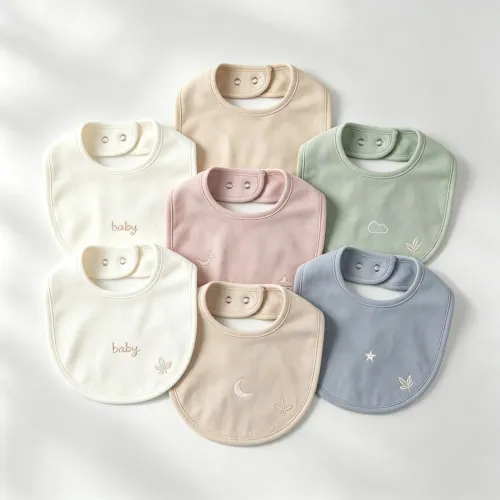
Features
Why Choose Xinxiangrui Webbing?
Source Factory
Direct wholesale production from our own plant in Dongguan, not a trading desk. Weaving, dyeing, printing, hardware assembly and packing all run in house, with no middleman margin in the price.
Full Customization
OEM and ODM work starts from your drawing: width, weave, colour, hardware and retail packaging. We match Pantone, send a physical sample before bulk, and keep every change on one work order.
Strict QA & ISO Standards
Every batch is checked for width, thickness, break strength and colour fastness before it ships, and the plant runs to ISO 9001 and ISO 14001. Test reports for your batch travel with the goods.
Proven Track Record
Fifteen years of narrow fabric since 2011, 200+ active partners and shipments to 50+ markets. Long-run programmes are what this factory is built for, which is why most customers reorder.

We Have The Best Solutions for Your Business
Xinxiangrui has made narrow fabric in Dongguan, China since 2011. Our 8,000 m² plant weaves, dyes, prints, cuts and sews under one roof, supplying 200+ active partners in 50+ markets. We produce polyester, nylon, cotton, elastic, reflective and bio-based webbing, ribbon, lanyards, pet leashes, bags and luggage components, from yarn and reflective tape to finished straps and handles.
Because every step stays in one plant, a widening range does not cost tolerance. Our laboratory tests to 2000N+ break strength, 50,000+ Martindale cycles and 1,000+ hours of UV exposure, and every batch carries its own figures rather than a catalogue sample. We work to OEKO-TEX, CPSIA, REACH, RoHS, ISO 9001, ISO 14001 and GRS. Send us your spec sheet and target quantity, and we will recommend the construction that fits.
Skin-Friendly Baby Drool Bibs: Absorbency Is Three Numbers
A single figure for absorbency is close to useless, because absorption has a speed and a limit as well as a quantity. The table below separates them.
| Figure | What it answers | How it is read | Where it misleads |
|---|---|---|---|
| Capacity | How much liquid the bib holds before it passes through | Millilitres absorbed per unit area before strike-through | A heavy bib holds more and takes longer to dry |
| Rate | How fast it takes a spill rather than letting it run | Seconds for a fixed volume to be taken up | A slow bib can pass a spill despite a high capacity |
| Dry time | How soon the bib is usable again | Time to a stated residual moisture | A bib that takes a day to dry gets used wet |
A number that does not belong here: a bib is not a load-bearing product, and the 2000N figure that describes a 25 mm webbing band has nothing to say about it. That figure belongs to the strap on the pram bag or the harness in the high chair. Mentioning it in a bib specification tells a buyer that the two are being confused, which is worse than leaving it out.
The Layer Stack and Where It Goes Wrong
A face layer that lets liquid in quickly
The layer against the chin has to accept liquid fast and hold it away from the skin, which means a knit or a brushed woven with a raised surface rather than a flat, dense cloth. A smooth face looks tidier and lets a spill sit on the surface until it runs to the edge, which is exactly the path a bib is supposed to interrupt.
A middle layer that holds, or a film that blocks
Two-layer bibs rely on a thick absorbent core; three-layer bibs add a film between the core and the back. The film stops strike-through completely, and it also stops breathability, which is a real trade on a product worn against skin for hours. A film that is bonded rather than laminated at the edges will lift at a wash, and a lifted film traps moisture against the back layer, which is worse than having no film at all.
A back layer that stays wet
The back is the layer against clothing and it decides whether the bib has done its job. It should be thin, quick to dry and smooth enough not to rub. A back layer chosen for softness alone often holds moisture and keeps a damp patch against a chest, which reads to a parent as a bib that does not work even when the front is dry.
The Closure Is a Skin Decision
A bib's closure sits at the back of a neck, where skin is thin and a baby cannot reach to adjust anything. A snap concentrates its force on two small points and can pinch if the fabric around it is thin; a hook and loop tab spreads the load but collects lint and can scratch if the hook side is exposed; a tie is adjustable and slow, which is a safety advantage and a daily inconvenience. The choice is a trade between speed and gentleness, and it should be made against the age of the child rather than against the complexity of the component.
Whatever the closure, the edges around it matter as much as the component. A binding that is tight at the neck will leave a mark after an hour, and a neck opening that is generous will let the bib rotate until the wet part is under the chin. Measuring the neck opening on the finished product, rather than on the pattern, is the only way to be sure of either.
What Fifty Washes Do
A bib is washed more often than almost any other textile product, and the change over fifty cycles is the real specification. Four things move: the fabric shrinks, the surface pills, the absorbency changes and the colour shifts.
Shrinkage is the most visible. A cotton face can lose several per cent in both directions, and a bib cut to a snug neck becomes tight before the print has faded. Pilling appears where the bib rubs against a shoulder or a car seat, and it changes the surface that touches skin. Absorbency usually improves slightly at first, as the fabric softens, and then declines as detergent residue and mineral deposits fill the spaces between fibres. Colour moves fastest on deep shades and on anything printed with a pigment ink that sits on the surface.
Testing at one wash proves nothing. The useful test is a retained sample washed twenty times and compared with an unwashed one, and a second sample taken to fifty if the product is sold on durability. Both should be judged on the same day, in the same light, by the same pair of eyes.
Six Lines a Bib Brief Should Carry
- The finished size and the neck opening — measured on the product, because a pattern dimension is not the dimension a baby wears.
- The layer stack — how many layers and what each one is for, since two bibs with the same outer fabric can behave nothing alike.
- The absorbency targets — capacity, rate and dry time, stated separately, because one figure hides the other two.
- The closure type and its position — snap, tab or tie, with the overlap and the neck opening drawn rather than described.
- The wash routine it must survive — temperature, cycle and whether a dryer is used, since the dryer is what turns a stable bib into a short one.
- The document set — which test report, which safety standard and which of them has to name the lot rather than the site.
Four Checks Before a Bulk Order
- Pour a spoonful of water on the face and time it. Then turn the bib over and look at the back. The two observations together tell you more than any single absorbency number.
- Put it on a doll or a wrist for an hour. Check the neck for a mark and the chin area for rotation. A bib that shifts is a bib that will be taken off.
- Wash one twenty times and measure it. Width, length and neck opening, before and after. Shrinkage is the complaint that arrives earliest.
- Rub the wet face on white cloth. Colour that transfers onto a collar is the second most common complaint and the easiest to test.
The baby products range covers this product beside the tapes and harnesses that go with it, and the face fabric is often a soft cotton webbing or knit from the same plant. Where a bib is part of a larger set, the cutting and sewing sit with the custom spec bags team, which is what allows a matching bag and bib to be produced in one run.
Two Mistakes That Reach a Parent
A film added to a bib that did not need one
A waterproof layer solves strike-through and creates a warm, non-breathing patch against the chest. For a bib used during teething, where the liquid arrives continuously and in small amounts, a breathable three-layer stack without a film usually performs better than a film-backed one. The film belongs on a bib used for meals, where a single large spill is the event being managed.
A print that stiffened the chin area
A large printed block cures into a film, and a film on the face layer stops the fabric absorbing where the print sits. The bib then works everywhere except the one place it is needed. Keeping print away from the chin zone, or choosing a dye route that enters the fibre rather than sitting on it, preserves the property the product is sold on.
Skin-friendly baby drool bibs are decided by three numbers, one closure and fifty washes. Specify the stack by purpose, the absorbency by three figures, and the wash routine by temperature. Everything else about the product is decoration, and decoration is the part that fails last.
Why Xinxiangrui for Skin-Friendly Baby Drool Bibs
A bib is a small product with a large test burden, and skin-friendly baby drool bibs made here are cut and sewn in the same Dongguan plant that weaves the face fabric, so a change of stack is a work order rather than a shipment. We have run narrow fabric since 2011 and wash samples to twenty and fifty cycles before a lot is approved, so the bib a parent uses is the bib that was tested. Tell us the age, the spill and the wash routine, and a matched sample comes back to you.
Featured Products
Collection about Xinxiangrui Webbing

User Reviews
What users say about Xinxiangrui Webbing
Frequently Asked Question
Do you have any question?
Four measurable things: how much liquid it takes up, how quickly it takes a spill rather than letting it run, how the closure sits against a neck, and how all of it changes after fifty washes. Softness alone is a claim; these four are a specification.
Because absorption has a speed and a limit as well as a quantity. A bib with high capacity and a slow rate lets a spill run to the edge before it is taken up. Capacity, rate and dry time are three separate numbers and all three belong in a brief.
Two layers rely on a thick absorbent core; three add a film between the core and the back, which stops strike-through and also stops breathability. The film belongs on a meal bib where a single large spill is the event, not on a teething bib where liquid arrives continuously in small amounts.
Each is a trade. A snap concentrates force on two points and can pinch through thin fabric; a hook and loop tab spreads the load and can scratch if the hook side is exposed; a tie is adjustable and slow. Choose against the age of the child rather than the complexity of the component.