Detachable Custom Lanyard: Three Joints, Three Different Jobs
A detachable custom lanyard is really two products sold as one: the strap, and the joint that lets it go. Buyers tend to say "detachable" when they mean one of three quite different things — a strap that splits at the neck, a strap that releases the badge, or a strap whose clip opens — and the three have different hardware, different release forces and different failure modes. Choosing the wrong one produces a lanyard that does something the wearer never wanted it to do at the worst possible moment.
This guide separates the three joints, explains why a detachable fitting is not a safety feature, sets out what each joint does to the fold and the cut length, and lists the six lines that make a detachable custom lanyard specification reproducible.
Detachable Custom Lanyard: Three Places It Can Let Go
The first question in any detachable brief is not which fitting looks best. It is where the separation should happen, because that decides what the wearer is holding when it does.
- At the neck — the strap splits into two halves behind the head, so the lanyard can be put on or taken off without lifting it over hair, a cap or glasses.
- At the badge — the holder leaves the strap, so a card can be handed across a counter or scanned at a reader without the lanyard following it.
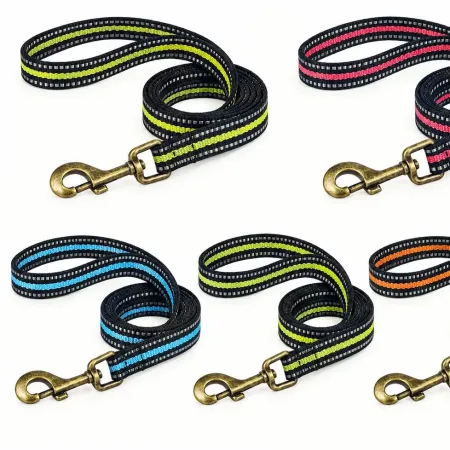
- At the fold — a swivel hook or a snap clip opens at the strap end, which is the arrangement that lets one strap serve several holders or several sites.
- At all three at once — possible, and usually a mistake, because each extra joint doubles the number of ways the assembly can be lost or mis-assembled.
Once the position is fixed, the fitting follows from it. The table sets the three working options against what each one is actually good at.
| Joint | Where it separates | How it opens | What to watch |
|---|---|---|---|
| Side-release buckle | At the neck | Two fingers on both tabs, with an audible click | Releases when a wearer leans against a shelf edge |
| Magnetic pair | At the neck | A steady pull, in any direction, with no button | Re-attaches reversed; picks up swarf and steel dust |
| Swivel snap hook | At the badge or the holder | A sprung gate pressed with a thumb | The gate catches knitwear and does not release under load |
| Slide release | At the neck | One tab pushed sideways, which is harder to do by accident | Less familiar to wearers; needs a demonstration |
Why Detachable Is Not a Safety Feature
This is the misunderstanding that causes the most trouble in a specification. A breakaway releases when a load pulls it, without the wearer doing anything. A detachable joint releases when the wearer decides to open it. They look similar on a sample board and they behave in opposite ways in an incident.
A snap hook is the clearest example. It is designed to hold, so a strap caught in a machine will pull the wearer rather than let go, and no amount of good intention changes that. Where a lanyard is worn near moving parts, the breakaway belongs in the strap itself, as a separate element, and the detachable joint is chosen for convenience only. A programme that needs both should specify both, in two places, and say in the brief which one is expected to operate first.
Two tests, not one
A detachable joint needs a release force figure and a cycle figure, and they answer different questions. The release force says how much pull opens it, which decides whether it opens by accident. The cycle figure says how many times it can be opened before the mechanism loosens, which decides whether it still holds in month eight. Ask for both on the assembled piece rather than on a bag of fittings, because the fold and the strap change the numbers.
The Joint Changes the Strap Around It
The fold has to match the bar
Every detachable fitting is held by a bar, and the webbing has to pass round that bar and be sewn back on itself. The fold depth is therefore set by the bar's width, not by preference: a 25 mm buckle needs a fold that clears 25 mm of hardware plus the thickness of the cloth, which is why a strap built for a 20 mm buckle will not accept a 25 mm one without being recut. A neck-splitting lanyard has four folds instead of two, so the cut length grows by twice the allowance at each end, and a specification that quotes only the finished circumference will be short by that amount.
The weight moves to the joint
Hardware is dense. A magnetic pair or a metal buckle at the back of the neck adds mass exactly where a lanyard is already least comfortable, and it adds it in a hard lump rather than spreading it through cloth. That is why a detachable neck joint usually needs a slightly wider strap than the same lanyard without one: the extra width spreads the load and stops the joint from turning over. At the badge end the effect is smaller, because the holder is already a rigid object and the joint simply becomes part of it.
The printing has to avoid the joint
A joint occupies real estate. The fold at each end sits under the hardware, the stitching line interrupts the surface, and a logo placed where the buckle lands will be hidden for the life of the product. Mark the hardware zones on the artwork before the proof rather than discovering the overlap afterwards, and remember that a neck-splitting design has a hardware zone at the centre back as well as at both ends.
Six Lines for a Detachable Brief
A detachable custom lanyard fails at the joint far more often than at the cloth, so the brief should spend its detail there.
- Where it separates — neck, badge or fold. One position, stated, with a reason.
- Release force — the pull that should open it, and the pull that should not. Both halves matter.
- Cycle life — how many openings a shift involves, multiplied by the service period, gives the number to test against.
- Bar width and fold — the hardware decides the fold, and the fold decides the cut length.
- Environment — steel dust and magnets do not mix, and neither does a snap hook with knitwear.
- Separate breakaway — if a safety release is required, it is its own line in the brief, not an assumption about the joint.
A 20 mm strap at a normal sett clears 2000N, so a detachable assembly almost never breaks in the cloth. What fails is the mechanism, which is why the joint deserves more of the specification than the webbing does. Fittings, holders and short wristlets are listed together in the custom lanyard range, and the short webbing wristlet with a lobster clasp shows how a joint and a strap are developed as one piece. Release and cycle figures are recorded per order in the in-house laboratory, and new fittings go through OEM and ODM development.
FAQ: Detachable Custom Lanyard
Is a detachable lanyard the same as a breakaway lanyard?
No, and the difference matters. A detachable joint opens when the wearer chooses to open it. A breakaway opens when a load pulls it, whether or not the wearer intended anything. A lanyard can have both, but they are two fittings in two places, and the brief should say so.
Which joint is best for a badge lanyard?
A swivel snap hook at the holder, because the badge is the part that needs to move — handed over, scanned, clipped to a pocket. At the neck end a side-release buckle is more comfortable for a full shift than a magnetic pair, which adds a hard lump exactly where the strap already presses.
Do magnetic joints weaken over time?
They lose strength with heat and with repeated impact more than with simple use, and the housing usually fails before the magnet does — a crack in the moulding reduces the holding force long before the magnet itself is spent. In a hot workshop or a laundry environment that matters more than the nominal pull figure on a data sheet.
Can the joint be printed with the logo too?
Sometimes, on a flat face of a moulded housing, but treat it as a separate element with its own artwork. A mark that spans the joint will be cut in half when the lanyard opens, and a mark placed under the hardware will never be seen. Design the strap and the joint as two surfaces.
Why does a detachable lanyard come up short?
Because the quote was written as a finished circumference and the factory cut to a flat length with fold allowances at each end. A neck-splitting design has four folds rather than two, so the gap doubles. State the finished circumference, the fold allowance per fold, and the number of folds, and the arithmetic closes.
A detachable custom lanyard is decided by one sentence in the brief: where it lets go, and why there rather than somewhere else. Fix that, match the fold to the bar, keep the breakaway separate if one is needed, and the joint stops being the weak point of an otherwise simple product.
Why Xinxiangrui for Detachable Custom Lanyard
Straps, clips, swivels, buckles, rings and holders sit in one catalogue rather than across suppliers, so a detachable custom lanyard is developed as a set and the joint is chosen against the strap instead of being adapted to it. Because the hardware bench sits beside the looms, a clip that does not suit the fold can be swapped before the sample is signed. Tell us your detachable custom lanyard spec and a matched construction comes back to you.