High-End Shock-Resistant Luggage Case: Deceleration, Not Force
A high-end shock-resistant luggage case is not a case built from a tougher material. It is a case that turns a hard stop into a slower one, so the contents decelerate over more milliseconds and arrive at the far side of the impact with less of the energy that started the fall. Two cases of identical shell thickness can differ by a factor of two in what reaches a laptop inside them, purely because of where the geometry puts the bend.
This guide explains what shock resistance is actually measured as, which three design decisions set the number, what a drop protocol has to state before it means anything, and where the claim quietly stops being true.
High-End Shock-Resistant Luggage Case: The Quantity Behind the Word
A shell does not absorb a drop; it spreads it over time and area. That spreading is what a laboratory records, and it is expressed in multiples of gravity at a point inside the case rather than in newtons applied to the outside.
- Peak deceleration — the highest g reading at the measuring point, which is what a fragile item inside actually experiences.
- Pulse duration — how long the event lasts, since a long low pulse and a short high spike do different damage to different contents.
- Transmission path — which corner, rib or fitting carried the load into the interior, and therefore which part of the contents was loaded.
- Recovery — whether the shell returns to shape, since a dented corner holds a stress concentration for every impact after it.
| Drop orientation | What it loads hardest | What it tends to reveal |
|---|---|---|
| Corner | The smallest area with the least give | Cracks that start at a fitting hole |
| Edge | The seam or frame joint | Opening of the closure under load |
| Flat face | The widest span of unsupported wall | Oil-canning and residual dent |
| Tumble | Hardware, wheels and trim | Loosening rather than fracture |
The packed weight sets the test, not the shell
The same case dropped empty and dropped full are two different products. Mass inside the shell becomes the load that the walls must hold back, so a case rated on an empty drop tells a buyer almost nothing. Every meaningful shock figure names the packed mass, the drop height, the orientation and the surface — four details, and a claim without them is a description of a test nobody can repeat.
Three Decisions That Set the Deceleration
Corner radius does more than wall thickness
A tight corner puts the whole impact into a few square centimetres, and the wall there has nowhere to bend. Opening the radius spreads the same energy over a longer arc, which lowers the peak and moves the bend away from the fittings. This is why two shells of equal gauge behave so differently: the one with the rounder corner has more material in the load path, and the load path itself is curved rather than folded.
Ribs are a routing decision
A rib does not make a wall stronger in the abstract; it decides where the wall will bend. Placed well, ribs lead an impact around the contents and into the frame. Placed badly, they lead it straight to the corner where the handle housing already removed material. The drawing that shows rib positions is a more useful document than a thickness figure, because thickness without routing only relocates the failure.
What holds the contents matters as much
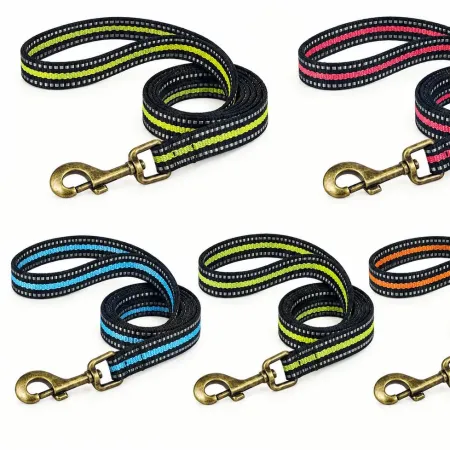
A well-built shell with loose contents still fails, because the contents arrive at the wall with their own momentum. Interior compression straps are the cheapest way to remove that momentum: they hold the load against the base so a drop is absorbed once rather than twice. The webbing used here is woven narrow fabric, and a standard construction clears 2000N across the width — far beyond what a compression strap sees, which is the point. The margin exists so the anchor and the buckle become the variables worth inspecting.
Six Lines a Drop Protocol Has to State
- Packed mass and load distribution — what was inside, where it sat, and whether it was restrained.
- Drop height and surface — a steel plate and a concrete floor are not the same test, and neither is a tiled airport floor.
- Orientation sequence — corner, edge and face in a stated order, because the first impact changes the shape the second one meets.
- Conditioning — temperature and humidity before the drop, since a shell at minus fifteen behaves differently from one at room temperature.
- Pass criteria — what counts as a failure: a crack, a dent over a stated depth, a closure that no longer seals, or contents that no longer function.
- Where the readings came from — instrumented, photographed, or judged by eye, which are three different levels of evidence.
The trim that lives inside a case is specified the same way, and it belongs in the same conversation as the shell. Polyester webbing is the usual answer for compression straps because it holds length under load, with nylon webbing chosen where a softer hand matters at the buckle. Break and abrasion figures for both come off the in-house laboratory bench, and the OEM and ODM programme covers the anchor pattern as well as the fabric.
A protocol is worth writing even when nobody asks for it, because it changes the design conversation. Once the drop height and the packed mass are named, the corner radius stops being a styling preference and becomes a number someone has to defend. That is a healthier argument to have at the drawing stage than after a container of returns.
Where the Claim Stops Being True
Cold makes a different material
A hold in January, or an unheated cargo deck, takes a shell well below the temperature at which it was tested. Polymers lose impact strength as they approach their transition, and the loss is not linear: a shell that deflects happily at twenty degrees can crack at minus twenty under the same load. A shock claim that does not state a conditioning temperature describes a laboratory, not a journey.
Repeated small impacts are the real load case
A case in service is not dropped from a metre; it is set down hard a thousand times, levered over kerbs and pushed through a carousel. Each of those leaves a small mark and a small amount of stored stress, and the accumulation is what a laboratory tumble test tries to compress into an afternoon. Buyers who care about the third year ask for tumble results as well as drop results, because the two answer different questions about the same product.
FAQ: High-End Shock-Resistant Luggage Case
Is a hard shell more shock resistant than a soft one?
Not automatically. A hard shell spreads a point impact better and protects against puncture; a soft case deforms further and can slow a fall over a longer time. Which wins depends on the contents and on whether the risk is a sharp knock or a heavy fall.
What drop height should a case be tested at?
It follows the handling the case will meet, and most programmes settle on a figure between the height of a carousel ledge and the height of a loading dock step. The exact number matters less than stating it, along with the packed mass and the surface.
Why do cracks start around the handle?
Because the housing removes material exactly where the shell needs it, and the fixing points act as stress risers. A reinforcement plate or a moulded boss around the housing does more for durability than a thicker wall elsewhere.
Does an interior strap really change the outcome?
It changes how many times the contents are hit. Loose contents strike the wall and then the other wall; restrained contents are struck once. The strap itself is rarely the weak point, since a standard webbing construction clears 2000N — the anchor pattern is what needs the attention.
Can shock resistance be improved on an existing shell?
Partly. Adding internal restraint, changing the foam or the corner protection helps, and so does a different fitting layout. Changing the radius or the rib path needs a new mould, which is a programme decision rather than a modification.
A high-end shock-resistant luggage case earns the description when four things are named together: the packed mass, the drop height and surface, the conditioning temperature, and what counts as a failure. Add the trim specification — anchor pattern, webbing construction, buckle — and the case becomes something a buyer can compare with another, rather than a word printed on a hangtag.
Why Xinxiangrui for High-End Shock-Resistant Luggage Case
Shock is measured on a rig here rather than argued about over email, so the figures behind a high-end shock-resistant luggage case leave the building as readings: corner drop after cold conditioning, deflection across a loaded face, and the pull at which an interior anchor begins to move. The webbing in that last measurement is woven on site to clear 2000N, which is why the anchor, not the fabric, is what the report discusses. Send us the drop height and the packed mass, and the bench sheet arrives before the case does.