Custom High-End Luggage Case: What Can Change, in What Order
A custom high-end luggage case starts with one question that decides the schedule and most of the risk: does the project need a new shell mould, or can it be built on a tool that already exists? Everything else — colour, texture, handle, wheels, lining, trim, logo — is a variation on a shell. Buyers who understand that order get a sample in a fraction of the time taken by buyers who treat every element as equally custom, because only one of those elements sets the pace.
This guide sorts the changes a buyer usually wants into four tiers, sets out what the brief has to contain before sampling starts, walks through the sequence in the order it actually happens, and names the three delays that cost a custom project a month.
Custom High-End Luggage Case: Four Tiers of Change
Sorting a wish list into these four tiers is the single most useful thing a buyer can do before the first conversation, because the tiers are not equally fast and they are not equally reversible.
- Graphics — a badge, a print, an emboss or a woven label; nothing about the case changes except what is fixed to it, which makes this the fastest tier and the easiest to revise.
- Colour and texture — shell film shade, gloss level, lining colour, zip tape, webbing and wheel colour, all of which can move on an existing shell but must be approved together.
- Fittings — wheels, trolley handle, latches, lock, interior layout and pockets; these change what the case does without changing the mould, and they are where most of the product character sits.
- Geometry — external size, capacity, frame type and corner radius; this is the tooling tier, and it resets everything above it.
| Tier | What it changes | What it needs before approval |
|---|---|---|
| Graphics | Badge, print, emboss, label | Artwork at final size with placement |
| Colour and texture | Shade, gloss, lining, trim | A physical standard, not a screen image |
| Fittings | Wheels, handle, latches, interior | A load case and a packing list |
| Geometry | Size, capacity, frame, radius | A mould decision, taken once |
The mould is the fixed point
Once a shell mould exists, everything in the first three tiers can be revised cheaply and repeatedly; before it exists, none of them can be finalised, because a change of corner radius or depth moves every fitting position on the case. This is why a brief that lists forty changes but never names the shell is not a brief yet. It is a mood board, and it will be re-done.
What the Brief Has to Carry
A case to hold, not a photograph
A photograph shows shade and shape; it cannot show how a handle sits in the palm or how much a shell flexes when a knee is pressed into it. Send the case the new one should resemble, even a worn one. Measuring a physical reference takes an hour and prevents the most common disappointment in custom work, which is a case that matches its picture and feels wrong in the hand.
The packing list, not the litre figure
A litre figure describes volume in the abstract; a packing list describes what has to fit. Two cases of the same stated volume can differ by several centimetres of usable depth once the trolley tubes and the hinge box are subtracted, and a buyer who specifies litres will approve a case that swallows the volume and rejects the shoes. List the items, their largest dimensions and how many of each.
The market and its gate
Cabin limits are not universal, and a case designed to the largest allowance will be gate-checked by the strictest carrier it meets. Where the case is sold into more than one market, name them at the brief stage, because the external envelope is the one tier that cannot be adjusted after tooling. A centimetre decided late is a mould decided twice.
The Sequence, in the Order It Happens
- Reference review — the supplied case is measured, weighed and photographed, and the gaps against the brief are listed before anything is designed.
- Shell decision — existing tool with modifications, or new tool; this is where the project either becomes a variation or becomes a development.
- Colour and texture approval — approved on film and on a formed panel, in daylight and under shop light, because a shade that matches on a flat chip can read differently once the shell is curved.
- Fitting trial — wheels, handle and latches mounted on a pilot shell to check clearances before the trim positions are fixed.
- Trim build — webbing, zip tape and lining cut at production width from the roll that will be used, so the sample and the bulk share a lot.
- Loaded pilot — the case packed with the real list on the real trolley, wheeled across a rough surface, because that is the only test that reports on the whole object at once.
Inside that sequence sits one figure that belongs to the trim rather than to the case. Interior compression straps, exterior webbing belts and handle wraps are woven narrow fabric, and a standard construction clears 2000N across the width; the shell beside them is judged on flex and impact. Keeping the two kinds of number apart is what stops a specification from asking a shell to meet a tensile figure it was never designed for.
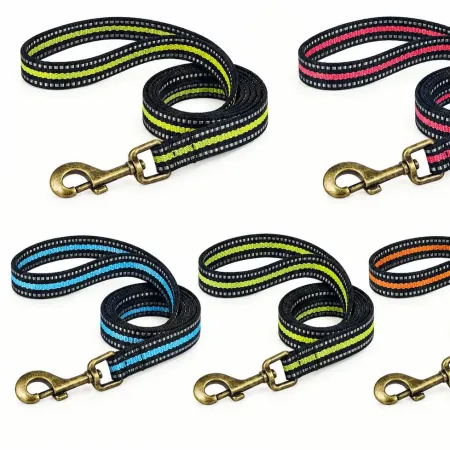
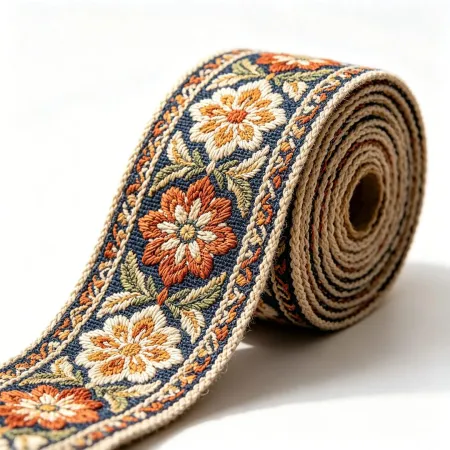
Custom cases run alongside the custom specification bag range, the straps inside them are woven on the polyester webbing and nylon webbing lines, and a change of trim or shade is handled through OEM and ODM development.
Where a Custom Project Loses a Month
The artwork arrives last
The logo is usually treated as the smallest item on the list, so it is approved last, after the shell, the shade and the fittings. But badge size decides where a moulding can sit without crossing a curvature, and a print decides which surface finish will take it. Late artwork does not delay the case by a day; it delays it by a re-sample, because the position has to be proved on a physical panel.
Approving a shade from a screen is the second version of the same delay. A colour approved on a monitor is a colour nobody has seen on a curved, glossy surface under a shop light, and the first physical strike-off is where the argument starts. Ask for the sample to be shown in the light the product will be sold under, and approve that.
FAQ: Custom High-End Luggage Case
Can I customise a case without a new mould?
Yes, and it is the route most projects should take first. Colour, texture, lining, fittings, interior layout and graphics can all be changed on an existing tool. A new mould is justified when the external envelope or the frame type has to move, not when the case needs to look different.
What is the smallest change that still reads as custom?
A single fitting change plus a colour matched to a physical standard, carried through the lining and the trim. A case reads as its own product when the hardware, the shade and the interior agree, and that can be done on an existing shell.
Do I need to send a physical sample case?
It is the fastest way to be understood. A photograph cannot show wall flex, handle balance or how the shell sounds when tapped, and those are the three things a development brief usually gets wrong when it works from images alone.
Can the interior be specified separately from the shell?
In practice the interior follows the shell, because every pocket and strap anchor has to land on a fixing point that the shell provides. Decide the interior layout at the same time as the fittings, or the anchor positions will be guessed and proved twice.
How does a set of three cases stay consistent?
By cutting the trim for all three from one lot and approving the shade once, on the largest shell, because the same film reads lighter on a bigger surface. A set that was developed case by case will show three shades under a shop light.
A custom high-end luggage case is a sequence, not a menu. Settle the shell, prove the shade on a curved panel, mount the fittings on a pilot, cut the trim from the production lot, then pack the case with the list it was designed for. Do it in that order and the fourth sample is a production case rather than a fourth sample.
Why Xinxiangrui for Custom High-End Luggage Case
A custom brief is answered with a sample rather than a document, so a custom high-end luggage case starts on the bench: trim positions set at production width, webbing cut from the roll that will actually be used, and colour matched against a physical standard in daylight and under shop light. Free samples are part of the routine here, and they come off production settings rather than a desk. Send us the case you want it to resemble and we will come back with a matched sample.