How to Run a Baby-Friendly Soft Webbing Supplier Approval That Holds
Most baby-friendly soft webbing supplier approvals are completed in the week before a launch and never revisited. The sample passes, the certificates look right, the first order ships — and then a shade drifts, a lead time slips, and the brand discovers that nothing in the approval process ever defined what "acceptable" meant after month three.
This guide sets out a four-stage approval that produces evidence rather than impressions, a scorecard simple enough to actually be used, the reason single sourcing fails quietly, and how to keep an approval alive once production is running.
Four Stages of a Baby-Friendly Soft Webbing Supplier Approval
The sequence matters as much as the checks. Each stage produces a document the next stage depends on, so skipping one shows up as an argument later.
- Capability screen — before any sampling, establish which processes sit inside the supplier's own building. Weaving, dyeing, printing, assembly and testing are five different answers, and the pattern tells you what kind of supplier you are dealing with.
- Sample against a written spec — not a sample against a photograph. The specification must state width with a tolerance, thickness with a band, elongation at working load, edge type and the adjuster the strap must pass through.
- Document and lot review — the certificate annex, the dye lot record and a test report tied to a batch number. All three should describe the same goods; when they do not, the file is decorative.
- First production verification — the step almost everyone omits. Check the first commercial batch against the approved sample using the same measurements, then write down what you found. That record becomes the baseline for every future complaint.
Each stage should hand over something you can file. The table below is the minimum document set, and what a pass actually looks like.
| Stage | Document produced | What a pass looks like |
|---|---|---|
| Capability | Process map with the site address for each step | Four of five processes inside one address, and the fifth explained |
| Sampling | Signed sample and a measurement sheet for it | Every figure inside the stated tolerance, measured the same way twice |
| Documents | Certificate annex, dye lot record, batch test report | The yarn, the dye-house and the article appear in all three |
| First production | Batch against approved sample comparison | Differences recorded with a number, not a judgement |
| Ongoing | A quarterly review of rejects, claims and lead time | Trends discussed before they become a re-sourcing decision |
A Scorecard Simple Enough to Use
Long scorecards get filled in once and abandoned. Four criteria, each scored out of five, is enough to compare suppliers — and enough to notice when one of them is drifting.
- Specification conformance — how often a delivered batch measures inside the band you agreed. This is the only criterion that matters to a production line, and it is measurable from your own incoming records.
- Document reliability — whether the paperwork arrives complete, current and matching the goods. A supplier that sends a certificate for last year's yarn is telling you something about next year's order.
- Response to a problem — speed and substance. Compare how long it takes to get a root cause rather than an apology, and whether the fix is a process change or a credit note.
- Commercial stability — consistency of the quoted basis, notice before a change, and whether the same person answers the same question twice. Instability here tends to precede quality problems rather than follow them.
Why Single Sourcing Fails Quietly
Single sourcing is not a mistake. Buying every infant strap from one supplier is often the right call, because one weave programme and one chemistry file is simpler to control. The mistake is single sourcing without knowing what happens on the day that supplier cannot ship.
The qualification cost is paid twice if you start late
A second supplier cannot be qualified in a fortnight, because sampling, dye matching and documentation all have lead time. Brands that keep a dormant second source — colour-matched, sampled once, never ordered from — spend very little to hold an option, and brands that do not end up accepting whatever the only supplier can offer during a disruption.
Dual sourcing has its own trap
Splitting one strap across two mills looks like risk management and often becomes a colour problem. Two dye-houses will not produce an identical shade, and a customer who buys two of the same product expects them to match. If you dual source, dual source by position or by programme rather than by splitting the same article.
The quiet failure is a slow drift, not a stop
Suppliers rarely fail suddenly. Thickness moves a tenth of a millimetre, a shade shifts half a step, a lead time stretches by a week — each one acceptable in isolation, and together a different product. This is why the ongoing stage of the approval matters more than the initial one: it is the only part that notices drift while it is still cheap to correct.
Keep one approved sample sealed and dated
A signed sample in a sealed bag with a date on it settles most disagreements in ten minutes, because both sides are measuring the same object. Keep a second piece in a drawer away from light, and replace it only when a specification is formally revised — not when a new batch looks close enough.
Keeping the Approval Alive
An approval is a document that expires quietly. Four habits stop that from happening without adding bureaucracy.
- Measure every incoming batch, once — width, thickness and a shade check against the retained sample. Three numbers per delivery, recorded in one spreadsheet, is enough to see a trend before it becomes a recall.
- Ask for the certificate renewal date — certificates expire, and a file that was complete at approval can be out of date eighteen months later. Put the renewal date in the calendar next to the review, not in a folder.
- Re-sample on a schedule, not on a complaint — one fresh sample a year against the retained standard catches drift that incoming measurement misses, especially in hand feel and edge finish.
- Walk the floor again if a process changes — a new dye line, a new loom or a moved assembly area invalidates the process map the approval was built on. Ask to be told, and ask to see.
What Xinxiangrui Provides During an Approval
The evidence a buying team normally asks for, produced without a negotiation.
- A process map with one address — weaving, continuous high-temperature dyeing, dye-sublimation printing, hardware assembly and packing all inside the 8,000+ m² Dongguan plant, so the map has no blanks in it.
- Batch-level data rather than a brochure — tensile pull to 2000N+ break strength on carrier grades, Martindale abrasion past 50,000 cycles, UV ageing and colourfastness, reported against the roll you receive.
- A document set with certificate numbers — OEKO-TEX, CPSIA, REACH, RoHS, ISO 9001:2015 certified processes, ISO 14001 and GRS recycled PET, with the annex naming the yarn and dye-house.
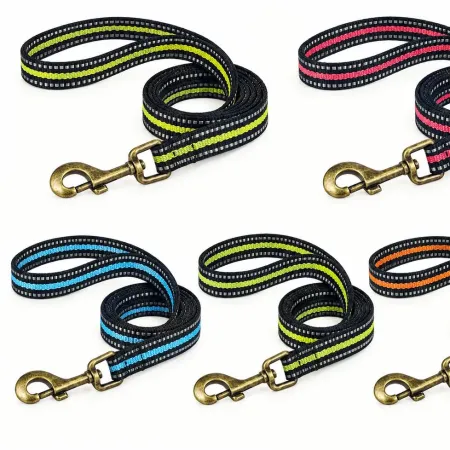
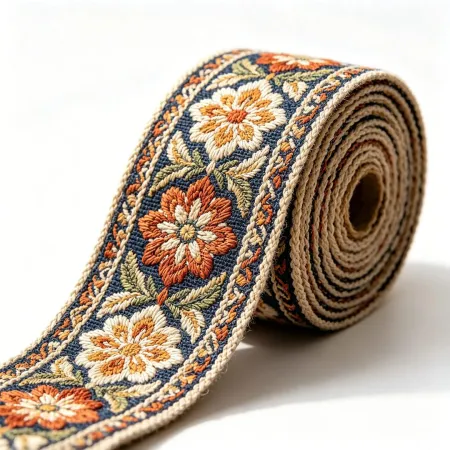
Current infant builds sit in the baby products range, with the printed detachable strap and organic cotton drool bibs showing two ends of the fibre range. The cotton webbing range covers skin-contact builds, and OEM and ODM development sets out how a new programme is handled.
FAQ: Baby-Friendly Soft Webbing Supplier Approval
How long should an approval take?
The screening and sampling stages can overlap, and documentation can be gathered in parallel, so the calendar is driven mostly by dye matching and sample transit. The stage worth protecting is the first production verification — compressing that one is how brands end up approving a sample and shipping a different article.
What single document is most often missing?
The measurement sheet for the approved sample. Brands approve a physical piece without recording the numbers behind it, then argue six months later about whether a batch is different. A one-page record of width, thickness, weight and shade turns that conversation into a comparison.
Should the same supplier make the webbing and the finished strap?
If hardware assembly is available on the same site, yes — because the adjuster can then be trial-fitted to the production roll and the pull force measured on the actual material. Where assembly is separate, the interface between webbing and buckle becomes a shared responsibility that nobody owns.
How do I keep a dormant second source valid?
Sample once against the same written spec, keep the retained piece, record the numbers and refresh the certificate copies annually. No orders are needed to keep the qualification meaningful, but a second source that has never produced your article is an option on paper only.
What signal should trigger a re-approval?
Three: a change of dye-house or yarn supplier, a new loom or finishing line, and two consecutive batches outside tolerance. The first two are process changes that invalidate existing data; the third is drift that has already reached your goods.
An approval is not a judgement made once, it is a record that gets tested every quarter. The brands that avoid surprises are not the ones with the longest questionnaires — they are the ones that wrote down what they measured, kept the sample, and looked again twelve months later. That is what a durable baby-friendly soft webbing supplier approval actually consists of.
Why Xinxiangrui for Baby-Friendly Soft Webbing
The range behind the approval is broad enough that a strap rarely needs a new development: three product lines, 17 categories and 65 individual product pages, built over 15 years for 50+ markets and 200+ active partners. Most infant straps start from a base cloth already in production, which shortens sampling instead of repeating it. Give us the application and the load it must carry, and the construction follows.