1 Inch Nylon Webbing: Which Standard You Are Buying
A 1 inch nylon webbing band is the most specified narrow fabric in the world, and that is exactly why buying it is harder than it looks. Every supplier quotes 25 mm, and the bands behind those quotations differ in thickness by half a millimetre, in pick count by a fifth, in warp tenacity and in whether the weave is flat or has a twill line. None of them is wrong. They are different answers to a question nobody wrote down, and the sample card is where that question gets written.
This guide covers the three choices hidden inside the word standard, how to build a sample card that produces a decision, the sequence from bench sample to sewn assembly, and what a skipped sampling round actually costs.
1 Inch Nylon Webbing: The Word Standard Hides Three Choices
Three levers set everything a buyer will notice, and a quotation rarely states any of them. That is not concealment; it is that the supplier has a default and assumes the buyer shares it.
- Thickness — the same 25 mm face can be woven at about 1.4 mm or at about 2.2 mm, and that difference sets the hand, the needle behaviour and the strength.
- Pick density — more picks per centimetre makes a firmer, denser band that resists abrasion and resists folding, which is good on a rail and bad in a buckle.
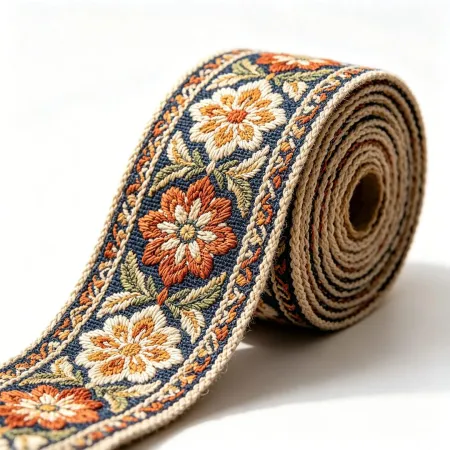
- Weave style — a flat weave has the yarns crossing squarely; a twill runs a diagonal line that puts more fibre on the face and changes how the band wears.
- Yarn tenacity — two bands of identical geometry can differ by a fifth in breaking load purely on the yarn lot, and that is invisible in a photo.
| Variant | Hand | Where it wins |
|---|---|---|
| Light, ~1.4 mm | Soft, folds easily | Bag trim, apparel, anything threaded repeatedly |
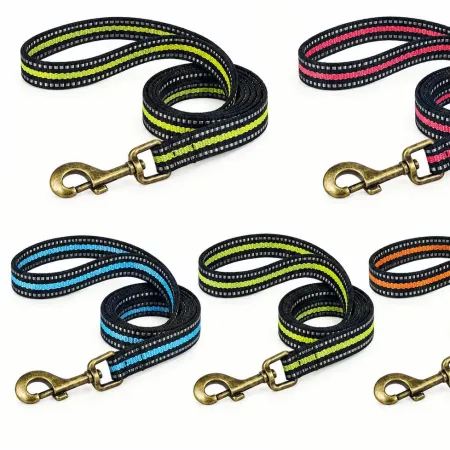
| Standard, ~1.8 mm | Balanced, holds a crease | Leashes, handles, belts, general strap work |
| Heavy, ~2.2 mm | Firm, resists folding | Tie-down, harness, load that rubs an edge |
| Twill, ~1.9 mm | Smooth face, visible diagonal | High-wear faces, printed or branded bands |
Sampling answers a written question, not an open one
A sample sent without a brief is a gift, and gifts get admired and filed. A sample card that arrives with the hardware, the seam allowance and the load it must hold is a proposal, and a proposal gets either accepted or corrected. The difference in outcome is large and the difference in effort is one page of writing, which is why the brief comes before the courier.
How to Build a Card That Decides Something
One lever per candidate
A card with three candidates that differ in thickness, density and weave at once produces a preference and no reason for it. A card where candidate B is candidate A with a denser pick count produces a sentence you can write into the specification: the buyer wanted it firmer, or did not. That sentence is the entire return on the sampling round, and it is only available if the variables were separated before the loom ran.
Finish each candidate as the part will be used
A 25 mm band judged as loose tape will be judged on its face and its stiffness. The same band folded, sewn and fitted with its buckle is judged on how it threads, how the fold sits and whether the seam puckers. The second judgement is the one that predicts the customer complaint, and it costs a bar tack and a buckle rather than a second sampling round. Ask for the candidates as finished loops and fit them to the real hardware.
Approve the shade on the band, under the light it sells in
A 25 mm band has enough face to read as a colour rather than a line, which makes it easier to approve than a narrow trim and easier to get wrong than a swatch. Dyed nylon shifts under warm retail light and under daylight in different directions, and a band matched on a bench can read one shade off in a shop. Approve on a length, in the light the product will be seen in, and keep the approved piece rather than the photograph of it.
Six Lines to Send With the Enquiry
- The hardware — buckle, slider or ring, with the slot width, because that governs the usable face more than the nominal does.
- The load and how it arrives — a steady pull, a drop, or a rub over an edge, since each one pushes the construction in a different direction.
- The seam plan — fold, box-and-cross, bar tack, or no seam at all if the band is only threaded.
- The shade reference — a physical standard rather than a screen value, and the light it will be judged under.
- The cut length and tolerance — in millimetres, with a plus and a minus, and whether the piece is cut before or after dyeing.
- The environment — sun, salt, chlorine or a wash cycle, because each one has a different answer and the answer is cheaper to give before the card is built.
The sixth line is the one buyers leave out and later regret. A band that will sit in sun on a boat, or in chlorinated water twice a week, or through a hot wash, is a different specification from the same band indoors, and the difference is not something a supplier can infer from the product photo. Saying it early costs a sentence. Discovering it after the first bulk order costs a dye lot.
The card that comes back should also carry numbers, not only samples. A 1 inch nylon webbing candidate is worth having with its breaking load, its thickness and its width tolerance on the same sheet, because those three figures are what a test report will be checked against later. The 25 mm construction clears 2000N and the figure belongs on the card beside the sample it describes. Where the same programme also runs a polyester webbing line for wet service, or a lighter band for trim, custom development can put all of them on one card and save a courier.
What a Skipped Round Costs
Three rounds instead of one
A buyer who orders against a photograph and a nominal width will usually reject the first delivery on hand feel, accept the second on a construction that was guessed at, and correct the third once the hardware is in hand. Three rounds of freight and three sets of documents for a part that could have been settled on a card. The saving is not the sample itself; it is the two rounds that never happen.
A specification written after the fact
When a band is approved by eye, the approved thing is a piece of tape in a drawer rather than a set of numbers. Two years later a reorder arrives, the piece is gone, and the only description anyone has is the word standard. That is how a product quietly changes twice without anyone deciding to change it. A card with figures attached is the cheapest insurance against that, and it is also what makes a second supplier comparable.
FAQ: 1 Inch Nylon Webbing
Is 1 inch the same as 25 mm?
It is 25.4 mm exactly, and most hardware is nominal 25 mm. State both, and say which one the tolerance applies to, or the band and the buckle will disagree.
How many samples should I ask for?
Three, differing in one lever each, finished as the part will be used. More than three produces confusion, and fewer produces a verdict with no reasoning behind it.
Does a thicker band always hold more?
Usually, but thickness also stiffens the band and makes it harder to fold and thread. Past a point the extra thickness buys strength the application cannot use and costs hand feel it can.
Can I approve a shade from a photo?
No. Screens, cameras and lighting all shift a dyed nylon, and the shift is larger than the tolerance on most briefs. Approve a physical length under the light the product will be seen in.
What if the sample is right and the bulk is not?
Then the sample was not a specification. Keep the figures that came with it, agree which of them are pass or fail, and the comparison between sample and bulk becomes a measurement rather than an argument.
A 1 inch nylon webbing order is only as good as the question behind it. Write down the hardware, the load, the seam and the environment, ask for three candidates that differ in one lever each, and keep the numbers that come back with them. The word standard then stops being a risk and starts being a specification.
Why Xinxiangrui for 1 Inch Nylon Webbing
A one-inch band is the most copied specification in the category, so the only useful question is which standard a supplier means, and that is answered by a card rather than a photograph. Sampling runs off production settings rather than a bench, in the shade you nominate, with each candidate differing in one lever so the choice becomes a decision. Send us the hardware and the load it has to hold, and three 1 inch nylon webbing candidates come back ready to compare.