25mm Cotton Webbing: How to Read the Test Report Before You Trust It
25mm cotton webbing is a metric standard, and metric standards invite a particular kind of confidence: the number is round, the width is familiar, and a report that says 25 mm and 1,850N looks settled. The trouble is that both figures move depending on how they were measured, and a report that does not state its method is a report that cannot be reproduced.
This guide is about reading rather than ordering. It covers what a width figure means at this size, why the strip and grab methods give different tensile numbers, which five results are worth paying for, and the three habits that make a laboratory report look stronger than the product it describes.
What a Width Figure Actually Says
At 25 mm a woven cotton strip is soft enough that the measurement itself becomes a variable. Three conditions change the reading by more than the tolerance the buyer thought they were getting.
- Pressure on the calliper — a spring calliper compresses a soft weave more than a light contact instrument. The same roll can read 24.8 mm or 25.4 mm depending on who is holding the tool.
- Relaxation after dyeing — a dyed strip continues to move for a short period after it leaves the line. Measuring off the beam and measuring after a day of rest give different answers.
- Where along the roll — selvedge tension varies from the start of a beam to the end. A single measurement is a spot check, not a width.
A defensible report states the instrument, the pressure, the number of readings and where they were taken. A report that gives one figure and no method is telling you what the mill hopes, not what the loom did.
| Report line | Weak version | Version you can act on |
|---|---|---|
| Width | "25 mm" | Mean of ten readings, instrument and pressure named, tolerance band stated |
| Tensile | "1,850N" | Method, gauge length, pull rate, number of specimens and the direction of test |
| Abrasion | "Pass" | Cycles to a defined end point, with the end point described |
| Colour fastness | "4–5" | Which fastness — rub, wash, light — and the grey scale used to judge it |
| Shrinkage | "2%" | The wash cycle, the temperature and whether length or width or both |
Strip Method and Grab Method Are Not Interchangeable
A 25 mm strip is narrow enough that the jaws of a tensile machine grip nearly the whole width, which is why the strip method suits it and why the grab method gives a different and usually higher number. Both are legitimate; mixing them across a supply chain is not.
- Strip method — the full width is clamped, the whole cross-section carries the load, and the result is the strength of the strip as sold. This is the figure to quote in a specification.
- Grab method — a central portion is gripped and the edges are left free. The result describes how the cloth behaves around a concentrated grip, which is useful for a rivet or a bar-tack and misleading as a headline strength.
- Gauge length — a short gauge flatters a woven strip because less yarn extends before failure. Two hundred millimetres is a common convention; anything shorter should be declared.
- Jaw slip — a soft cotton strip can slip in smooth jaws, and a slip reads as a lower break. Serrated jaws or a lined grip reduce it, and the report should say which was used.
When two suppliers quote 25 mm cotton at figures that differ by thirty per cent, the first question is not who is stronger. It is whether the two numbers came off the same method, the same gauge and the same jaw type. Most of the time they did not.
Five Results Worth Paying For on 25mm Cotton Webbing
A full battery of tests is not necessary. Five results cover almost every failure mode this product has, and each one has a clear decision attached to it.
- Tensile to break, strip method — the headline. Constructions in this width reach 2000N and beyond; the useful part is knowing the figure for your roll rather than for a stock sample.
- Elongation at a working load — more informative than break strength for a strap that will be pulled daily. A strip that stretches five per cent at half its break load will feel soft and grow over a season.
- Martindale abrasion — cycles to a defined end point, commonly quoted past 50,000 for a durable construction. State what the end point was: a hole, a thread break or a colour change.
- Colour fastness to rubbing and washing — the two that generate returns. A deep shade on cotton moves; a pale one usually does not.
- Dimensional change after washing — percentage in length and in width, with the cycle named. This is the number that decides whether an adjustable strap still adjusts after a customer washes the bag.
Ask for the raw numbers, not the summary
A single figure is easy to produce and impossible to check. Ask for the individual specimen results — five readings for tensile, five for abrasion — and look at the spread. A tight spread says the process is controlled; a wide one says the sample was lucky. The mean is the least interesting number on the page.
Three Habits That Make a Report Look Stronger Than the Product
Testing the yarn and reporting the strip
A yarn tensile is a mill figure and says nothing about the finished width. When a report quotes a yarn strength in the same line as a strap, it is borrowing credibility. Ask for the specimen photograph or the specimen dimensions on the report; a strip result has a width and a gauge length attached.
Quoting the best of five
A report that says "up to 2,100N" is quoting a maximum. A report that says "mean 1,780N, minimum 1,690N" is describing a process. The second is what a buyer needs, because the container will not contain only the best specimen.
Testing a conditioned sample and shipping an unconditioned one
Cotton takes up moisture from the air, and its strength and elongation both change with regain. A sample conditioned in a standard atmosphere and a roll that sat in a humid container are not the same material. This is not dishonesty; it is a gap between the laboratory and the loading dock, and the way to close it is to test a sample taken from the packed goods.
Four Questions to Ask About Any Report
- Which specimen — a stock sample, a lab dip or a piece cut from the production roll.
- Which method — strip or grab, gauge length, pull rate, jaw type.
- Which direction — warp or weft, and for a strap that is pulled lengthways the warp figure is the only relevant one.
- Which date — a report from three years ago describes a yarn lot that no longer exists.
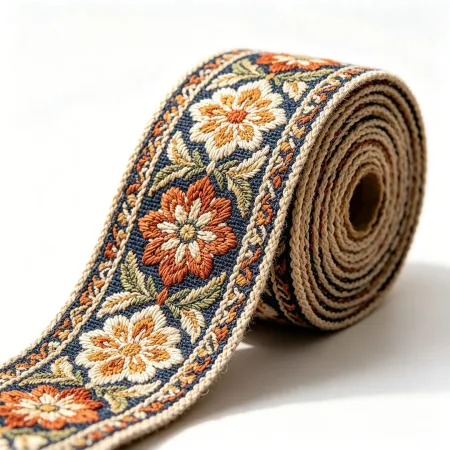
A 25 mm strip is narrow enough that a single number can hide a wide spread of behaviour, so the report is the product's argument in written form. The plain woven cotton webbing page shows the base construction, the cotton webbing range sets it beside the neighbouring widths, and the OEM and ODM process covers sampling and colour approval.
FAQ: 25mm Cotton Webbing
Is 25 mm the same as one inch?
No. One inch is 25.4 mm, and the difference matters when hardware has a tight slot. If the product was designed around an imperial buckle, order the imperial figure and say so; if it was designed in metric, 25 mm with a stated tolerance is the correct order.
Why do two labs give different tensile results?
Different method, gauge length, pull rate or jaw type, or a sample conditioned differently. None of these is a defect; they are reasons a report must state its conditions. Compare figures only when the methods match.
What thickness should 25 mm cotton webbing be?
Commonly 1.2 to 1.8 mm, depending on yarn count and sett. Thickness is what hardware feels, so specify a band and name the instrument used to check it rather than accepting a nominal figure.
Does abrasion testing predict a strap's life?
It ranks constructions reliably and predicts calendar life poorly. A Martindale figure tells you which of two strips wears first under the same motion; it does not tell you how many months a specific user gets, because the motion in use is never as uniform as the machine's.
Can I get a report for my own production lot?
That is the only kind worth having. A report tied to a lot number, dated, with the specimen described, is a record of your goods. A generic certificate describes a mill's capability, which is a different and much weaker claim.
A test report is a set of conditions before it is a set of numbers. Method, specimen, direction and date turn a figure into evidence; without them, 25mm cotton webbing arrives with a number attached and no way to know what it describes.
Why Xinxiangrui for 25mm Cotton Webbing
Load, abrasion and colour results for 25mm cotton webbing are produced in an in-house laboratory against the roll that ships, with the method, gauge length and specimen dimensions named on the page — so the figure describes your goods rather than a catalogue sample. Width readings are taken at several points along the roll under a stated pressure. Share your webbing details with us and we will come back with a matched sample.