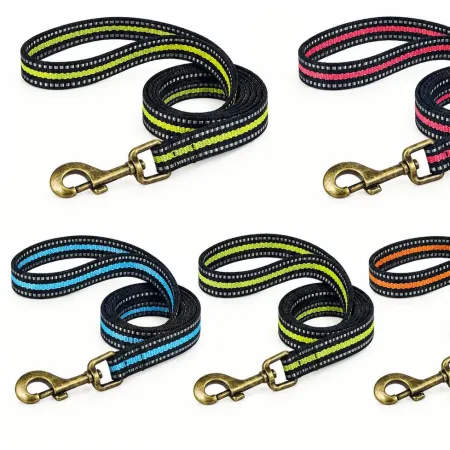
Pet Reflective Webbing Supplier: The Folder Behind the Goods
A supplier is bought for goods and audited on a folder, and the folder is usually thinner than the goods deserve. Pet reflective webbing supplier is a role rather than a product: the goods may be perfect and the shipment still held because the declaration describes a plain woven band and says nothing about the coating on it. What a buyer is really purchasing alongside the roll is a set of documents that a customs officer, a retailer and a laboratory can each read without asking a follow-up question.
This guide covers the five documents a reflective band shipment normally needs, the three gaps that recur in this category, why a test report without a lot number is a brochure, six lines a supplier brief should carry, and the two failures that only appear at the border.
Pet Reflective Webbing Supplier: Five Documents
The file is short and each page answers a different reader. Missing one is not a clerical problem; it is a delay at a specific point in the chain.
| Document | Who reads it | The usual gap |
|---|---|---|
| Invoice and packing list | Customs, freight forwarder, warehouse | A description that names the fabric and omits the coating |
| Test report | Retailer's technical team, buyer | No lot number, so it describes a sample rather than a delivery |
| Material declaration | Compliance team, screening laboratory | Lists the band but not the binder, the print or the thread |
| Statement of conformity | Retailer, market surveillance | Signed by a party that did not make the goods |
| Packaging declaration | Customs, retailer's packaging obligations | Forgotten entirely until a retailer asks what the bag is made of |
The second row is where a good supplier separates itself. A test report that carries the lot number can be matched to the carton, which means a retailer's auditor can pick a roll off a pallet and check the paperwork against it. A report without one is a statement about a material that may or may not be the material in the box, and auditors know the difference.
A reflective band is not one material
A finished pet band is typically a woven base of polyester, a binder carrying glass beads or a prism film, a printing ink if there is a pattern, and a sewing thread in the finished product. A declaration that covers only the first is accurate and incomplete at once, and the omissions are exactly the materials a screening laboratory tests first.
Three Gaps That Recur
The coating is missing from the description
A customs entry written from the fabric alone describes a narrow woven band of synthetic fibre, which is a different article from a coated reflective band. The error is not usually about duty; it is about credibility, because a file that misdescribes the goods invites a closer look at everything else in it. The fix is a sentence rather than a certificate: name the coating, name the base, and let the entry follow both.
The performance is reported only when new
A test report on a new band is the normal document, and a customer's question is almost always about an old one: does it still work after a winter. Where a supplier keeps retained samples and has washed a strip beside an untouched one, that comparison can be supplied as an observation rather than as a certificate. It is not a standard test and it is far more useful than another reading taken on day one.
The packaging is nobody's document
Polybags, cartons, header cards and any plastic clip are separate materials from the band, and several markets now ask a retailer to account for them. They are also the parts a supplier changes most casually, since a switch from one bag to another looks like a housekeeping decision. Asking for the packaging materials to be listed, with the polymer named, turns a later question into a line already on file.
Six Lines for a Supplier Brief
- The destination and the channel — which market and whether the goods reach a retailer, since both decide which documents are expected.
- The document set wanted — listed by name, so that a quotation can confirm what will be supplied rather than what might be.
- Lot traceability — whether reports will carry the lot number that appears on the carton, which is the difference between a file and a folder of brochures.
- The full material list — base, binder, optics, ink and thread, declared together rather than one at a time.
- The packaging list — every polymer in the pack, since a change of bag is a change of declaration.
- The retention period — how long the file is kept, and whether a copy accompanies the goods or only an email.
The sixth line sounds like archiving and is really about speed. When a retailer asks a question about a delivery eleven months later, the difference between an answer in a day and an answer in a week is whether a copy went with the shipment. A supplier who sends the file with the goods has effectively answered the question before it was asked, and that habit is worth more than a thicker certificate folder.
- One file per shipment — named by invoice number, so the folder and the carton find each other.
- A signature with a company name — because an unsigned statement is a draft whatever its heading says.
- A date on every page — which is what allows a superseded document to be recognised as superseded.
- A statement of what is not covered — the honest line that prevents a document being read as a wider claim than it is.
The goods themselves are straightforward to describe once the construction is fixed. A 25 mm pet reflective webbing band clears 2000N, the base comes from the polyester webbing line, and the laboratory record for each lot carries the date it was run. What causes delay is never the band; it is a page that describes something slightly different from what is in the carton.
Two Failures That Appear at the Border
The report that does not match the goods
Every border check begins with a comparison between the paperwork and the pallet: quantity, description, marks, and sometimes a physical sample. A discrepancy on any of those costs days, and the cost does not fall on the party that made the error. A shipper who checks the file against the cartons before the container is sealed, rather than after it is booked, is performing the only inspection that reliably prevents this.
The test that is run twice
Where a report is accepted at origin and not at destination, the goods are tested again, and the second test can produce a different number because the method or the mounting differs. That is not fraud and it is a serious inconvenience. The defence is a report that names its method and its geometry in full, so a second laboratory can see what was done and either repeat it or explain the difference before a shipment is held.
FAQ: Pet Reflective Webbing Supplier
What documents should come with a shipment?
Invoice, packing list, a test report tied to the lot, a material declaration covering the coating and the thread, and a packaging statement. The last two are the ones most often missing.
Does a test report need a lot number?
It needs one to be useful. Without it the report describes a material rather than your delivery, and an auditor cannot match it to a carton on a pallet.
Why does the coating belong in the description?
Because a coated band is a different article from a plain woven one, and a description that omits the coating reads as a misdescription of the goods being imported.
Can performance after washing be certified?
It can be reported as an observation on retained samples, which is not a standard test and is often more relevant than another reading on new material.
Is a statement of conformity required?
It depends on the market and the claim being made. Where one is supplied, it should be signed by the party that can stand behind the goods rather than by a reseller.
Pet reflective webbing supplier is a job of matching paper to product. Ask for the lot number, the full material list and the packaging polymers, and the file will describe the pallet rather than a sample of it.
Why Xinxiangrui as a Supplier
A pet reflective webbing supplier is judged on whether the folder matches the pallet, and here the goods and the file are produced by the same company inside an 8,000+ m² plant in Dongguan, with the laboratory a corridor away from the coating line. Reports carry the lot number printed on the carton, the certificate numbers match the yarn and the dye house actually used, and customs paperwork is written against the real construction rather than the fabric alone. Tell us your destination and the document set you need, and the file comes back with the quotation.