Colored Cotton Webbing: Four Dye Routes and the File Behind Each One
Colored cotton webbing is usually ordered by shade and judged by eye, which is the wrong way round. Two strips can look identical on a sample card and behave completely differently after a wash, because the colour came from different dye chemistry: a reactive dye that has bonded to the fibre, a vat pigment trapped inside it, or a surface coating that sits on top and leaves when it is rubbed.
This guide sets out the four routes cotton takes colour, what each one means for fastness in real use, and the documents that have to exist before a coloured strip can ship into a market that regulates dyes. The shade is the last decision, not the first.
Four Ways Cotton Takes Colour
Each route produces a strip that passes a colour match and fails a different test, which is why the dye class belongs in the specification next to the Pantone number.
- Reactive dyes — they form a chemical bond with the cellulose, so the colour becomes part of the fibre rather than a coating on it. Wash fastness is the best of the four, which is why most apparel-grade cotton is dyed this way.
- Vat dyes — an insoluble pigment is reduced to a soluble form, absorbed into the fibre and then oxidised back inside it. Deep shades and outdoor goods use them because light fastness is excellent and the colour survives abrasion.
- Sulphur dyes — the workhorse for blacks, navies and deep browns. Economical and strong, but they can bronze on storage and are sensitive to repeated bleaching.
- Pigment — a binder holds colour particles on the surface. Cheap, unlimited in shade, and the weakest in rub fastness, because what sits on the surface can be rubbed off.
The table compares them on the properties a buyer actually feels, and names the use each one suits.
| Dye class | Wash | Rub | Light |
|---|---|---|---|
| Reactive | Strong | Good | Moderate in pale shades |
| Vat | Strong | Very good | Excellent |
| Sulphur | Good | Moderate | Moderate; bronzes in storage |
| Pigment | Moderate | Weak, especially wet | Depends on the binder |
What "Colourfast" Has to Mean for Each Use
The word is not a property; it is a test result with a use attached. A strip that scores well on washing can score badly on rubbing, and the two matter in different proportions depending on how the strap is handled.
- Against skin — perspiration fastness and wet rub are the tests that matter, because a shoulder strap sits against a damp neck. A grade of four on the grey scale is a working floor for a deep shade.
- Against a white garment — dry rub and bleeding in the wash. This is where pigment dyes fail visibly and where a customer decides the product is cheap.
- Outdoors — light fastness dominates. A vat-dyed strip holds its shade under UV far longer than a reactive one, and the difference appears in one summer rather than in one wash.
- Against hardware — metal rings and sliders abrade the strip at one point continuously. A coloured strip needs rub fastness at that point, not on average across its face.
Ask for the test and the grade together. "Colourfast" on its own is a claim; "grade four to wet rub, grade three to dry rub, measured after five wash cycles" is a specification. Colour does not change what a strip can hold — a dyed construction still clears 2000N — but it changes how quickly the surface carrying that load starts to look worn.
Colored Cotton Webbing and the File Behind It
A coloured strip carries a chemical story that a natural one does not. Dyes, auxiliaries, fixing agents and the water they were applied in all leave something behind, and regulated markets ask for evidence about all of it. Documented in one place is the point of a compliance file: not a folder of certificates, but a set that names your yarn, your dye recipe and the tests run on your goods.
- Restricted substances — the azo colourant restriction is the first question asked of any dyed textile, and the answer has to name the amines tested for rather than the certificate's title.
- Skin-contact certification — OEKO-TEX at the class that matches the product, with the scope naming the yarn and the dye house actually used.
- Children's goods — CPSIA applies to the article, and a dyed strap on a children's bag inherits the requirement even though the webbing itself is a component.
- The heavy-metal question — some pigments and some dye intermediates raise it. An RoHS statement covers the electrical reading of the question; a textile report covers the rest.
Check the scope, not the logo
A certificate is only as useful as its scope page. Look for the yarn count and supplier, the dye house, the colour references covered and the expiry date. A certificate issued for a different yarn lot, or one whose scope names a dye house you are not using, will not survive a serious audit even if the logo looks right.
Three Colour Faults That Reach the Customer
Metamerism: a match in the office, a mismatch in the shop
Two strips can match under one light source and diverge under another, because their colour comes from different dye combinations. This is the fault that survives every visual approval and then appears in a shop window. Approving under two light sources — daylight and a warm interior — catches most of it before production.
Crocking at the fold
Surplus dye that was not washed off properly sits on the surface and transfers on contact. It shows first at a fold, where the strip rubs against itself, and it shows as a faint stain on a pale garment. Extra soaping at the dye stage removes it; nothing at the sewing stage can.
Shade drift between lots
Cotton absorbs dye differently depending on the maturity of the fibre and the water used, so a shade approved in one season can arrive half a step away in the next. A retained physical piece from the approved run, kept by both sides, is the only reference that settles the argument.
Five Lines for a Coloured Order
- The reference pair — a Pantone number plus a physical piece from a previous approved run, if one exists.
- The dye class, if it matters — a vat dye for an outdoor strap is a different order from a reactive one, and the difference is invisible on a swatch.
- The fastness floor per property — separate grades for wash, rub and light, rather than one word.
- The compliance scope — which certificate class and which market's restriction list applies.
- A retained reference piece — full width, dated, signed, and used for every later lot.
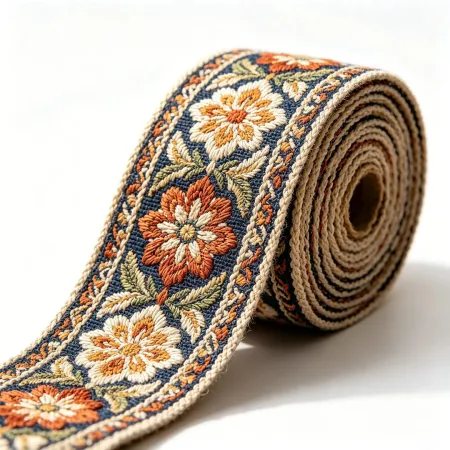
The cotton webbing range covers the constructions a colour programme usually needs, the jacquard cotton strap shows colour built into the weave rather than applied to it, and sampling with colour approval runs through OEM and ODM development.
FAQ: Colored Cotton Webbing
Which colours are hardest on cotton?
Deep blacks, navies and saturated reds. They need more dye, they show rub and wash faults sooner, and they are the shades where a cheaper dye class becomes visible within a few months of use.
Can the colour be matched exactly to a Pantone chip?
On a textile substrate, close rather than exact. A chip is ink on paper and cotton is a dyed fibre with its own texture, so a small shift is normal and should be agreed as a tolerance rather than argued about at inspection.
Does a darker webbing need a different construction?
Not the weave, but often the dye route. The same sett carries a vat-dyed black better than a pigment one, and a dense sett holds more colour at the surface, which makes any rub weakness more visible rather than less.
Is natural cotton webbing a colour too?
It is the fibre's own colour, and it varies with the crop, so it needs a reference piece just as a dyed shade does. Buyers who specify "natural" without a reference are specifying a range rather than a colour.
What happens if the dye recipe changes between orders?
The shade can stay the same while the fastness changes, which is the worst outcome because nothing looks wrong. Ask for the dye class to be recorded per order so a substitution is visible on paper before it is visible on the product.
A coloured strip is a textile with a chemistry attached. The dye class decides how it survives use, and the file decides whether it can enter the market at all — the shade itself is only the part a buyer can see.
Why Xinxiangrui for Colored Cotton Webbing
Colour on colored cotton webbing is approved on the actual fibre, at full width, under two light sources, and a retained piece is kept once the shade is signed off. The dye class, the recipe reference and the fastness grades are recorded per order, so a repeat run is a repeat rather than a new match. Tell us your webbing spec and a matched construction comes back to you.