
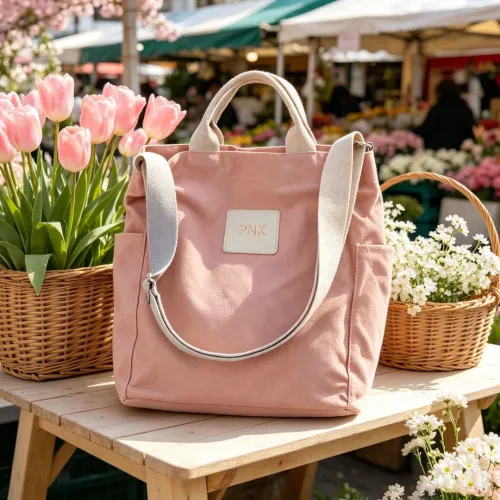
Features
Why Choose Xinxiangrui Webbing?
Source Factory
Direct wholesale production from our own plant in Dongguan, not a trading desk. Weaving, dyeing, printing, hardware assembly and packing all run in house, with no middleman margin in the price.
Full Customization
OEM and ODM work starts from your drawing: width, weave, colour, hardware and retail packaging. We match Pantone, send a physical sample before bulk, and keep every change on one work order.
Strict QA & ISO Standards
Every batch is checked for width, thickness, break strength and colour fastness before it ships, and the plant runs to ISO 9001 and ISO 14001. Test reports for your batch travel with the goods.
Proven Track Record
Fifteen years of narrow fabric since 2011, 200+ active partners and shipments to 50+ markets. Long-run programmes are what this factory is built for, which is why most customers reorder.

We Have The Best Solutions for Your Business
Xinxiangrui has made narrow fabric in Dongguan, China since 2011. Our 8,000 m² plant weaves, dyes, prints, cuts and sews under one roof, supplying 200+ active partners in 50+ markets. We produce polyester, nylon, cotton, elastic, reflective and bio-based webbing, ribbon, lanyards, pet leashes, bags and luggage components, from yarn and reflective tape to finished straps and handles.
Because every step stays in one plant, a widening range does not cost tolerance. Our laboratory tests to 2000N+ break strength, 50,000+ Martindale cycles and 1,000+ hours of UV exposure, and every batch carries its own figures rather than a catalogue sample. We work to OEKO-TEX, CPSIA, REACH, RoHS, ISO 9001, ISO 14001 and GRS. Send us your spec sheet and target quantity, and we will recommend the construction that fits.
Canvas Tote Bag: What the Cloth Weight Predicts
Weight is the first number on any canvas specification and the least understood. It is quoted in grams per square metre or in ounces per square yard, and the two are not interchangeable in conversation because one is a metric area and the other an imperial one. What the figure predicts is stiffness and opacity; what it does not predict is strength at the seam, which is a question about thread, stitch and reinforcement.
| Cloth weight | What it feels like | What it suits | Where it disappoints |
|---|---|---|---|
| Light | Soft, folds easily, hangs limp when empty | Giveaways, folded retail packs, event bags | A printed block that stiffens the whole panel |
| Medium | Holds a shape, creases cleanly, takes a fold | Retail bags, bookshop and grocery totes | A bottom seam that was never bar-tacked |
| Heavy | Stands upright, edges fray less, cuts harder | Work bags, tool totes, branded merchandise | A domestic machine asked to sew through four layers |
A number worth asking for that rarely appears on a quote: the finished weight of the bag, not the cloth. Two totes cut from the same roll can differ by a noticeable amount once one has a gusset, a lining and a reinforced base, and the customer who lifts the bag in a shop is judging that total rather than the roll.
Three Body Constructions
Flat, two panels and a bottom fold
The simplest body is two rectangular panels joined at the sides with the bottom formed by a fold rather than a seam. A fold carries load better than a seam, which is why this construction survives a heavy shop even at a modest cloth weight. Its weakness is volume: a flat bag has no base, so everything settles into a narrow shape and a printed design distorts once the bag is filled.
Gusseted, with a base that opens
A gusset adds depth by inserting a strip or by folding the bottom corners into a triangle and stitching across them. The bag then stands and the print sits flat on a panel that does not move. The cost is four extra seams at the base, and each one is a place where a stitch can miss. A gusseted tote is only as good as the bar-tack at those corners.
Boxed, with a base panel sewn in
A boxed construction sews a separate base panel between four walls, the way a carton is built. It produces the cleanest interior and the most rigid shape, and it is the construction that best supports a heavy load because the weight travels down the walls into a seam that runs around a corner rather than across a fold. It is also the slowest to sew and the least forgiving of a cutting error: a base panel a few millimetres out shows as a leaning bag.
There is one more decision that belongs to the cutting table and rarely reaches the brief. A tote is normally cut from a roll with a direction: the cloth has a warp and a weft, and a panel cut along the warp behaves differently from one cut across it. Cut the body one way and the base another and the bag will lean after its first wash, because the two panels move by different amounts. Marking the roll direction on every pattern piece costs nothing at the cutting stage and is the difference between a bag that stays square and one that is quietly rejected a season later. It is also the first question a pattern cutter asks when a sample comes back leaning, and the answer is usually visible on the cutting table rather than in the wash test.
Six Lines a Canvas Tote Bag Brief Should Carry
- The cloth weight and its tolerance — with the unit named, because a gram figure and an ounce figure describe the same cloth and invite a mistake.
- The finished size and how it is measured — flat width, flat height and gusset depth, with the point of measurement drawn rather than described.
- The construction — flat, gusseted or boxed, since the three do not share a pattern and cannot be substituted after sampling.
- The handle material and attachment — a woven band, a tape or a cloth strip, and whether it is stitched, bar-tacked or riveted to the body.
- The decoration route — screen print, transfer or embroidery, because each one changes how the cloth behaves where it is applied.
- The wash and shrink expectation — a stated cycle and a stated limit, since unwashed canvas moves more than almost any other bag cloth.
Four Checks Before a Bulk Order
- Load the handle, not the bag. Fill a sample and lift it by one handle for a minute. The seam that fails is almost always the upper attachment, and it fails at a fraction of the load the body could carry.
- Wash one and measure it. Canvas shrinks along the warp more than across the weft, so a bag that was square can arrive slightly tall. Measure both directions before and after.
- Check the print through a fold. Fold the decorated panel along the line a bag naturally creases and look for cracking. A print that fails here will fail in a customer's cupboard rather than in a shop.
- Sew a full bag and carry it loaded for a week. Nothing in a specification predicts how a bag hangs when it is full, and how it hangs is what the customer judges first.
The custom spec bags programme covers the sewn side of this work, and the handle is where the two families meet: a tote handle is usually a band, and the cotton webbing used for it is woven on the same looms as the straps on a wider range of bags. A 25 mm band in that range clears 2000N, which is far more than a tote ever asks of it; the number matters because it is the reason the handle never becomes the weak point.
Two Mistakes That Shorten a Bag's Life
The handle attached with one row of stitches
A single straight seam across the top of a handle looks tidy and concentrates the whole load on one line of thread. Every kilogram in the bag pulls on that line, and the cloth either side of it is unsupported, so the tear starts at the end of the stitch run and travels across the panel. A bar-tack, a box-X stitch or a rivet spreads the same load over an area, and the cost difference at the machine is measured in seconds.
The print that stiffened the panel
A heavy ink film turns a soft cloth into a stiffened panel, and the boundary between printed and unprinted cloth becomes a hinge. The bag then creases along that boundary every time it is folded, and the ink cracks first because it cannot stretch with the cloth beneath it. Thinner deposits, softer inks and a design that avoids long straight edges across a fold all cost less than a returned order.
A canvas tote bag is decided by the cloth weight, the base construction and the handle attachment, in that order. Get the three right and the print becomes decoration; get any one wrong and no decoration rescues it. Name the weight with its unit, draw the size, choose the construction before sampling, and test the handle loaded rather than empty.
Why Xinxiangrui for Canvas Tote Bags
A canvas tote bag is a sewn product built from a woven one, and both halves happen here: the band for the handle comes off the same looms that supply the rest of the range, and the cutting and sewing sit in the same plant in Dongguan. That means a handle and a body can be matched in colour before either is cut, rather than after both have arrived from different suppliers. Send the size, the cloth weight and the load it must carry, and a matched bag comes back to you.
Featured Products
Collection about Xinxiangrui Webbing

User Reviews
What users say about Xinxiangrui Webbing
Frequently Asked Question
Do you have any question?
Four decisions, in order: the cloth weight, the base construction, the handle attachment and the decoration. Weight predicts stiffness and opacity, a folded base outlasts a seamed one, a bar-tacked handle outlasts a single stitch row, and a heavy ink film stiffens the panel it is printed on.
In grams per square metre or ounces per square yard, and the two are not interchangeable in conversation because one is metric area and the other imperial. Weight predicts hand and opacity; it does not predict strength at the seam, which depends on thread, stitch and reinforcement.
Flat for giveaways and folded retail packs, gusseted for retail totes that must stand, boxed when the bag carries weight or needs the cleanest interior. A gusseted or boxed bag adds seams at the base, and each one is a place where a stitch can miss.
Almost always at the upper attachment rather than the body. A single straight seam across the handle top concentrates the whole load on one line of thread, and the tear starts where that run ends. A bar-tack, a box-X stitch or a rivet spreads the same load over an area.