Cotton Webbing for Keychain: The Cut, the Eyelet and the Print
Cotton webbing for keychain is a fifteen-centimetre product with three failure points and one printing restriction that catches most first-time buyers. The strip itself is stronger than anything it is attached to — 2000N of cloth against a few hundred newtons at a small eyelet — so the whole design problem sits in the fold, the hardware and the decoration.
This guide covers how a short cut length is specified, why sublimation does not work on cotton, and what changes when a keychain programme runs as many small variant orders rather than one large one. It is aimed at promotional buyers, brand accessory lines and anyone adding a logo loop to a larger product.
The Cut, the Fold and the Eyelet
A keychain is a length of webbing folded in half, joined at one end and fitted with hardware at the other. Three decisions define it, and the third is the one that fails.
- Cut length — 150 to 180 mm for a wristlet that a hand passes through, 80 to 100 mm for a key fob that hangs. Half the cut length plus the fold allowance becomes the loop's reach.
- The join — an eyelet through two layers, a rivet, a bar-tack or a box-X. The eyelet is the most common and the weakest, because it removes a disc of cloth from the exact point that carries the load.
- The hardware — a split ring, a swivel hook or a D-ring. The ring's wire diameter and its opening decide whether it survives a pocket full of keys.
- The end finish — a hot cut, a tipped end or a folded and stitched return. On cotton a raw cut end frays within days of being handled.
The table compares the three joining methods on the two things that matter at this size: how much cloth they remove and how they fail.
| Join | Material removed | Failure mode |
|---|---|---|
| Eyelet | A disc, usually 8 to 10 mm across | Tears from the eyelet outward; the ring pulls through |
| Rivet | A single hole, smaller than an eyelet | Pulls through if the hole is near the edge |
| Stitch only | None | Thread abrades against the ring and wears through |
Why Cotton Cannot Be Sublimated
Dye sublimation needs a polyester surface to accept the dispersed dye. Cotton has no affinity for it, so a sublimated print on cotton either sits as a transfer film on top of the fibre or washes away. This single fact decides which decoration routes are open, and it is the most common misunderstanding in the category.
- Screen print — the workhorse for cotton. One screen per colour, a thick ink deposit that sits on the surface, and good wash durability on a short piece that is rarely laundered.
- Heat transfer — a printed film applied with heat and pressure. Fine detail is excellent; the edge of the film can lift on a narrow strip that flexes constantly.
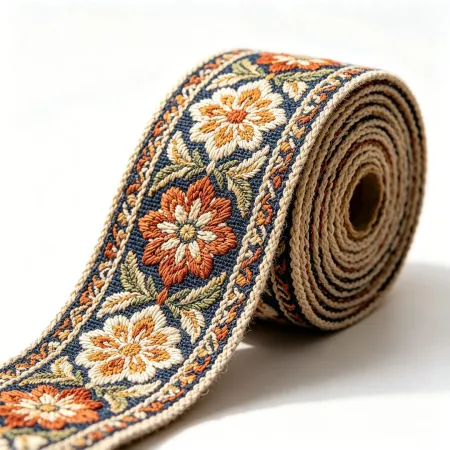
- Woven jacquard — the logo is built into the cloth, so it cannot wear off at all. It needs a minimum width and a warp setup, which is why it suits a programme rather than a single promotional order.
- A woven or printed label — sewn on, and the cheapest way to add a brand to a plain strip.
Test the print on the fold, not on the flat
A keychain folds, hangs and rubs against a pocket every day. A print that survives a flat rub test can still crack along the fold within a month, because the film cannot stretch with the cloth. Ask for the sample to be folded through the artwork and handled for a week before approving the decoration.
Small Runs, Many Variants: Cotton Webbing for Keychain Across 50+ Markets
Xinxiangrui Webbing ships narrow woven products to 50+ markets and supplies 200+ active partners, and a keychain programme is where that experience is most useful, because the product is rarely ordered in one version. A promotional buyer wants six colours with three logo variants; a brand wants one shape in eight shades; an event wants a thousand pieces in one colour by a fixed date.
- Variant count drives the plan — every colour and every logo is a separate setup, so the number of SKUs matters more than the total quantity.
- Packing is per piece — a keychain is usually bagged or carded individually, which is labour rather than material, and it is the part of the order that overruns a schedule.
- Carton weight is metal — a thousand keychains weigh far more than the webbing in them, so freight follows the hardware rather than the cloth.
- Consistency across variants — six colours cut from six rolls must be the same width and the same hand, or the set looks assembled from leftovers.
The last point is the one that separates a supplier who weaves from one who resells. A programme with eight shades needs eight dye lots that agree, and that is a decision made at the dye line rather than at the packing table.
Three Keychain Failures
The eyelet pulls through
An 8 mm eyelet set into a 25 mm strip leaves less than 9 mm of cloth on each side, and that margin is what holds. A larger eyelet removes more cloth; a smaller one concentrates load. The workable answer is usually a wider strip, not a different eyelet.
The print cracks at the fold
A heat transfer film does not stretch with a woven strip. Where the keychain folds through the artwork, the film cracks along the fold line, and the crack appears as a pale stripe across the logo. Keeping the artwork away from the fold is a design decision that costs nothing.
The ring opens and drops the keys
A thin split ring that is opened and closed repeatedly loses its temper and stops closing. On a product whose entire purpose is not losing keys, ring wire diameter is a specification item rather than an afterthought.
Five Lines for a Keychain Order
- Cut length and finished loop reach — the second figure is what the buyer actually feels.
- Width and join method — eyelet, rivet, stitch or a combination, with the margin either side of the hole.
- Hardware and plating — ring type, wire diameter, and whether nickel release matters for the market.
- Decoration route — screen print, transfer, jacquard or label, chosen against the artwork's detail and the fold position.
- Variant list and packing — how many colours, how many logo versions, and how each piece is bagged or carded.
The jacquard cotton strap is the route for a woven logo, the plain woven cotton webbing is the base for printed versions, and the cotton webbing range covers the narrow widths this product needs.
FAQ: Cotton Webbing for Keychain
Can cotton webbing be sublimated?
No. Sublimation needs a polyester surface; on cotton the dye has nothing to bond to. Use screen print, a heat transfer film, a jacquard weave or a sewn label instead, and choose between them on the artwork's detail rather than on convenience.
What width is a keychain strap?
Twenty to twenty-five millimetres is the usual range, and 25 mm is the practical minimum for an eyeleted join because the hole needs margin on both sides. Narrower strips work with a stitched join rather than an eyelet.
How long should a wristlet loop be?
A cut length of 150 to 180 mm gives a loop that a hand passes through comfortably. The reach is roughly half the cut length once folded, so a 160 mm strip gives about 75 mm of opening.
Does a keychain need a compliance file?
If it is sold as a children's item or could be handled by a child, yes, and the small-parts and chemical requirements are stricter than for an adult accessory. For an adult promotional item the dyestuff and hardware plating questions still apply in regulated markets.
Why do my keychains arrive with different widths?
Usually because the variants were cut from rolls woven at different times or sourced separately. For a multi-colour set, ask for all shades to come from one production window so the width and the hand match across the range.
A keychain is a small product with a large specification relative to its size: cut length, join, hardware, decoration and variant count. The cloth is never the weak point, and the decoration is where most of the surprises live.
Why Xinxiangrui for Cotton Webbing in Keychains
Short cut lengths of cotton webbing are a different product from the roll they come off, and Xinxiangrui Webbing ships narrow woven products to 50+ markets with 200+ active partners, so a programme of six colours and three logos is planned as variants rather than as one run. Cutting, eyelets and rings are handled in-house, and a print proof is approved on the fold rather than on a flat sheet. Share your cotton webbing for keychain details with us and we will come back with a matched sample.