Cotton Webbing for Tote Bags: Proportion, Print and One Site
Cotton webbing for tote bags is chosen last and carries everything. The body of a tote is a rectangle of cloth with no structure of its own; the handles are what turn it into a bag, and their width, length and attachment decide whether the product feels considered or improvised. On a tote more than on any other bag, the handle is the design.
This guide covers proportion — how wide a handle should be against the face of the bag — what printing on a handle requires when the cloth and the print come from the same plant, and the three failures that make a tote look cheap within a month.
The Handle Decides the Tote
A tote is carried flat against the body, loaded unevenly and set down on the ground. Four properties follow from that, and none of them is about strength.
- It has to lie flat — a handle that curls rolls against the shoulder and looks wrong on a shelf. Edge structure matters more than thickness here.
- It has to hold a shape when empty — a limp tote photographs badly. A firmer webbing at a moderate width gives the bag a silhouette before anything is inside it.
- It has to spread a grocery load — a tote is loaded to the top with heavy items rather than with a laptop. Twenty-five millimetres is comfortable for a light bag; thirty-eight is the width that stops a full one cutting in.
- It has to survive being set down — the handle ends and the bag's bottom corners take the abrasion, and the handle ends are usually the first thing to look worn.
The table sets a starting proportion against bag size, which is the decision most often made by eye and then corrected in the second sample.
| Bag face | Handle width | Drop |
|---|---|---|
| Up to 350 mm | 25 mm | 100–110 mm |
| 350–420 mm | 30–38 mm | 110–130 mm |
| Over 420 mm | 38–50 mm | 130–150 mm |
The drop in that table is measured from the bag's top edge to the inside of the handle, and it is the figure that decides how the product is carried. Below 100 mm a loaded bag rubs a wrist and reads as a giveaway; above 150 mm the handle looks like a shoulder strap and the bag hangs too low to carry comfortably by hand. The same 25 mm webbing at two different drops is two different products, which is why the length belongs in the brief rather than in the factory's default.
Two Handles That Match
A tote has two handles and they are seen together, which makes matching more important than absolute accuracy. Two handles that differ by four millimetres in drop look like a mistake; two that are both two millimetres off look fine.
- Cut as a pair — cut the two handles for one bag consecutively from the same roll, and keep them together through sewing. This one habit removes most mismatch complaints.
- Fold on the same mark — a fold allowance measured with a template rather than by eye. Two millimetres of fold difference becomes eight millimetres of drop difference once both ends are folded.
- Sew from the same direction — a box-X sewn from opposite ends can shift the handle slightly. Consistent direction keeps the two symmetrical.
- Check the pair, not the piece — inspection that measures each handle separately passes a mismatched pair. Measure the two against each other.
Hang the finished bag before you approve the handle
A handle approved flat on a table tells you nothing about how it hangs. Fill the tote to its working weight, hang it from a hook by both handles, and look at the bag from a metre away. The proportions that looked correct on a drawing either work or do not, and the answer arrives in seconds.
Printed Handles: Cotton Webbing for Tote Bags From One Site
At Xinxiangrui's 8,000+ m² plant in Dongguan, weaving, dyeing, printing and hardware assembly run on one site, and a printed tote handle is where that matters most. The handle and the bag body have to agree in colour, and the print has to sit on a surface whose weave was decided a few metres away.
- Colour across two products — a natural handle and a dyed body, or the reverse, is a match decision made against the same reference rather than between two suppliers.
- Print before cutting — artwork positioned on a continuous length and the cut following a mark, which keeps the logo centred on every handle.
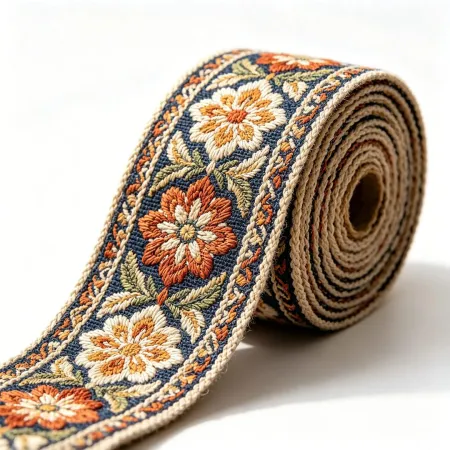
- A weave that accepts ink — a flat plain weave prints cleanly; a pronounced twill shows its diagonal through the artwork, which is either texture or interference depending on the design.
- The fold stays unprinted — ink on a fold cracks. Keeping the artwork 20 mm clear of each fold is a decision made on the drawing, not at the press.
A sound cotton construction at 25 mm clears 2000N, so strength is not the constraint on a tote handle. What limits the product is how it hangs, how the pair matches and how the print survives the fold.
Three Failures That Make a Tote Look Cheap
The handle is too narrow for the bag
A 25 mm handle on a 450 mm tote looks like a shopping bag rather than a product. Width is the cheapest visual upgrade available, and the cost difference between 25 and 38 mm is smaller than the perceived difference in quality.
The attachment shows a raw edge
A handle end cut and stitched without turning under frays along the cut. On a natural cotton tote this reads as unfinished rather than rustic, and the fraying progresses with every use. A turned end or a tucked edge costs a minute per bag.
The bag's top edge sags between the handles
The handle is only half the structure; the bag's top edge has to hold between the two attachment points or the tote collapses inward when lifted. A facing, a turned hem or a strip of the same webbing inside the top edge solves it, and it is a bag decision that the webbing supplier should raise rather than accept.
Five Lines for a Tote Handle Order
- Width against the bag face — stated as a proportion rather than a habit.
- Drop and cut length, with the fold allowance written down.
- Edge and end finish — tucked, turned or tipped, because a raw cut end is the most visible economy.
- Print position and the clear distance from each fold.
- Pair matching tolerance — the maximum difference between the two handles of one bag.
The twill handle strap was developed for this product, the plain woven cotton webbing is the softer and more printable option, and the cotton webbing range covers the widths a tote programme needs.
FAQ: Cotton Webbing for Tote Bags
What width handle for a standard tote?
Twenty-five millimetres for a bag up to about 350 mm across, thirty to thirty-eight for anything larger. A 38 mm handle on a 400 mm tote is the combination that reads as a proper product rather than a giveaway.
Can tote handles be printed?
Yes, by screen print or transfer on cotton, or woven in by jacquard. Keep the artwork clear of the folds, because ink on a fold cracks, and print on a continuous length before cutting so the position is consistent across every handle.
Should the handle be the same cloth as the bag?
Often, and it is the simplest way to secure a colour match. A different cloth in the handle is a deliberate contrast, not a default, and it needs an approved pair of samples side by side rather than two separate approvals.
How do I stop two handles mismatching?
Cut them consecutively from one roll, keep the pair together through sewing, and fold to a template rather than by eye. Then inspect the pair against each other rather than measuring each handle in isolation.
Why does the top of my tote collapse?
Because the top edge has no structure between the handles. A facing, a turned hem or a strip of webbing inside the top edge keeps the bag open, and it is worth raising at development because no handle construction can compensate for a soft top edge.
A tote is a bag made of two handles and a sack, and the handles are the only part with a structure. Width against the face, a matched pair and a fold that stays clear of the print are the three decisions that make the product look finished.
Why Xinxiangrui for Cotton Webbing in Tote Bags
Tote handle webbing carries the whole bag and it is usually chosen last, so cotton webbing for tote bags is offered with the print, the dyed body and the handle matched on one site rather than across two suppliers. Weaving, dyeing, printing and hardware assembly share the Dongguan plant, and a retained piece is kept once a shade is approved. Tell us your tote spec and a matched construction comes back to you.