0.5 Inch Nylon Webbing: The Width That Changes the Rules
A 0.5 inch nylon webbing band is 12.7 mm wide, and at that width every proportion that is a rounding error at two inches becomes a structural decision. Two selvedges of a millimetre and a half each take almost a quarter of the face. Two stitch lines three millimetres in from the edges leave under seven millimetres of clear body. The tolerance that a wide band absorbs without comment is the difference between a band that threads a buckle and one that does not.
This guide covers the four proportions that shift at this width, the three measurements that matter more here than anywhere else, six lines a half-inch brief should carry, and the two mistakes that only show up once the band is narrow.
0.5 Inch Nylon Webbing: Four Proportions That Become Fractions
Nothing about the weave changes when the reed is narrowed. What changes is how much of the finished band is not body, and that is where a narrow specification is won or lost.
- The selvedge share — two edges of about 1.5 mm take roughly a quarter of a 12.7 mm face, and the selvedge carries fewer load-bearing picks than the body does.
- The stitch share — a 3 mm seam allowance on each side leaves a clear width of under 7 mm, and the needle holes sit close enough to the edge to pull out under load.
- The hardware gap — buckles, sliders and cord locks are made in steps, and a 13 mm band can be loose in a 15 mm slot and impossible in a 12 mm one.
- The length tolerance — a cut length that is 2 mm over on a 500 mm piece is nothing; the same 2 mm on a 60 mm loop is a visible gap.
| Width | What dominates | Typical use |
|---|---|---|
| 12.7 mm | Selvedge and stitch share, edge fray | Lanyards, small handles, craft and pet trim |
| 25 mm | Load and hardware fit, balanced | Leashes, bag straps, belts, general hardware |
| 38 mm | Body strength, abrasion across a rail | Shoulder straps, chair webbing, cargo ties |
| 50 mm | Thickness and needle penetration | Harness, heavy bags, seat and tie-down work |
At 13 mm the selvedge stops being free strength
On a 50 mm band the two selvedges are roughly six percent of the face and nobody counts them. On a 12.7 mm band they are close to a quarter, and the yarns there are turned back on themselves rather than running straight, so they contribute less to breaking load than their share of the width suggests. That is why a half-width band does not carry exactly half the load of a one-inch band, and why a test report on the actual band is worth more than an arithmetic estimate.
Three Measurements That Matter More at This Width
Breaking load, measured and not divided
The tempting shortcut is to take the figure for a 25 mm band and halve it. The measured value is usually a little lower than half, for the selvedge reason above, and it depends on where the sample was gripped: a jaw that crushes the selvedge reads lower than one that lets it slip. Ask for the grip type along with the number, and compare only figures taken the same way. A 25 mm construction that clears 2000N tells you what the weave can do; it does not tell you what its 13 mm sibling will read, and the difference is not a constant.
Width tolerance, and which end of it you get
A woven band is held to a width by the reed, and the tolerance is normally stated as a plus or minus on the nominal. What matters on a narrow band is not the size of that tolerance but its direction relative to the hardware: a band that runs 0.4 mm over can fail to enter a slider, while the same band 0.4 mm under rattles. The useful line in a specification is not the tolerance alone but the hardware it has to pass, because the two together decide whether the assembly works.
Thickness, because the needle has less room
On a wide band a needle deflection of half a millimetre disappears into the body. On a 12.7 mm band it puts the stitch line somewhere other than where it was drawn, and on a two-layer fold it can push the lower ply out past the edge. Thickness is specified in the same conversation as the seam for that reason, and a band that is a little thicker than expected is often the one that sews badly rather than the one that holds better.
Six Lines for a Half-Inch Brief
- The hardware, named — the buckle, slider or cord lock it must pass, because that sets the usable width more tightly than the nominal does.
- The load and its direction — a straight pull and a fold over an edge are different jobs at the same load.
- The seam allowance you intend — because at this width it is a large share of the face and it decides how much body is left to carry anything.
- The edge treatment — woven selvedge, hot cut or sealed, since a 13 mm band frays visibly faster than a wide one.
- The cut length and its tolerance — stated in millimetres with a plus and a minus, not as a nominal.
- The shade against the hardware — a metal finish and a dyed band are approved together, because one makes the other look wrong.
The first line does more work than the other five combined. Buyers usually specify a width because that is the number on the drawing, but the number that governs whether the part functions is the slot it has to pass through. A supplier who is told the hardware can adjust the weave to land inside it; a supplier who is told only 12.7 mm has to guess which way the tolerance should lean, and will guess the way that suits the loom rather than the assembly.
Where the band becomes a handle, the seam is the part to worry about. A folded nylon webbing loop at this width concentrates the load on two short stitch runs, and a box-and-cross pattern with a bar tack at the turn spreads it better than a straight run ever will. The 25 mm construction beside it clears 2000N, while the 13 mm band is rated on its own reading; the test report should carry both as separate figures rather than one scaled from the other. Where a wider strap is also in the programme, a polyester webbing version is worth comparing for wet service, and custom development can run the two widths from one brief.
Two Mistakes That Only Appear at This Width
Scaling a specification down instead of writing a new one
A programme that already runs a 25 mm band will often ask for the same construction at half the width, expecting half the yarns and half the work. What arrives is a band with the same thread count in the warp and a selvedge that eats the body, and the seam allowance carried over from the wider part leaves almost nothing clear. Writing the half-width line from its own hardware and its own seam produces a different weave — usually a slightly denser pick count to keep the face stable — and it takes one extra sampling round rather than three.
Judging fray from a short cut
A 13 mm band cut with a hot blade looks sealed on the bench and starts to shed at the edges after a few hundred cycles through a buckle. The reason is that the sealed edge is a thin crust, and at this width the crust is a large fraction of the edge length that rubs. A short cut sample cannot show that, because the wear needs repetitions rather than length. A pull test through the actual hardware, run a few hundred times, is the only cheap way to see it before a customer does.
FAQ: 0.5 Inch Nylon Webbing
Does half the width carry half the load?
Usually a little less than half, because the selvedge takes a larger share of the face and carries fewer straight yarns. Treat the reading as its own number rather than as a division.
What is 0.5 inch in millimetres?
12.7 mm exactly, and most hardware in this range is designed around 13 mm. Say both in the brief, because a 12.7 mm band and a 13 mm slot are not the same conversation.
How wide should the seam allowance be?
Narrow enough to leave body and wide enough to hold the stitch. On a 12.7 mm band that usually means 2.5 to 3 mm, plus a bar tack wherever the load turns a corner.
Will it fray more than a wider band?
Yes, at the same edge treatment, because the sealed zone is a bigger share of the width. A hot cut plus a short row of stitching behind the cut slows it considerably.
Is a 13 mm band suitable for a dog leash?
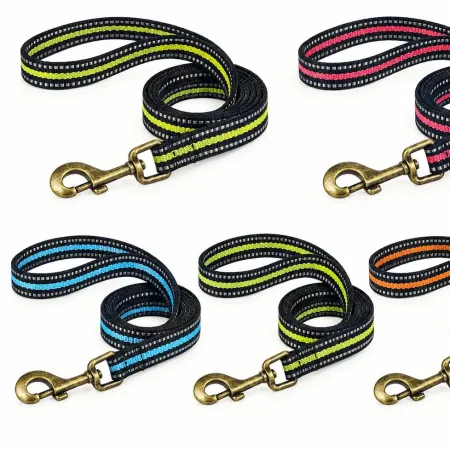
For a small dog on a light lead it can be, but the hardware becomes the limiting part before the band does. Most leashes move up to 20 mm or 25 mm for that reason.
A 0.5 inch nylon webbing line is not a narrow version of a wide one. It is a specification where the edges, the seam and the hardware take most of the budget, and where the load figure has to be measured rather than divided. Name the hardware, state the seam, and ask for a reading from the band you will buy.
Why Xinxiangrui for 0.5 Inch Nylon Webbing
At half a width the small differences are the whole argument, and a report taken from a catalogue sample cannot settle it. Testing happens on the roll that ships, so a 0.5 inch nylon webbing band arrives with breaking load, width and thickness read from that lot, with the 2000N figure of the 25 mm construction measured on the same bench for comparison. Tell us the hardware it has to pass through, and the readings come back against that gap.