Source Factory
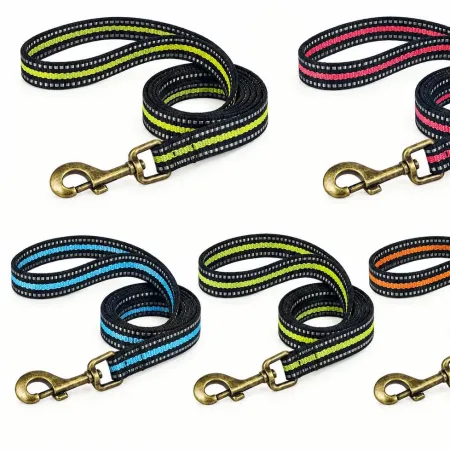
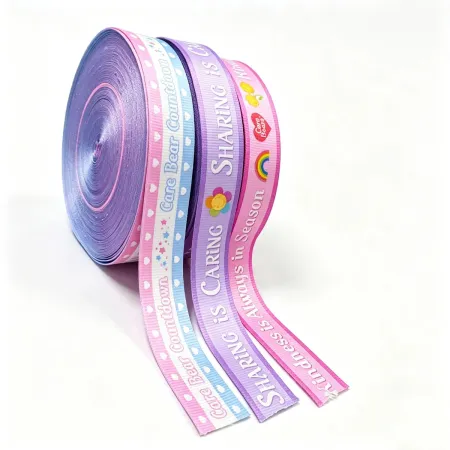
Direct wholesale production from our own plant in Dongguan, not a trading desk. Weaving, dyeing, printing, hardware assembly and packing all run in house, with no middleman margin in the price.
Full Customization
OEM and ODM work starts from your drawing: width, weave, colour, hardware and retail packaging. We match Pantone, send a physical sample before bulk, and keep every change on one work order.
Strict QA & ISO Standards
Every batch is checked for width, thickness, break strength and colour fastness before it ships, and the plant runs to ISO 9001 and ISO 14001. Test reports for your batch travel with the goods.
Proven Track Record
Fifteen years of narrow fabric since 2011, 200+ active partners and shipments to 50+ markets. Long-run programmes are what this factory is built for, which is why most customers reorder.
Crossbody Canvas Tote Bag: Strap Geometry and Load Path
A crossbody canvas tote bag moves the load from a hand to a diagonal line across the body, and that single change redistributes force through parts of the bag that were never designed for it. The handle attachments become side anchors, the base becomes a hinge, and the bag's own weight starts to rotate it against the strap.
Most crossbody totes are a shoulder tote with a longer strap added. This guide covers what that addition actually requires: the geometry of a strap that stays put, the four hardware decisions that decide whether it hangs straight, and how to run a sample round that settles the length question before production.
What Changes in a Crossbody Canvas Tote Bag
Adding a strap to a tote is a structural change rather than a styling one. Four things stop working the way they did on a hand-carried bag.
- The attachment moves to the side — anchors sit at the upper side seam rather than on the front panel. That seam is now carrying load in tension along its length instead of in shear, which is a different stitch requirement.
- The bag rotates against the strap — a heavy bag on a narrow body hangs at an angle, so the top edge twists and the base swings forward. A base stiffener or a wider strap footprint limits it; nothing eliminates it.
- Length becomes a range, not a number — a fixed strap fits one body and one layer of clothing. A crossbody needs an adjustable range of roughly 200 mm to be sellable across a size run.
- Hardware carries continuous load — a D-ring or swivel hook under permanent tension behaves differently from one that is only loaded while a bag is lifted. Plating wear and edge radius matter more here than on a handle.
The table maps the four configurations used on crossbody totes to what each demands from the bag.
| Strap configuration | Working length | What it requires from the bag |
|---|---|---|
| Fixed crossbody | 1,000–1,200 mm total loop | Side anchors bar tacked through a reinforced seam; no adjuster to hide slack |
| Slider adjustable | 900–1,300 mm, 25 mm strap | Strap thin enough to pass the slider; loose end needs a keeper loop |
| Two-point swivel hooks | 1,000–1,400 mm detachable | D-rings secured to a load-bearing point, not to the lining |
| Two straps, one bag | Short handle plus long strap | Four attachment points, all of which must share one reinforcement standard |
| Wide webbing strap | 1,000–1,200 mm, 38 mm strap | Side seam wide enough to take the strap without puckering the panel |
| Guitar-style pad | 1,100–1,300 mm with a sliding pad | Heavier bag; the pad adds bulk and the strap must still pass a slider |
Three Geometry Decisions
A crossbody bag that hangs badly is almost always wrong in one of three dimensions, and each can be corrected on a sample.
Anchor height sets the hang
Anchors placed at the very top of the side seam let the bag hang level. Anchors placed 40 mm lower pull the top edge into a curve and the bag tips forward, so the contents shift toward the front panel. The difference between a bag that sits flat against the hip and one that swings is usually two centimetres of anchor height.
Strap width against body weight
A 25 mm strap is comfortable on an empty bag and begins to cut on a full one, because a crossbody concentrates the whole load on one narrow line across the chest. At 38 mm the pressure drops enough to carry all day, but the strap starts to look like luggage hardware on a light canvas. The usual compromise is 30 mm with a sliding pad.
Rings in line with the seam
A D-ring sewn flat against the panel loads the seam at 90 degrees and pulls the fabric out of plane. A ring set on a short webbing tab, aligned with the direction the strap actually pulls, keeps the force in the plane of the seam. It is a few millimetres of geometry that decides whether the attachment lasts one season or five.
Sample the strap on three body types, not one
A crossbody length that works on a 165 cm model can sit at the hip on someone shorter and under the arm on someone taller. Put the sample on three people of different heights with a coat and without, photograph each, and pick the adjustable range that covers all three. This is the single most useful hour in the development of a crossbody bag.
Four Lines for the Strap Specification
A crossbody strap has more variables than a handle, and four lines keep a sample round from turning into three.
- Adjustable range in millimetres — the shortest and longest loop, measured end to end including hardware. A single length is not a specification for a product sold across a size run.
- Strap width and weave — 25, 30 or 38 mm, in plain or twill, because the weave changes both the hand and how well a slider grips. A slick twill can slip under load in a metal slider.
- Hardware list with dimensions — ring internal width, slider type, hook opening. Ring internal width within 2 mm of the strap width is the rule that prevents the strap from folding inside the ring.
- Attachment method and reinforcement — a webbing tab, a bar tack count and whether the anchor is backed inside the bag. This line is what separates a strap that stays on from one that tears out.
Six Questions Before the Sample Is Approved
All six can be answered by wearing the sample for a minute with a realistic load inside it.
- Does the bag hang level when full? — fill it and look in a mirror. A bag that tips forward will spill and will be returned for a reason nobody records as a design fault.
- Where does the strap sit on the body? — across the chest, under the arm or at the hip. Only one of those is a crossbody; the other two are an adjustable strap set wrong.
- Does the loose end stay put? — an adjuster without a keeper loop leaves a tail that flaps and frays. It is a small component and a visible one.
- Is the anchor backed inside the bag? — feel through the lining. A ring attached to a single canvas layer is a hole waiting to happen.
- Does the hardware rotate freely? — a swivel hook that binds will twist the strap flat and wear the plating at one point instead of distributing it.
- Does the bag keep its shape when the strap is worn diagonally? — a soft tote collapses into a pear shape under diagonal load. A base stiffener or a slightly narrower body fixes it.
Running the Sample Round
Crossbody bags benefit more from a structured sample round than most products, because the failures are visible on a body and invisible on a table.
- Two lengths, one bag — ask for the adjustable range split into a short and a long version so the decision is comparative rather than imaginary.
- Strap cut from production webbing — a sample strap made from a stock roll will behave differently from the woven one, and the difference shows up in how it sits in the slider.
- Load the sample to the intended weight — a crossbody tested empty tells you nothing about hang, and hang is the whole product.
Crossbody totes are quoted within the custom spec bag range, and the strap is woven on site rather than bought in: the polyester webbing range covers the 25 and 38 mm widths used for crossbody straps, while a natural finish comes from the cotton webbing line. A finished casual shoulder version is the floral cotton canvas shoulder bag.
FAQ: Crossbody Canvas Tote Bag
How long should a crossbody strap be?
An adjustable range of roughly 900 to 1,300 mm end to end covers most adults and most clothing. A fixed length only works for a single market or a single size run.
Where should the anchors sit?
At the top of the side seam, level with each other, on a short webbing tab. Placing them lower on the side or on the front panel makes the bag tip forward under a diagonal load.
Why does the strap twist flat?
Either the ring is too narrow for the strap and forces it to fold, or the swivel hook is binding. Ring internal width within 2 mm of the strap width, and a hook that rotates freely, both prevent it.
Should a crossbody tote have a top closure?
A zip or a magnetic closure is worth having on a bag carried at hip height, because the mouth is open toward a pickpocket and toward rain. A simple flap is the cheapest option that solves both.
Can the strap be detachable?
Yes, with swivel hooks onto D-rings, and it turns one bag into two products. The cost is that every D-ring becomes a load-bearing attachment needing its own reinforcement inside the bag.
A crossbody canvas tote bag is a hanging problem before it is a sewing problem. Anchor height decides whether it lies flat, strap width decides whether it can be worn all day, and ring geometry decides whether the strap keeps its face. All three are settled on a sample worn by three people, which costs an hour and removes the most common reason a crossbody programme goes back for a second round.
Why Xinxiangrui for Crossbody Canvas Tote Bag
A crossbody canvas tote bag is developed around three figures at Xinxiangrui Webbing — strap width, ring diameter and drop height — and all three are confirmed on a free sample before a pattern is released. Width, weave and colour are set on the loom at 2000N+ break strength rather than picked from a stock list, and a Pantone match is made against the bag cloth. A length change reaches the next sample instead of the next quarter. Tell us your bag spec and a matched construction comes back to you.