High-End Cabin Size Luggage Case: Measure the Gate First
Cabin size is a name, not a measurement. A high-end cabin size luggage case is bought to go into an overhead locker, and whether it does is decided by an external envelope that includes wheels, handle and every protruding fitting — measured against a limit that differs between carriers and sometimes between aircraft on the same route. Two cases sold as the same cabin size can differ by several centimetres in the dimension that matters, and the difference is discovered at a gate rather than in a catalogue.
This guide breaks the envelope into the three dimensions that are actually checked, explains where the allowance goes once wheels and a trolley are added, sets out how to fix an envelope that has to work across several carriers, and separates three words that are used as if they meant the same thing.
High-End Cabin Size Luggage Case: The Envelope, Dimension by Dimension
Three dimensions plus one behaviour decide whether a case boards. Each of them fails in a different place, and only one of them can be fixed by packing differently.
- Height — the dimension most often quoted and the one most often measured without the wheels, which is precisely the part a gate sizer measures.
- Width — set by the shell but extended by side handles, external pockets and any webbing belt that stands proud of the face.
- Depth — the dimension that quietly grows when a case is packed full, and the one an expander zip changes on purpose.
- Give — how much the case deforms when pushed into a sizer, which is a genuine advantage for a soft construction and a non-issue for a hard shell.
| Measurement point | Why it counts | Common mistake |
|---|---|---|
| With wheels | A sizer measures the whole object | Quoting shell height alone |
| Handle retracted | A grip that stands up adds height | Measuring with the handle up |
| Packed depth | A full case is deeper than an empty one | Approving an empty sample |
| Proud fittings | Feet, locks and belts add millimetres | Ignoring anything not on the mould |
A gate sizer is a box, not a tape
Airlines do not measure a case with a rule; they ask whether it drops into a frame with a lid. That changes the arithmetic: a case that is a centimetre over on one dimension will not go in even if the other two are generous, because the frame does not average. It also means the shape of the corners matters, since a rounded corner that clears the frame's corner is worth more than a millimetre saved on the flat.
Where the Allowance Goes
Wheels and handle are paid for twice
Every millimetre given to a wheel housing is a millimetre taken from the interior, and the same is true of the trolley tubes and the shell wall. A case at the top of its permitted envelope has less usable height than a smaller one with a thinner base, which is why two cabin cases that both "fit" can hold noticeably different amounts. The honest comparison is internal height between the base and the closed lid, measured on a packed sample.
Depth is the dimension that betrays
A hard case holds its depth and a soft case does not, so both behave badly in different ways. The hard case is honest and occasionally refuses to close; the soft case closes easily and then bulges past the envelope once it is full. If the product has an expander, the expanded depth is the figure that has to be compared with the gate, not the closed one, and an expander that is used once on a trip usually stays used.
Give is a real advantage
A soft case that is a few millimetres over on paper will still go into a sizer because it compresses, which is a legitimate reason buyers choose fabric for cabin products. It is not a reason to design past the limit, because the compression has to come from somewhere and it comes out of the contents. The useful rule is to design to the envelope and treat give as margin rather than as permission.
Setting an Envelope That Travels
- List the carriers — the ones actually flown, including the regional operators that a codeshare puts on the ticket, since those are often the strictest.
- Take the smallest of each dimension — not the smallest overall limit, but the minimum of height, width and depth across the list, because the gate applies all three at once.
- Deduct the fittings — wheels, feet, lock, side handle and any webbing that stands proud, measured on a production sample rather than estimated.
- Check the packed case — the same measurement repeated with the packing list inside, because that is the state in which it will meet the gate.
- Agree the tolerance — how much variation between units is acceptable, since a moulded shell and a sewn shell do not hold a dimension in the same way.
- Record the trim — strap widths and anchor positions, because a belt that adds three millimetres to the face can be the difference between a case that boards and one that does not.
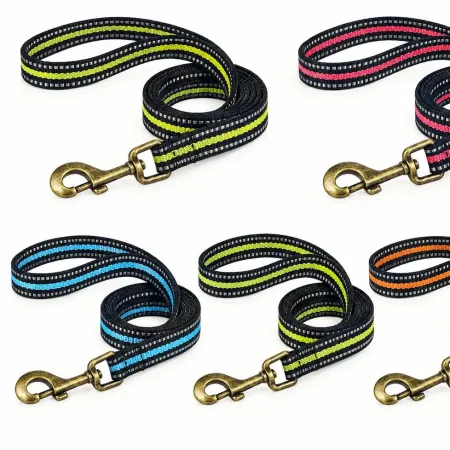
The sixth point is where the trim becomes a dimensional item rather than a decorative one. Exterior webbing belts, compression straps and the handle wrap are woven narrow fabric, and a standard construction clears 2000N across the width; on a tightly drawn cabin case the same belt also has to be flat enough not to push the envelope over. That is a small design constraint with an outsized consequence, and it is settled by choosing the weave rather than by tightening the buckle.
Cabin and larger cases share a shell family across the custom specification bag range, the belts and straps come off the polyester webbing and nylon webbing lines, and a dimension that has to be held to a tolerance is checked in the in-house laboratory.
Three Words That Are Not Synonyms
Cabin, carry-on and personal item
A cabin bag goes in the overhead locker; a carry-on is the allowance that includes it; a personal item goes under the seat and is a different, smaller envelope. Buyers use the three interchangeably and then wonder why a case that fits one carrier fails another, or why a case sold as a personal item is refused at a gate. Naming which of the three the product is meant to be is the first line of a specification, not a marketing decision.
The distinction matters most for cases with a trolley, because a handle that extends makes a case easy to identify as cabin luggage and easy to reject as a personal item. Where a product is intended for under-seat use, the handle has to be short or absent, and the depth has to be set by the seat rather than by the locker.
FAQ: High-End Cabin Size Luggage Case
What size counts as cabin luggage?
There is no single figure. Carriers publish their own limits and they differ, so the working answer is the smallest envelope across the carriers the product will fly. Measure with wheels and handle included, and with the case packed.
Do wheels count in the measurement?
Yes. A gate sizer is a fixed frame and the whole case has to drop into it, so the wheel housing, the feet and the retracted handle are all part of the height. A case quoted by shell height alone will be a few centimetres over in practice.
Is a soft cabin case easier to get on board?
It compresses, so a case a few millimetres over will usually still drop into the frame. That is a margin rather than a licence, because the compression comes out of what is packed inside, and a case that is over by design will be over every time.
Does an expander zip break the cabin allowance?
It can, because the expanded depth is the depth the gate sees. An expander on a cabin case is best treated as an emergency that is used after boarding rather than before, and the closed depth should be the figure compared with the limit.
Can one case suit both a locker and a seat?
Only if it is designed to the smaller of the two, which usually means a short or absent trolley and a shallower body. A case built for the locker will be too tall for under-seat use, and a case built for the seat wastes locker space on every other trip.
A high-end cabin size luggage case is an envelope with a product built inside it. Take the tightest carrier, deduct every fitting, measure the packed case, and agree the tolerance before the tooling. Do that and cabin size becomes a drawing rather than a claim that a gate can disprove.
Why Xinxiangrui for High-End Cabin Size Luggage Case
Cabin, mid-size and large cases are catalogued together, so a high-end cabin size luggage case is chosen from a range rather than designed from nothing: the same shell family, the same fittings and the same webbing at three lengths. That matters when a buyer wants a set, because the three sizes then share a shade and a hardware language. Tell us the gate it has to clear and the set it belongs to, and the drawing starts there.