Custom Baby-Friendly Soft Webbing: From Tech Pack to First Carton
Custom baby-friendly soft webbing sounds like an open brief and is really a set of six independent decisions. Width, thickness, weave structure, colour, print and hardware each move on their own, each costs a different amount of tooling, and each has a different failure mode when it is changed without the others. Most disappointing custom programmes are not badly made — they are under-specified.
This guide sets out what can genuinely be customised, what each change asks of you as the brand, how a development normally runs from tech pack to first carton, and the three places custom programmes go wrong often enough to plan for them.
What Custom Baby-Friendly Soft Webbing Can Actually Change
Five parameters cover most requests. Knowing which ones interact saves a sampling round, because changing two that fight each other is the usual cause of a disappointing second sample.
- Width — from narrow harness goods up to wide structural strap. Width changes the reed set, so it is a weaving decision rather than a trimming one, and the edge quality at the narrow end is what separates a specialist from a general mill.
- Thickness and hand feel — achieved through sett and pick density rather than by adding a coating. The two move together: a firmer strap is usually thicker, and asking for one without the other is the most common contradictory brief.
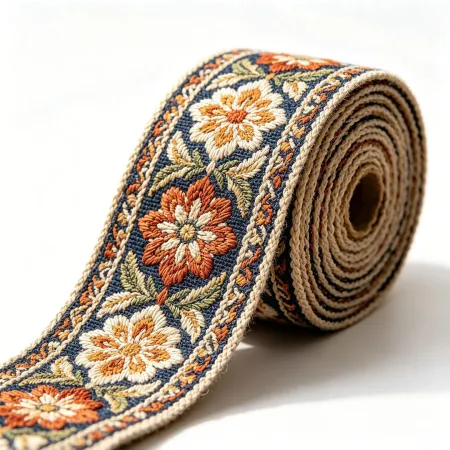
- Weave structure — plain, twill, herringbone or jacquard. Jacquard allows a woven logo or pattern that cannot rub off, at the cost of artwork preparation and a longer setup.
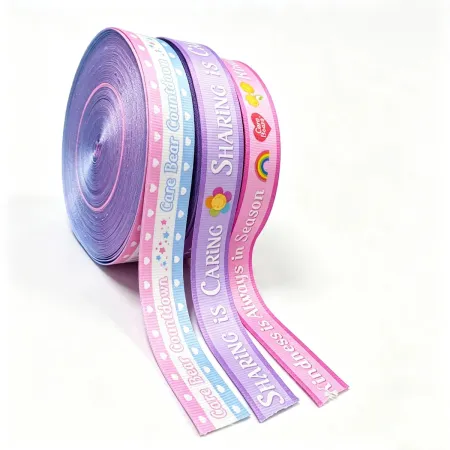
- Colour and print — dyed shades matched to a physical reference, plus dye-sublimation print for multi-colour artwork. Print sits in the fibre rather than on it, which matters on a strap that will be washed and wiped.
- Hardware and assembly — buckles, clips, sliders and stitching, fitted on site so the adjuster can be test-fitted against the actual production roll instead of a bench sample.
The table pairs each parameter with what it takes from you. The right-hand column is where enquiries usually stall.
| Parameter | What is feasible | What you must supply |
|---|---|---|
| Width | Narrow infant goods through to wide structural strap | Nominal width plus tolerance, and the buckle slot it must pass |
| Thickness | Controlled by sett and density, in a band rather than a point | A band with a measurement method, and the adjuster it must work with |
| Weave structure | Plain, twill, herringbone, jacquard logo | Vector artwork at the final woven size, and a decision on size limits |
| Colour | Matched to a physical reference on the production substrate | Pantone reference or a physical swatch, plus the substrate it applies to |
| Multi-colour sublimation on synthetic surfaces | Print-ready file, repeat length and where it may not fall | |
| Hardware | Fitted, trial-tested and pack-ready on site | The physical part or its drawing, plus the load it must hold |
Six Steps From Tech Pack to First Carton
A development that follows this order rarely needs more than two sample rounds. Skipping a step moves the discovery to a more expensive place.
- Brief review — the manufacturer reads the tech pack and challenges anything contradictory, such as a request for a firmer hand at an unchanged thickness. This conversation is cheaper than a sample.
- Construction proposal — sett, pick density, fibre and edge route proposed in writing, with the reasoning attached so you can compare two offers on substance rather than appearance.
- First sample — woven to the proposed construction, dyed to the reference, and measured. Expect one property to land slightly off; that is what the second round is for.
- Correction round — usually thickness or hand feel, occasionally shade. The correction should be a specific change to one variable, not a general request to make it better.
- Approval and hardware trial — sign the sample, record its measurements, then fit the actual buckle to the production roll and measure the pull force. This is the step that predicts whether the strap will bind in the field.
- First production carton — checked against the approved sample with the same instruments, and the result filed. That record is what you will rely on in eighteen months.
Where Custom Programmes Go Wrong
Three failures account for most of the disappointment, and none of them is a manufacturing problem.
A contradictory brief
Soft but firm, thin but rigid, matte but bright. Each pair is achievable only up to a point, and the supplier has to choose which side to favour. When nobody says which, the sample arrives satisfying neither and both sides call it a communication problem. Rank the priorities explicitly: hand feel first, thickness second, strength third.
Artwork built for paper, not for a 20 mm strap
Fine text and thin hairlines disappear at narrow widths, and a jacquard logo has a minimum feature size that a vector file does not warn you about. The practical fix is to simplify the mark for the strap rather than shrink the packaging design, and to approve artwork at actual size on a printed mock-up before any weaving begins.
A colour approved on the wrong substrate
Pantone references are printed on coated paper. The same number on a cotton face and a polyester face produces two different colours, and printing shifts the shade again. Approving a colour from a paper chip is the single most reliable way to need a third dye round, so ask for a dyed swatch on the actual construction.
Put a number on "softer"
A brief that says "make it softer" produces a guess. A brief that says "same construction, two fewer picks per centimetre, thickness to stay inside the band" produces a result you can evaluate. Hand feel is real, but the way to reach it is through measurable variables rather than adjectives.
How Xinxiangrui Runs a Custom Development
Custom work is easier when every parameter lives on one floor, because the interactions between them stop being negotiations between companies.
- Six parameters, one site — weaving, continuous high-temperature dyeing, dye-sublimation printing, jacquard work, hardware assembly and packing all inside the Dongguan plant, so a change to width and colour is one work order.
- Sampling on production settings — the sample comes off the same loom settings intended for bulk rather than a bench, which is why the first carton rarely surprises a brand.
- Data with the sample — tensile pull to 2000N+ break strength on carrier grades, abrasion, UV ageing and colourfastness measured on the article you approved, so the numbers refer to your construction rather than a generic one.
Reference builds that started as custom developments are in the baby products range, with the adjustable carrier strap and harness strap showing two common outcomes. Jacquard work appears in the woven jacquard range, and OEM and ODM development explains how a programme is handed over.
FAQ: Custom Baby-Friendly Soft Webbing
Is there a minimum order for a custom construction?
Every weaving programme has one, because a loom has to be set up and a beam warped for the width and sett you choose. What matters commercially is whether the minimum applies to the whole order or to each colour, and whether sampling is charged separately. Agree that structure before the first sample, not after.
Can you match a Pantone colour exactly?
On the substrate you choose, closely enough that a customer will not notice. Exactly the same as coated paper is not physically possible, because the same recipe reads differently on cotton and polyester. Approve a dyed swatch on the final construction and the argument about a shade shift never starts.
Can a logo be woven rather than printed?
Yes, by jacquard. It never rubs off and it survives washing, which suits a product handled daily by a child. The constraints are a minimum feature size and a limited colour count, so the practical advice is to simplify the mark for the strap rather than shrink a packaging design until it disappears.
How many sample rounds should I budget for?
Two on a well-written brief: one to establish the construction and one to correct hand feel or thickness against the real buckle. A third round is usually a sign that the brief contained a contradiction or that colour was approved on paper rather than on the fabric.
Can the hardware be sourced by the factory instead of by me?
It can, and doing so on one site keeps the webbing and buckle interface under one responsibility. The trade-off is that you lose direct control of the part number and its certification. If you go that route, ask which exact part will be fitted and keep a sample of it alongside the approved webbing.
A custom programme succeeds on the quality of its brief rather than on the willingness of its supplier. Rank the priorities, put numbers behind the adjectives, approve colour on fabric and send the buckle — and custom baby-friendly soft webbing becomes a routine piece of product development instead of a series of surprises.
Why Xinxiangrui for Baby-Friendly Soft Webbing
Inside the 8,000+ m² Xinxiangrui plant in Dongguan, yarn goes in one end and finished webbing comes out the other: woven on computerized high-speed needle looms, dyed on a continuous high-temperature line, printed by dye sublimation where the artwork needs it, then hardware-fitted and packed. A custom parameter is a work order inside one building rather than a negotiation between suppliers. Give us the application and the load it must carry, and the construction follows.