Knitted Polyester Webbing: Stretch Before Strength
A knitted polyester webbing is made by interlocking loops rather than by crossing warp and weft, and that single structural choice explains everything a buyer notices about it. It stretches sideways, it follows a curve without puckering, it curls at a cut edge, and it feels soft against skin. It also carries far less load than a woven band of the same width, which is not a defect but a different job.
This guide covers how the structure differs, the three product families that need knitting rather than weaving, six lines a knitted brief should carry, and the two limits that make a knitted band the wrong choice for a load-bearing part.
Knitted Polyester Webbing: A Different Structure, Not a Weaker One
The two structures fail in different ways, and comparing them on one number is what produces bad specifications. The table below is the comparison a buyer should be making instead.
| Property | Knitted | Woven |
|---|---|---|
| Direction of stretch | Crosswise, and often lengthwise as well | Very little in either direction at working load |
| Cut edge | Curls towards the face unless it is heat set or folded | Stable if tucked, sealed or hot cut |
| Response to a curve | Follows it, because the loops redistribute | Puckers or stands away, because the yarns cannot slide |
| Load per width | Low, and it recovers rather than resists | High, and it resists rather than recovers |
Read the last row twice. A woven band under load is doing the job it was built for; a knitted band under the same load is being stretched into a shape it will not fully return from. The number that matters on a knitted product is recovery, not peak, and a peak figure quoted for a knitted band is usually a distraction.
A curled edge is a structure announcing itself
Cut a knitted band across and the loops at the cut relax, so the edge rolls towards the face. This is not poor finishing; it is what the structure does when it is severed. It can be controlled by heat setting, by folding and stitching, or by choosing a tighter knit, but it cannot be argued away.
Three Products That Need Knitting
Binding and edging
Anything that has to run around a curve and stay flat is a knitting job. A woven binding on a tight radius either puckers or lifts, because the yarns at the outer edge have further to travel and cannot slide to accommodate it. A knitted band absorbs the difference in its loops, which is why it is used to finish necklines, cuffs and the edges of soft goods.
Products that touch skin or a muzzle
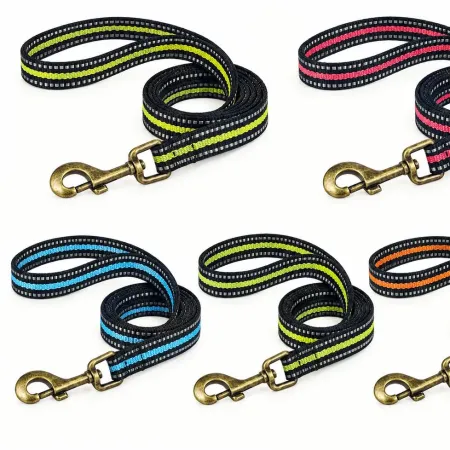
A knitted band has no hard selvage and no stiff edge, so it does not cut or chafe. For infant goods, soft pet toys and anything worn against skin, that softness is the primary requirement and strength is secondary. The band is chosen because it is kind to what it touches, and the load is designed around it rather than through it.
Garment trim and drawcord
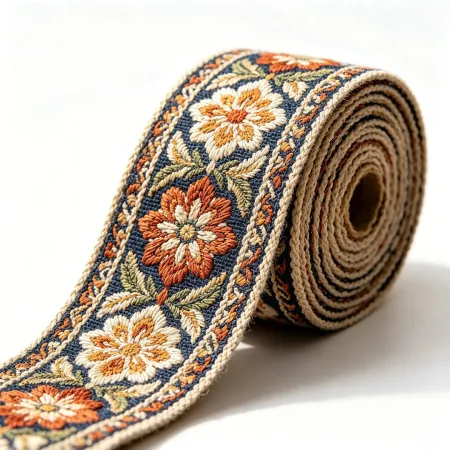
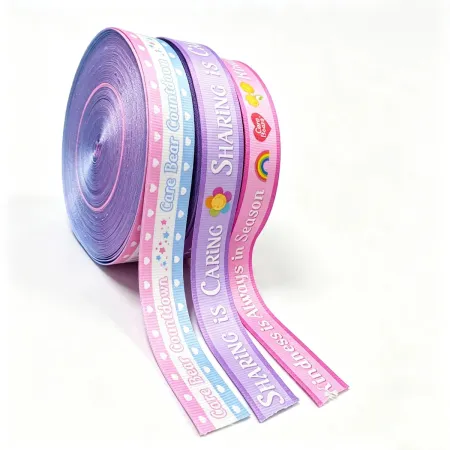
Waistbands, drawcords and decorative trims need a band that gathers and recovers. A woven band of the same width would need an elastic thread to do the same thing, and would still not drape as softly. Here the knitted structure is doing the work that would otherwise require a different fibre entirely.
There is one practical consequence that catches buyers new to the material. A knitted band is sold by width, and the width is measured relaxed. Pull it sideways and it will measure considerably more, which means a 20 mm knitted band can be specified for a 30 mm opening and will still fit. The reverse is the trap: a band measured while under tension in the warehouse will arrive narrower than the drawing.
Six Lines for a Knitted Brief
- Width measured relaxed — and the stretched width too, since the band will be pulled in use.
- The stretch and recovery required — how far it must extend and how completely it must come back.
- The edge treatment — heat set, folded, stitched or left raw, because a raw edge will curl.
- The radius it must follow — the reason for choosing knitting, stated as a measurement rather than as a feeling.
- The load it will see — small on most knitted goods, but never zero, and it decides the yarn.
- The contact surface — skin, fur or a fabric, since softness is judged against what it touches.
The third line is where a knitted programme most often goes wrong after approval. A raw cut edge on a sample looks acceptable because the sample was cut an hour ago; on a production run that sits in a carton for a month, the same edge has rolled and stiffened. Deciding the edge treatment at the sample stage costs nothing and prevents the complaint.
- Measure it lying flat and unheld — a stretched measurement is not a width.
- Cut one end and wait a day — the curl develops after the cut, not at it.
- Stretch it and let go — recovery is the property the product lives on.
- Feel it against skin — a woven comparison will not tell you what a knitted band is for.
Knitted and woven bands come off different machines on the same site here, which is why a customer can compare a knitted polyester webbing against the elastic webbing and the standard woven range on one bench rather than across two suppliers, which is also why the baby products line asks for a soft edge rather than a stiff one. The 2000N anchor belongs to the 25 mm woven base; a knitted band is measured by how far it stretches and whether it comes back.
There is also a finishing question that decides how a knitted band ages. A heat-set knit holds its width and its edge; an untreated one keeps more of its stretch but moves more in the wash. The two are not better or worse, and a product that is washed often is usually better served by the treated version while a product that is used once and discarded can carry the untreated one at a lighter weight.
One more difference shows up in the sewing room. A knitted band feeds under a needle without the resistance a woven one gives, so it can be sewn faster and with a lighter presser foot, and the seam sits flatter. The same softness that makes it kind to skin makes it harder to keep straight: it will drift under the needle unless the operator holds it, which is why a knitted programme usually costs more in labour than its material suggests.
Two Limits of a Knitted Band
It is not a load-bearing part
Loops that can open under tension will open. A knitted band used as a strap does not break cleanly at a rated load; it lengthens, thins and then fails unpredictably. Where a load must be held, the band is a woven one, and the knitted material belongs on the face, the edging or the soft part of the product.
Its dimensions move with handling
A knitted roll that has been stored under weight will be slightly wider or narrower than one from the top of the pallet, and a band that has hung for a month is longer than it was. This is normal and has to be allowed for in the tolerance rather than treated as a fault. Woven goods hold their dimensions; knitted goods negotiate them.
FAQ: Knitted Polyester Webbing
Is knitted webbing weaker than woven?
Considerably, at the same width. It is chosen for softness, stretch and edge behaviour rather than for load, and the two should not be compared on one figure.
Why does the cut edge curl?
The loops at the cut are no longer held by their neighbours, so they relax towards the face. Heat setting or a folded edge controls it.
Does it stretch lengthwise too?
Often yes, depending on the knit. That is useful for a binding and unhelpful for anything that must hold a fixed length.
Can it be printed?
Yes, though a stretchy surface distorts a rigid design. Either the artwork allows for it or the band is stabilised before printing.
What width should be ordered for a 30 mm opening?
Less than 30 mm relaxed, since the band will stretch to fit. The exact figure depends on the knit, so it is measured rather than calculated.
A knitted polyester webbing is not a cheap substitute for a woven one. It is a different structure that solves problems weaving cannot: curves, softness and recovery. Specify it for those, and keep the loads on the woven side.
Why Xinxiangrui for Knitted Polyester Webbing
A knitted band is a different animal from a woven one, and the range here carries both so the comparison can be made on the same bench: a knitted polyester webbing stretches in both directions, curls at the cut edge and takes a soft hand, which is why it serves apparel, binding and pet soft goods while the woven side carries the loads. Tell us your knitted polyester webbing spec and a matched construction comes back to you.