Personalised Cosmetic Bag: Keeping Variants Under Control
A personalised cosmetic bag is not a difficult product to make. It is a difficult product to administer. One design with forty names is forty variants, and forty variants means forty chances to stitch the right letters in the wrong place, pack the right pouch in the wrong bag or ship a set that is one short. The manufacturing problem is solved in an afternoon; the variant problem runs for the length of the order and is where almost every complaint originates.
This guide covers the three places a name can sit and what each one costs in changeover, why variant count drives the process rather than the design, how a layout goes wrong when the name is right, and the five lines that keep a personalised order from turning into a sorting exercise.
Three Places a Name Can Sit on a Personalised Cosmetic Bag
Where the name goes decides the process, the minimum size and the way a change is handled. The three options below are not decorative alternatives; they are three different production systems that happen to end up on the same pouch.
- Embroidered onto the panel — the most tactile option and the one that reads as a gift. Each name needs its own stitch file, so a change of name is a change of machine program rather than a change of artwork. Minimum letter height on a mid-weight canvas is about 6 mm, and each additional colour in the motif adds a thread change to every pouch.
- Printed onto the panel — the cheapest route for a long list of names, because one print file holds all the variants and the press runs them as a variable-data job. It wins on detail and colour count and loses on durability, since a print sits on the surface of the cloth rather than inside it.
- Woven into a label or a tag — the most consistent option, since every label in a run is identical by construction. It moves the name off the pouch body and onto a component, which means the pouch can be made in one long run and the labels applied at the end, close to packing.
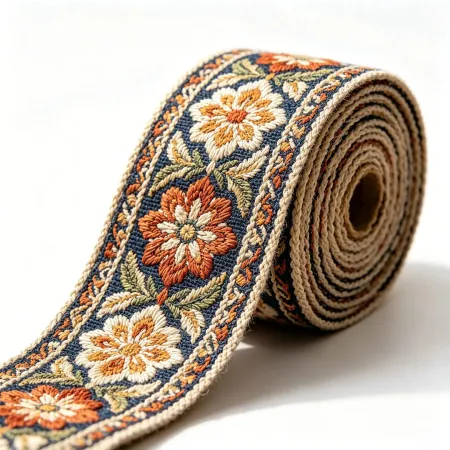
- Woven into the handle or the trim — a name in a jacquard webbing handle, which is unusual and expensive and survives everything. It is the option for a product where the trim is the feature rather than an accessory.
The table compares the four on the figures that decide whether a variant scheme is workable.
| Placement | What a name change costs | Minimum legible size | Best for |
|---|---|---|---|
| Embroidery | A new stitch file and a hoop change per name | 6 mm capitals on canvas, 8 mm on a coarse weave | Gifts, short lists, a premium feel |
| A data field in the same file, no setup | 3 mm text, 0.3 mm minimum line width | Long lists, events, detailed artwork | |
| Woven label | A new label weave, which is a loom setup | 4 mm text at 20 ends per cm in the label | Brand marks, identical across a run |
| Jacquard trim | A new jacquard program per name | 5 mm text, limited by pick density | One name, many units, permanent wear |
Three Ways a Personalised Order Slips
Every failure below produces a pouch that is correctly made and unusable, which is the most expensive category of defect because the labour is already spent.
Variant count drives the process, not the design
Forty names on forty pouches of one design is a different production problem from forty pouches of one design with one name, even though the drawings are identical. Each variant requires a separate machine program, a separate bundle ticket and a separate check before packing, and the labour sits in the changeovers rather than in the sewing. This is why a personalised order is planned by variant count: forty variants of twenty pieces is night and day compared with forty variants of two hundred pieces, and a schedule built on the second assumption will miss the first badly.
The name is right and the position is wrong
A motif placed against the seam on one pouch and floating centrally on the next reads as a different product, and on a personalised order there is no second pouch to compare against. Position needs two figures, not one: the distance from a fixed edge, and the axis it is aligned to. Naming the side seam and the top edge as the datum is enough, provided both are named on the drawing. A centring instruction alone lets the operator centre on a panel that was cut slightly off grain, which moves the name several millimetres without anyone making a mistake.
Mismatched packing is more common than mismade goods
On a personalised run the pouch is correct and the shipment is wrong, because forty similar pouches have to leave in forty identified sets. A bundle ticket that travels with the goods from cutting to packing is the only reliable control, and it has to carry the variant identifier in the same format as the buyer's list rather than a factory code. Ask for the packing list to be checked against the source spreadsheet by variant identifier, and ask for a photograph of the packed sets before the carton is closed. Both are cheap and both catch the error while the goods are still on site.
Approve a proof sheet, then approve the longest name
A proof sheet on paper shows every variant in one grid and catches duplicate spellings, and it is the only document that shows the whole order at once. Then run one physical pouch with the longest name in the list, because width runs out before height does. A name that fits at eight letters can overrun the panel at fourteen, and the overrun appears on the sample nobody thought to ask for.
Five Lines for a Personalisation Brief
A personalised order is administered through five decisions. Four of them are one sentence each, and the fifth is a spreadsheet.
- The placement and the datum — which face, the distance from which edge, and which axis the text aligns to. Two figures and an edge name remove the ambiguity that a centring instruction leaves.
- The variant count and the quantity per variant — the two numbers that set the plan, the operation count and the packing method. A list of names without quantities is not yet an order.
- The lettering specification — font, case, height and maximum character count, because the fourteenth letter is where a personalisation plan breaks rather than the first.
- The proof route and the cut-off — when proofs are issued, who signs them and by what date no further changes are accepted. A personalisation order without a cut-off absorbs changes until the day it ships.
- The identifier format — one code per variant, used identically on the spreadsheet, the bundle ticket, the polybag and the packing list. This single convention prevents most mis-shipments.
Personalised pouches are built inside the custom spec bag programme, and a finished reference with a stitched logo is the embroidered organic cotton tote, which shares the same panel construction. Where the name moves onto a handle or a zip pull, the trim comes off the cotton webbing range woven to 2000N+ break strength, and the testing page lists the abrasion and fastness methods applied to stitched and printed decoration.
FAQ: Personalised Cosmetic Bag Orders
Can each pouch carry a different name?
Yes, and it is routine. The constraint is not the sewing but the file handling: every name needs its own program or its own data field, and every one needs a bundle ticket that survives the journey to packing.
Is embroidery or print better for names?
Embroidery for a short list and a premium hand; print for a long list and fine detail. Embroidery costs a program per name, which is why a list of two hundred names is nearly always printed or labelled instead.
What if a name is very long?
Set a maximum character count in the brief, and test the longest name in the list on a physical pouch. Where a name exceeds the panel, the usual answers are two lines, a smaller height with a wider tracking, or initials only.
How late can the name list change?
Until the proof is signed, and not after. A change after proofing means a new program or a new print file plus a re-check of every affected bundle, which is why the cut-off date belongs in the order rather than in a reminder.
Can pouches be packed per person?
Yes, and it should be specified as its own operation with its own check. Packing per person is where a personalised order most often goes wrong, because the goods are right and the sets are not.
A personalised cosmetic bag is administered, not manufactured. Choose the placement that matches the length of the list, fix two figures and an edge for the position, put a quantity against every name, and use one identifier from spreadsheet to packing list. Do those four things and forty variants behave like one product; skip them and forty variants behave like forty products sharing a carton.
Why Xinxiangrui for a Personalised Cosmetic Bag
Three product lines, 17 categories and 65 finished items sit under one roof, so a personalised cosmetic bag usually starts from a base cloth and a panel construction already in production rather than from a blank page. That shortens the sampling stage, and it also means the trim a name sits on is woven on site to 2000N+ break strength rather than bought in per order. Pantone matching, woven labels and jacquard handles all come from the same plant, so a variant list does not split across suppliers. Tell us the variant count and the name format, and a matched construction comes back to you.