How to Choose Polyester Ribbon for Packaging, Branding, and Sewing Projects
Choosing polyester ribbon is a decision taken against four requirements at once: the bow or seam the ribbon has to hold, the decoration it has to accept, the shade it has to keep, and the handling it will survive between the factory and the shelf. Three projects — packaging, branding and sewing — weight those requirements differently, which is why the same ribbon rarely serves all three well. The failure is almost never a bad ribbon. It is a ribbon chosen for one job and used for another.
For a packaging buyer, a brand team or a garment manufacturer, the comparison is therefore not one swatch against another. Two ribbons can match the same Pantone reference and still behave differently: one holds a machine-tied bow, one slips open in the box; one takes a foil stamp, one glazes at the platen; one shrinks into a puckered seam, one stays flat. What separates them is the weave, the edge treatment, the finish and the residual shrinkage — four values that can be settled before a single roll is cut.
This guide takes the three project types in turn, sets out what each one actually asks of the ribbon, compares the widths and finishes that suit each, gives the sample checks that catch a mismatch in an afternoon, and ends with the specification lines that keep a repeat order identical to the first.
Polyester Ribbon Choice Starts with the Application
The first decision is not a color or a width. It is which of the three jobs the ribbon has to do, because the job determines the construction before any other value is fixed. A packaging ribbon is bought for behavior at the knot. A branding ribbon is bought for what the face accepts. A sewing ribbon is bought for how little it moves after the first wash.
| Project | What the ribbon must do | Construction priority | Most common failure |
|---|---|---|---|
| Packaging | Hold a bow, lie flat, resist creasing | Weave density and hand | Bow slips open or satin creases |
| Branding | Accept print or foil evenly, keep shade | Face smoothness and dye depth | Print cracks at the fold; foil glazes |
| Sewing | Shrink with the fabric, hold a fold | Residual shrinkage and stability | Seam puckers after the first wash |
Read the last column rather than the first. Each failure is specific enough to test for, and each is caused by a property that a shade card does not describe. A brief that names the failure the project cannot tolerate is more useful than one that names a finish, because it tells the mill what the ribbon has to survive.
Polyester Ribbon for Packaging: Knot, Width, and Finish
Packaging work is decided at the knot. A ribbon that ties beautifully and then slides open has failed, and the cause is almost always the weave rather than the fiber. Grosgrain holds because its ribs create friction against themselves; a smooth satin holds only if the weave is dense enough, and a loose satin will not hold at all.
Hand-Tied and Machine-Tied Bows
A machine-tied bow needs a stiffer hand and a tight width tolerance, because the feed grips the edge and the former pulls the loop. A hand-tied bow tolerates a softer finish and a looser tolerance, and usually looks better because the bow can be dressed. Specifying a machine-tied ribbon for a hand-tied process produces bows that stand up stiffly and photograph badly, which is a common and avoidable mismatch.
Width and the Box It Has to Sit On
Width should be chosen against the box face rather than against a catalogue. A 6 mm ribbon on a 200 mm box reads as a thread; a 25 mm ribbon on a small jewellery box overwhelms it. The working range for retail gift packaging is 10–25 mm, and the narrower end of that range is where most premium brands sit. A width tolerance belongs in the brief: a ribbon quoted at 15 mm that arrives at 14.2 mm still ties, but it will not fill the slot or the printed band it was designed for.
One packaging requirement is easy to forget and expensive to fix: whether the ribbon will contact food. Where it does, the finish has to meet the migration requirements of the destination market, and a finish chosen purely for its sheen may not.
Polyester Ribbon for Branding: Print, Foil, and Shade
Branding work asks the ribbon to carry a mark and keep it. That puts the face under a different kind of inspection from a packaging ribbon, because the print is the product rather than a decoration on it.
Sublimation Print
Sublimation dyes into polyester rather than printing onto it, so the image sits inside the fiber and does not crack at a fold. It is the only common method that holds a photographic gradient on a narrow strip, and it is the reason polyester dominates printed ribbon. The construction requirement is a face that accepts dye evenly, which means a consistent yarn and a weave without thick places.
Foil, Embossing, and Screen Print
Foil stamping needs a smooth, dense face and a ribbon that tolerates the platen temperature without glazing. Grosgrain and matte finishes hold foil poorly, and the failure reads as a printing fault when it is a finish mismatch. Screen print sits on the surface and will crack at a fold on a narrow ribbon, which is why it is usually reserved for wide decorative ribbon rather than for lanyards.
Holding One Shade Across a Range
A brand that uses ribbon on packaging, on a lanyard and on a sewn trim is asking one dye standard to hold across three constructions. Dye uptake differs by weave and by yarn, so the shade has to be approved on dips cut from each construction rather than once for the range. Approving one dip and applying it to three products is the most common cause of a set that photographs badly together.
Where the ribbon and the band sit in the same product, as they do in a custom lanyard, the two should be dyed against the same standard in the same run rather than matched afterwards.
Polyester Ribbon for Sewing: Shrinkage and Stability
In sewing, the ribbon stops being a decoration and becomes a component. The requirement moves from how it looks to how little it moves, and the figure that predicts the result is residual shrinkage rather than tensile strength.
The Puckered Seam
A ribbon that shrinks more than the fabric beside it will pull the seam into a wave at the first wash, and no amount of pressing removes it. The cause is heat applied during finishing that was not fully relaxed, and the fix is either a pre-shrunk ribbon or a wash before cutting. Both are cheap at the sampling stage and expensive after a bulk order.
Binding, Facing, and Trim
A ribbon used as a binding has to hold a fold without a crease line showing through, which puts the requirement on the weave and on the thickness rather than on the finish. A ribbon used as a facing has to be stable enough that the fold does not migrate. In both cases a tight weave with a firm hand outperforms a softer, more lustrous ribbon, which is the opposite of what a design team usually prefers on a card.
The practical test is a wash. Cut four 300 mm lengths, measure them, wash at the temperature the end user will use, dry the way they will dry, and measure again. The ribbon with the smallest change is the one to specify, and the measurement takes an afternoon. The same logic applies to the webbing beside it, as set out in how polyester webbing is made, where heat setting plays the equivalent role.
Polyester Ribbon Widths and Finishes for Each Project
The table below crosses the three project types against the widths and finishes that suit them. It is a starting point rather than a rule, but it removes most of the combinations that fail in practice.
| Project | Width range | Finish | Edge |
|---|---|---|---|
| Retail gift packaging | 10–25 mm | Double-face satin or grosgrain | Woven or folded |
| Confectionery and small boxes | 3–10 mm | Grosgrain or matte | Woven |
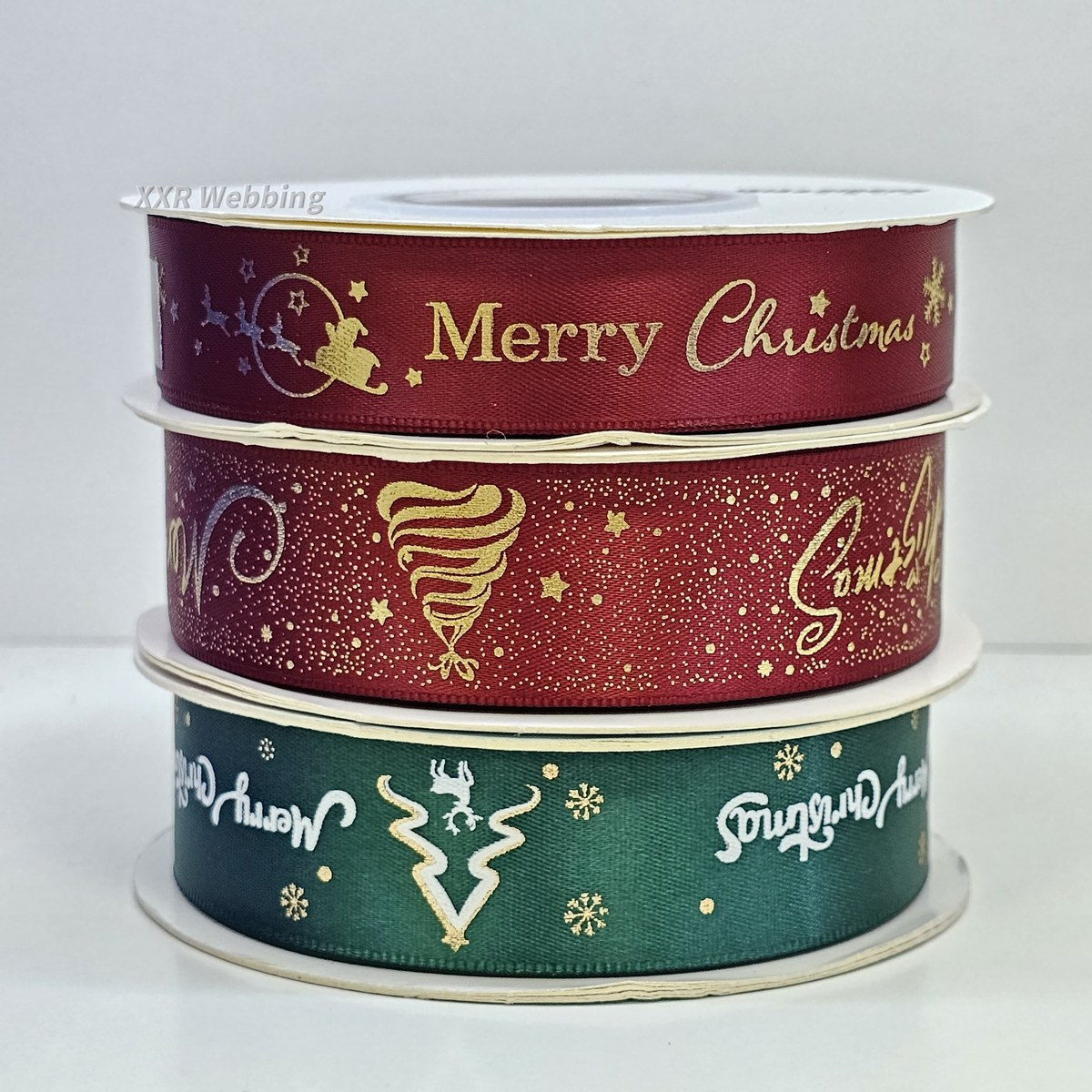
| Printed promotional ribbon | 6–15 mm | Smooth satin for sublimation | Sealed or woven |
| Lanyards and badge ribbon | 10–20 mm | Dense satin or grosgrain | Woven, then sewn |
| Garment binding and ties | 10–20 mm | Tight-weave matte | Woven |
| Home textile trim | 15–50 mm | Matte or satin | Woven or folded |
Two combinations on that table are worth flagging because they are ordered the wrong way round most often. A printed ribbon specified in grosgrain will lose print definition in the ribs. A garment binding specified in lustrous satin will show every crease at the fold. In both cases the finish that photographs best is the one that performs worst.
How to Approve a Polyester Ribbon Sample
Approval is where most of the remaining risk sits, because a ribbon can pass a visual check and still fail the job. Five checks cover the failure modes that matter, and all of them can be run without equipment.
- Tie it. Tie the bow the product will use, by the method the production line will use, and leave it for a day. A bow that has slipped by evening will slip in the box.
- Crease it. Fold the ribbon sharply, press it, and open it. A satin face that holds a white crease line will look worn before the product is sold.
- Print it. Where decoration is specified, print a sample through the actual process rather than judging a flat swatch. A gradient that reads on a card can band in the ribs.
- Wash it. Four 300 mm lengths, measured before and after the end-user wash. This is the only reliable check on residual shrinkage.
- Compare the dip. Approve the shade on a dip cut from the production ribbon under daylight, not on a screen and not under a warm lamp.
Keep the approved sample sealed and labelled with its construction and its dye lot. A ribbon approved on appearance alone cannot be re-ordered, because nothing about the approval describes what was approved.
Polyester Ribbon Specification Checklist
A brief that carries these six lines can be quoted without a round of questions and repeated without drift. Each line corresponds to one of the failures above.
- Construction. Polyester filament, woven or knitted, with the weave and the approximate density named.
- Width and thickness. Both with tolerances, measured on the finished ribbon.
- Finish and edge. Grosgrain, satin, double-face or matte, plus woven, folded or sealed edge.
- Colorfastness. Light and rub on named scales, plus the wash or dry-clean regime the product will meet.
- Residual shrinkage. A figure after a stated wash, which is the line that prevents a puckered seam.
- Decoration method. Sublimation, foil, screen print or embroidery, with the temperature the ribbon has to tolerate.
Where the ribbon and a woven band appear in the same product or the same photograph, they should be specified together. The ribbon and polyester webbing ranges are dyed from the same standard for that reason, and a combined brief is quoted through the OEM and ODM program as one construction rather than two.
FAQ: Choosing Polyester Ribbon
How do I choose between grosgrain and satin ribbon?
Choose grosgrain where the ribbon has to hold a knot or survive handling, because the ribs create friction. Choose satin where the face is the product and the bow will be dressed by hand. Grosgrain holds better; satin photographs better.
What width of polyester ribbon is best for packaging?
10–25 mm covers most retail gift packaging, scaled to the box face. Narrower widths suit confectionery and small boxes, and wider widths are usually decorative display ribbon rather than a functional tie.
Why does my ribbon bow come undone?
Almost always because the weave is too smooth for the knot, not because the ribbon is poor quality. A loose satin slides against itself; a dense satin or a grosgrain holds. The test is to tie the production bow and leave it for a day.
Can polyester ribbon be used for garment binding?
Yes, provided the residual shrinkage is specified and matched to the fabric. A ribbon that shrinks more than the shell will pucker the seam at the first wash, and no pressing will remove it.
How should a ribbon sample be approved?
On a physical sample, tied with the production bow, printed through the actual decoration process, washed at the end-user temperature, and matched to a dip cut from the production ribbon under daylight. A screen or a swatch card is not an approval.
Why Buyers Source Polyester Ribbon from Xinxiangrui
A ribbon that suits packaging will often disappoint in sewing, and a ribbon that binds a seam cleanly rarely ties a bow. The difference sits in four variables — weave, edge, finish and residual shrinkage — and all four can be written into a brief before a roll is cut.
Xinxiangrui Webbing has woven narrow fabric in Dongguan since 2011, with the ribbon line running on the same looms and the same high-temperature dye house as the webbing range. Grosgrain, satin and matte finishes are available across the widths used for packaging, lanyards and garment trim, colorfastness and shrinkage are tested in-house, and OEM and ODM work is quoted from the six-line checklist above. The ribbon range runs from 3 mm upward.