
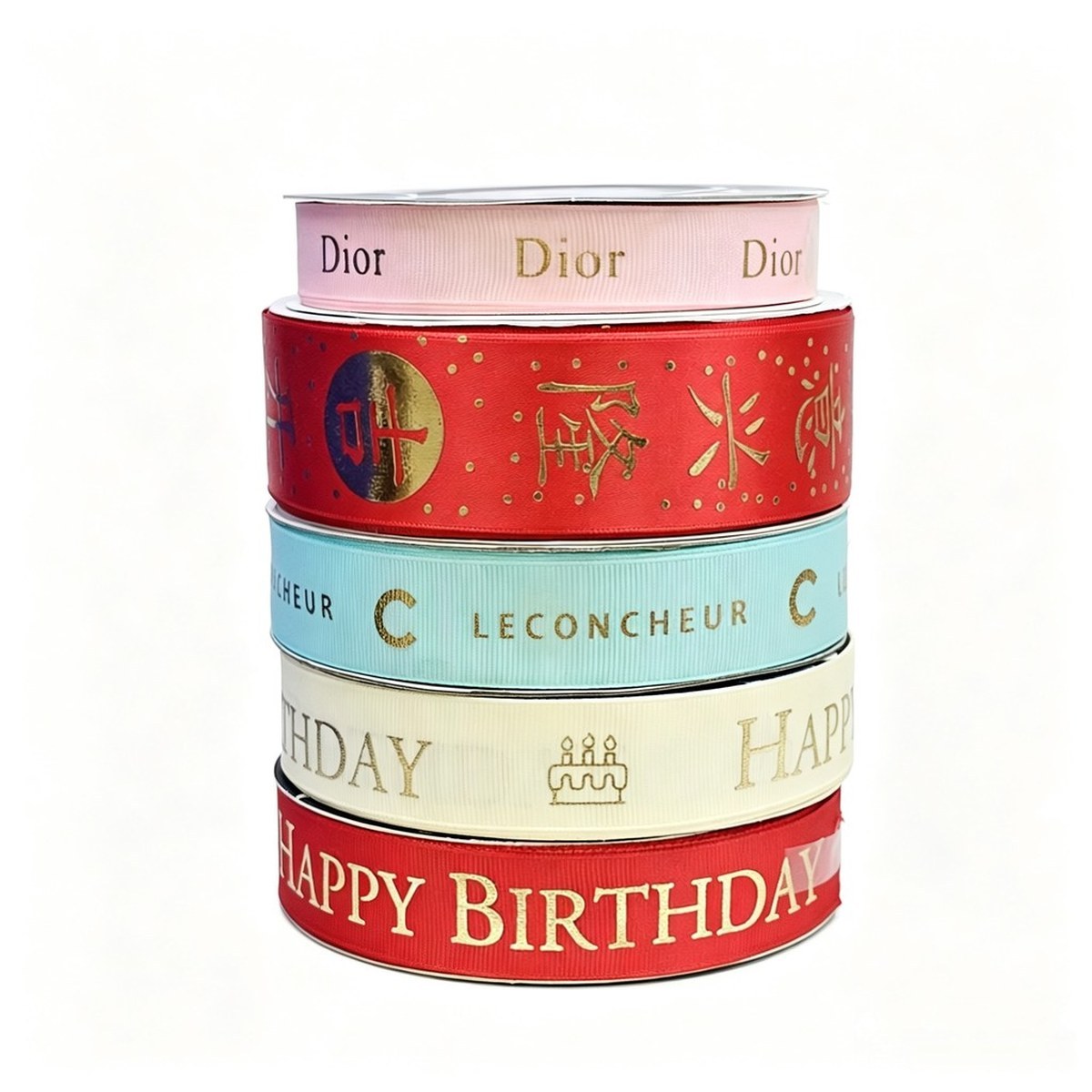
What Is Polyester Ribbon Used For? A Guide to Applications and Finishes
Polyester ribbon is a narrow woven or knitted strip used wherever a product needs a flat trim that holds a color, ties a knot without slipping, and survives handling. It is specified against four requirements at once: the hand the design calls for, the strength the closure or the load demands, the colorfastness of the end use, and the finish that has to be visible on the shelf. A ribbon bought for packaging and a ribbon sewn into a garment are the same fiber and rarely the same product, because the finish, the edge and the density differ before the color is even discussed.
For a packaging buyer, a brand team or a garment manufacturer, the choice is therefore not one shade card against another. Two ribbons can match a Pantone reference and still behave differently in use: one holds a bow, one slides open; one survives a hot stamp, one melts at the fold. What separates them is the weave, the edge treatment, the yarn and the finish — four variables that can be fixed in a brief before a sample is cut.
This guide explains what polyester ribbon is and how it differs from webbing, where it is used in packaging, branding and sewing, which finishes exist and what each one is for, the widths that suit each application, and how to write a finish into a brief so that the second order matches the first.
What Polyester Ribbon Is and How It Differs from Webbing
Polyester ribbon is woven or knitted from polyester filament yarn into a narrow strip, usually between 3 mm and 100 mm wide, with a smooth face and a finished edge. The distinction from webbing is not width but purpose. Webbing is built to carry load, so its warp is dense, its weave is tight and its surface is expected to be strong rather than smooth. Ribbon is built to look right and handle well, so its warp is lighter, its surface is finished, and its edge is treated for appearance rather than for abrasion.
Where the Two Overlap
The overlap is real and it causes specification errors. A 25 mm polyester ribbon and a 25 mm polyester webbing can look similar on a card and differ by a factor in tensile. A ribbon sewn into a bag handle because it matched the trim will stretch and distort under load, and the failure will be blamed on the seam. Where a narrow strip has to carry weight, the answer is a light webbing rather than a heavy ribbon.
What Ribbon Is Better At
Surface and edge. A ribbon can be woven with a satin face, a grosgrain rib, a double-face construction or a matte finish, and each of those changes how light falls on it. Webbing cannot be finished that way without losing the abrasion resistance it is bought for. Ribbon also prints, hot-stamps and embosses more cleanly, because the face is designed to receive decoration.
Polyester Ribbon in Packaging and Gift Applications
Packaging is the largest single use, and the requirement there is almost entirely about behavior at the knot. A ribbon that ties a bow on a box has to hold that bow through handling, stay flat against the paper, and resist the creasing that shows on a satin face after a day in a bag.
- Gift and retail boxes. Double-face satin or grosgrain in 10–25 mm. The bow has to hold without a clip, which puts the requirement on the weave rather than on the width.
- Bags and tissue wrapping. Grosgrain in 6–15 mm for handles and 3–6 mm for the tie. The rib gives friction, so the knot holds on a smooth paper bag.
- Food and confectionery. A ribbon that meets the migration requirements of the market, with a finish that does not transfer to the wrapper. Colorfastness to moisture matters more here than light fastness.
- Shipping and fulfilment. A lower-cost matte ribbon where the bow is decorative rather than structural, and where the product will be opened once and discarded.
One packaging detail is worth settling early: whether the ribbon will be tied by hand or by machine. A machine-tied bow needs a stiffer hand and a consistent width tolerance, because the feed mechanism grips the edge. A hand-tied bow tolerates a softer finish and a wider width tolerance, and usually looks better for it.
Polyester Ribbon in Branding, Lanyards, and Promotional Use
Branding work puts the ribbon under a different set of demands: it is printed, it is worn, and it is photographed. The face has to accept ink or foil evenly, the edge has to resist fraying when a die-cut end is used instead of a sewn one, and the shade has to survive a season of handling at a trade show.
Printed Ribbon
Sublimation prints into polyester rather than onto it, which is why a polyester ribbon takes a photographic image and a nylon or cotton ribbon does not. The print does not sit on the surface as a layer, so it does not crack at a fold. Where the artwork includes a gradient or a photograph, sublimation on polyester is the only route that holds it.
Ribbon in Lanyard and Badge Products
A lanyard is a ribbon that has been given hardware and a load. The construction changes accordingly: a wider band, a denser weave, and an attachment that distributes the badge weight. The detail that decides whether the lanyard hangs straight is the fold at the clip, not the print. Brands building both products usually want one shade across the ribbon and the custom lanyard range, which is a dye-lot question rather than a design one.
Hot stamping and embossing belong to the same family of decisions. A foil stamp needs a smooth, dense face and a ribbon that tolerates the platen temperature without glazing. A matte or grosgrain face holds foil badly, and the failure looks like a printing problem when it is a finish mismatch.
Polyester Ribbon in Sewing, Garment, and Home Textile Projects
In sewing, the ribbon becomes a component rather than a decoration, and the requirement moves to stability. A ribbon sewn along a seam has to shrink like the fabric beside it, or the seam puckers at the first wash. A ribbon used as a facing or a binding has to hold a fold without a crease line showing through.
- Binding and piping. A ribbon with a tight weave and a stable finish, pre-shrunk or washed before cutting, so the seam does not pucker after the first wash.
- Straps and ties on garments. A ribbon at 10–20 mm with enough body to hold a knot, and a finish that does not slip open on a smooth fabric.
- Home textiles. Curtain ties, cushion trims and table runners, where light fastness matters more than tensile because the product sits in a window.
- Accessories and small leather goods. A ribbon used as a zip pull or a bag trim, where abrasion at the fold decides the service life rather than the print.
The most common sewing failure with polyester ribbon is not a weak ribbon but a mismatched one: a stable ribbon on an unstable fabric, or the reverse. Pre-washing a sample and measuring it before and after is the fastest way to catch that, and it takes an afternoon rather than a laboratory.
Polyester Ribbon Finishes and What Each One Is For
The finish is the specification most often reduced to a single word on a purchase order, and it is the one that decides whether the product looks like the design. The four finishes below cover most of the range.
| Finish | Surface | Holds a knot | Best use |
|---|---|---|---|
| Grosgrain | Ribbed, matte | Very well, because the ribs grip | Packaging, bag handles, menswear trim, lanyards |
| Double-face satin | Smooth both sides, lustrous | Well, if the weave is dense | Gift boxes, hair accessories, premium packaging |
| Single-face satin | Glossy face, matte back | Moderately; the back is rougher | Decoration where one side shows |
| Matte or taffeta | Flat, low sheen | Well, with a firm hand | Retail packaging, printed ribbon, sustainable-looking ranges |
Two of these are routinely confused on a purchase order. Grosgrain and matte taffeta both read as “not shiny” on a screen, but grosgrain has a rib that grips and taffeta does not, so a bow that holds in one will slide open in the other. The distinction is visible in the hand within seconds and invisible in a photograph, which is why a physical sample is the only approval that works for a finish.
Edge Treatment
The edge is the second half of the finish. A woven edge is produced by the loom and cannot unravel; a cut edge must be heat-sealed or folded, and a heat-sealed edge on a satin face leaves a slightly stiff line that shows at the end of a bow. For a premium package the folded or woven edge is worth specifying; for a printed promotional ribbon the sealed edge is usually accepted.
Polyester Ribbon Widths and the Applications They Suit
Width follows the application rather than the design, because the ribbon has to pass through a bow, a loop, a seam allowance or a hardware slot. The table below gives the ranges that correspond to the common uses.
| Width | Typical application | Note |
|---|---|---|
| 3–6 mm | Confectionery, small gift boxes, garment loops | Too narrow for a printed logo to read |
| 6–10 mm | Bag handles, tissue ties, hair accessories | The most common promotional width |
| 10–15 mm | Gift boxes, lanyards, garment straps | The widest range of finishes available |
| 15–25 mm | Bag handles, belt substitutes, home textiles | Check the hardware slot before fixing the width |
| 25–50 mm | Sashes, decorative bows, wide trims | Ribbon at this width is usually a display product |
A width tolerance belongs in the brief alongside the width itself. A ribbon quoted at 15 mm that arrives at 14.2 mm will still tie, but it will not fill a 15 mm hardware slot the way the sample did, and the difference is enough to change the look of the finished product.
How to Specify Polyester Ribbon for an End Use
A brief that names the width, the color and the finish is a starting point rather than a specification. The six lines below turn it into something a mill can quote without a round of questions and a buyer can approve on measured figures.
- Fiber and construction. Polyester filament, woven or knitted, with the weave named so that the hand is reproducible.
- Width and thickness. Both with tolerances, measured on the finished ribbon rather than on the roll.
- Finish. Grosgrain, satin, double-face or matte, plus the edge treatment. A photograph is not a finish specification.
- Colorfastness. Light and rub, each on a named scale, with the wash or dry-clean regime the product will meet.
- Shrinkage. Residual shrinkage after a stated wash, which is the figure that prevents a puckered seam.
- Decoration compatibility. Whether the ribbon will be printed, hot-stamped, embroidered or sewn, and at what temperature.
Where a program needs one shade across ribbon, webbing and a finished accessory, the ribbon line is dyed against the same standard as the polyester webbing range, which is the only reliable way to keep a set consistent when the two are photographed together.
FAQ: Polyester Ribbon
What is polyester ribbon used for?
Packaging and gift tying, bag handles, branding and printed promotional ribbon, lanyards, garment binding and ties, and home textile trims. The common thread is a narrow flat strip that has to hold a color and a knot rather than carry a heavy load.
Is polyester ribbon the same as satin ribbon?
No. Satin is a weave, not a fiber, and satin ribbon can be polyester, nylon or silk. A polyester satin ribbon is a polyester ribbon woven with a satin face; the fiber decides how it dyes and washes, the weave decides how it looks.
Can polyester ribbon be printed?
Yes, and it is the best common ribbon for full-color printing because sublimation dyes into the fiber rather than sitting on the surface. The print does not crack at a fold, which is why it suits photographic artwork and gradients.
Does polyester ribbon fray?
A woven edge does not fray because the loom locks the weft. A cut edge will fray unless it is heat-sealed or folded, and a sealed edge on a satin face leaves a slightly stiff line that shows at the end of a bow.
What width of polyester ribbon is used for gift boxes?
10–25 mm covers most retail gift packaging. Narrower widths suit small boxes and confectionery, and wider widths are usually decorative display ribbon rather than a functional tie.
Why Buyers Source Polyester Ribbon from Xinxiangrui
Polyester ribbon is decided by four variables that a shade card does not show: the weave, the edge, the yarn and the finish. Name all four and the ribbon that arrives is the ribbon that was approved. Leave one out and the difference appears at the knot, at the fold, or in the second order.
Xinxiangrui Webbing has woven narrow fabric in Dongguan since 2011, with the ribbon line running on the same looms and the same high-temperature dye house as the webbing range. Grosgrain, satin and matte finishes are available across the widths used for packaging and lanyards, colorfastness is tested in-house, and OEM and ODM work is quoted from the six-line brief above. The ribbon range runs from 3 mm upward.